Full stops and commas
Sentences run together to split with full stops, and lists, names, question tags, extra information and linking words for commas.
Good punctuation is what makes writing easy to read. This free punctuation worksheet generator makes printable worksheets with sentences written for each level, following British school conventions: children add the missing marks and the answer key shows each mark in colour. For spelling patterns, try the spelling worksheets; for verbs, the verb tenses worksheets.
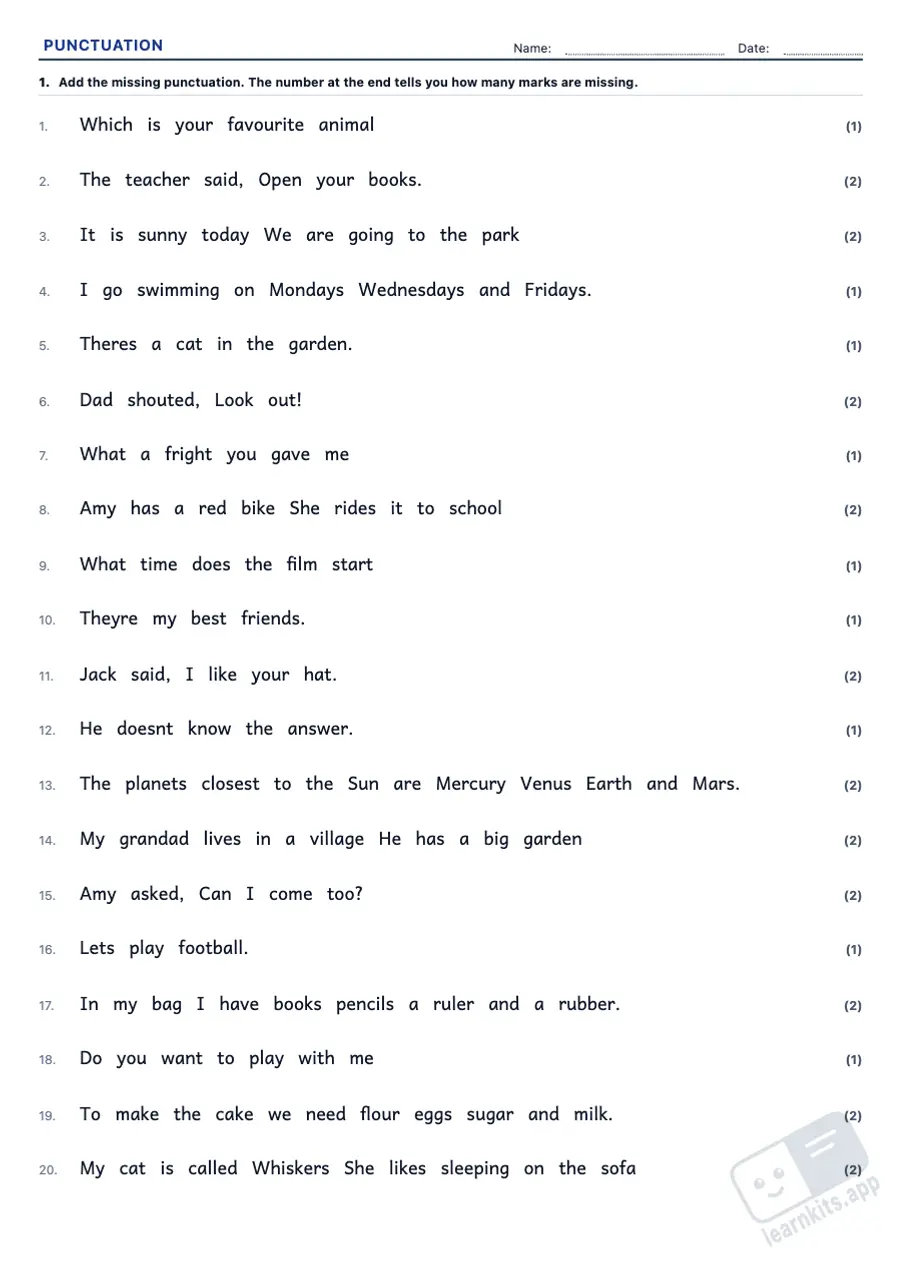 Student worksheet
 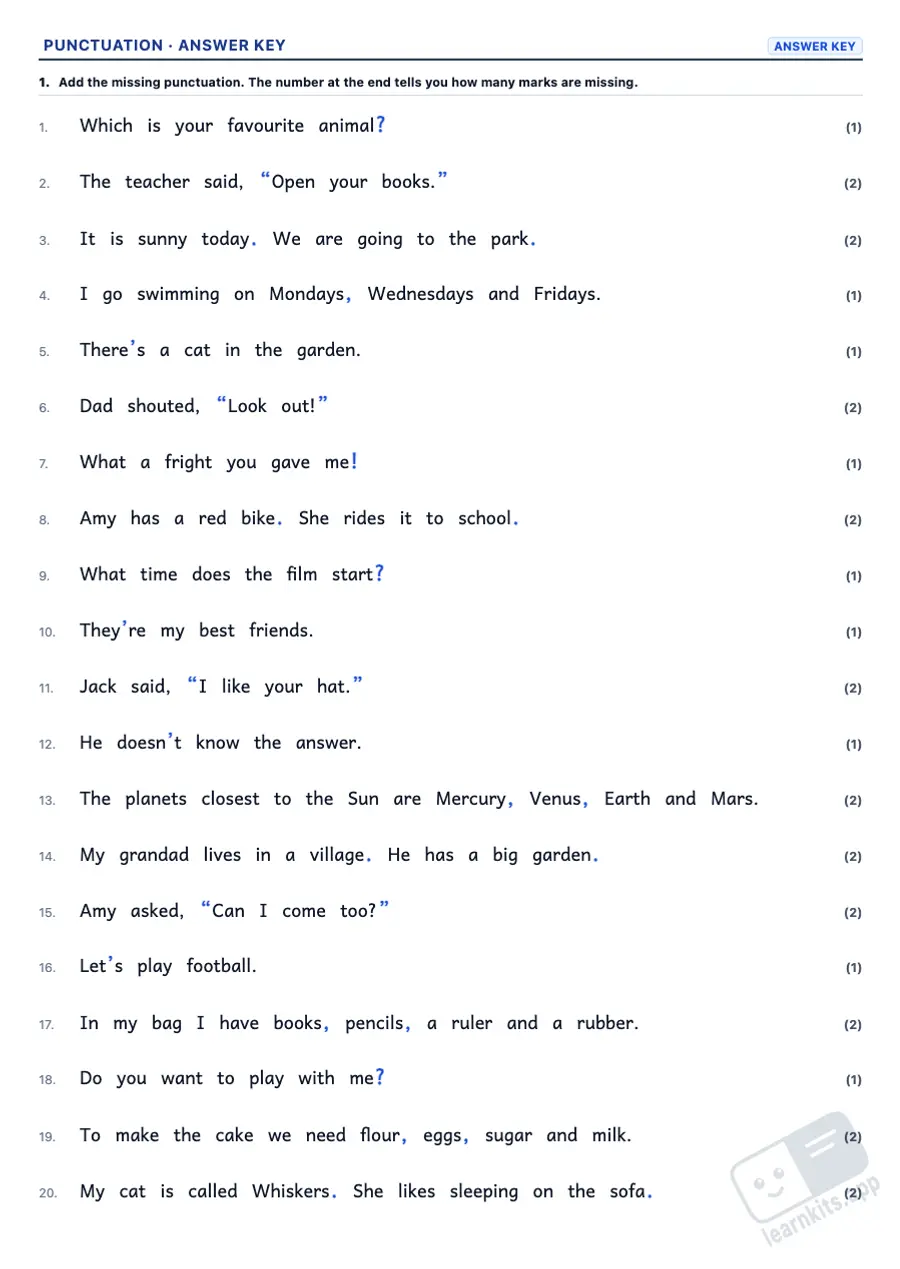 Answer key
 Sentences run together to split with full stops, and lists, names, question tags, extra information and linking words for commas.
Question marks, exclamation marks for What a…! and How…!, interjections, and indirect questions that end with a full stop.
Contractions, singular and plural possession, its or it’s, and inverted commas with the speaker before, after or in the middle.
Three levels: short sentences, longer sentences and texts with speech, colons and semicolons.
Every sentence is written so its marks have one correct place: no optional commas, no Oxford comma, and words that tell singular from plural possession.
The answer key prints each sentence in full with the added marks in colour. You can also say how many marks are missing or show their place with a box.
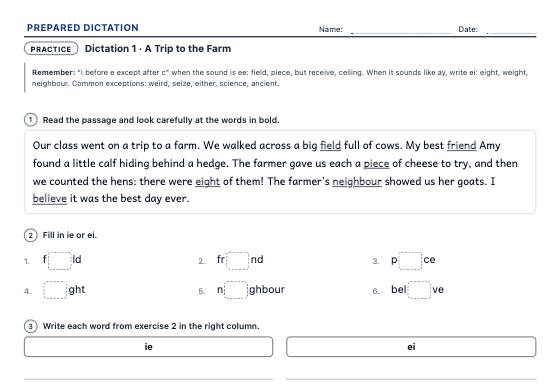
Original passages for each spelling pattern: a practice sheet with the key words to fill in and sort, a dictation sheet and the teacher's text to read aloud.
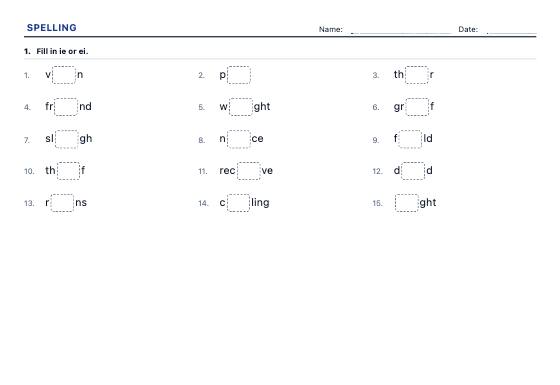
Words to fill in with the right letters, choose between two spellings or sort into columns: ie/ei, silent letters, double consonants, -tion/-sion, c/k/ck and homophones.
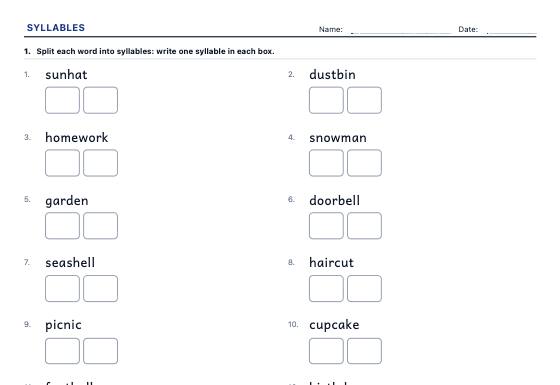
Real words to split into syllables, clap and count, build from their syllables, sort by number of syllables and find the stressed syllable, from compound words to long words.