Early Years
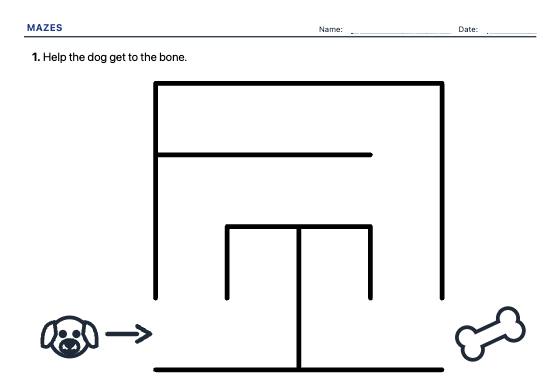
Printable Pre-K and Kindergarten worksheets for ages 3 to 5: mazes, dot-to-dot pictures, visual discrimination and opposites such as big and small, full and empty, with an answer key.
Attention & Logic
Dot-to-Dot
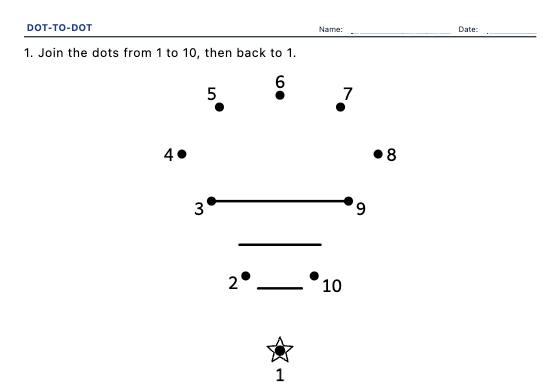
A4 worksheets to join the dots and reveal the picture: from 1-10 up to 1-100, counting in 2s, 5s and 10s or the alphabet, with over 30 pictures and the finished picture in the answer key.
Visual Discrimination
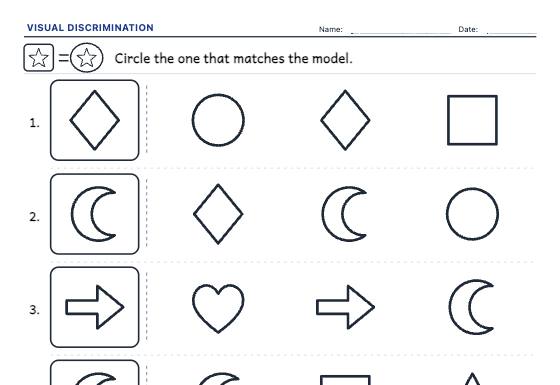
Visual discrimination worksheets for ages 3 to 5: find the one that matches the model, spot the odd one out and match the pairs, with differences in shape, pattern, orientation or small details.
Spot the Difference
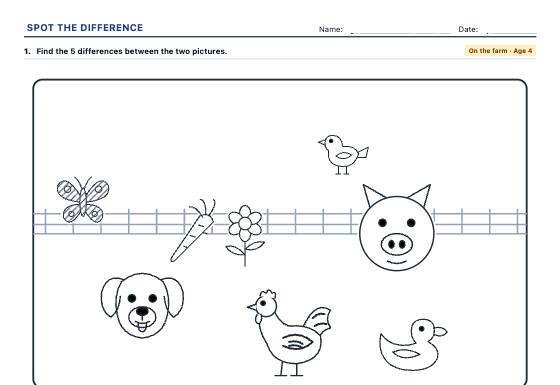
Picture pairs with 3 to 10 differences to find (something missing, swapped, smaller, striped, turned around or moved), in 9 scenes and 4 levels, with the differences circled in the answer key.
Basic Concepts
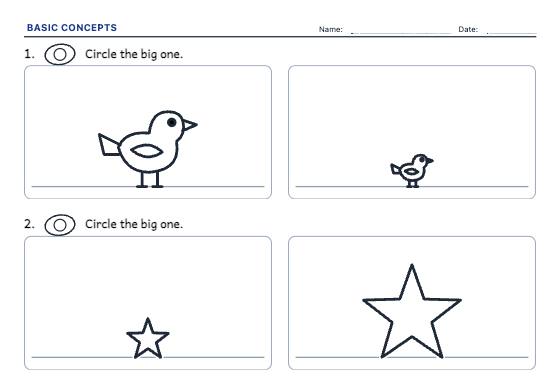
Basic Concepts
Opposites worksheets for ages 3 to 5: big and small, long and short, tall and short, on and under, inside and outside, in front and behind, near and far, many and few, full and empty. To circle, colour, cross out or draw.
Routines & Calendar
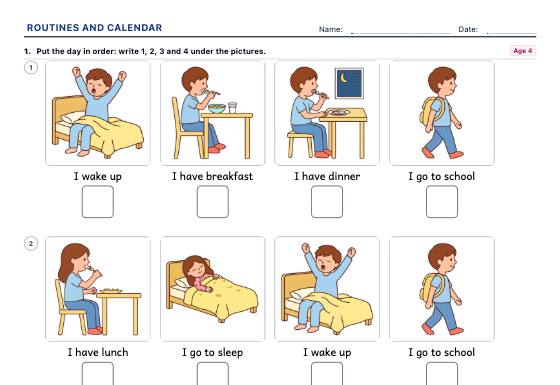
Daily Routine and Calendar
Visual schedules for morning, school, afternoon and bedtime routines, a "Today is" circle time board, the real calendar of any month, ordering the day and the days of the week.
Emotions
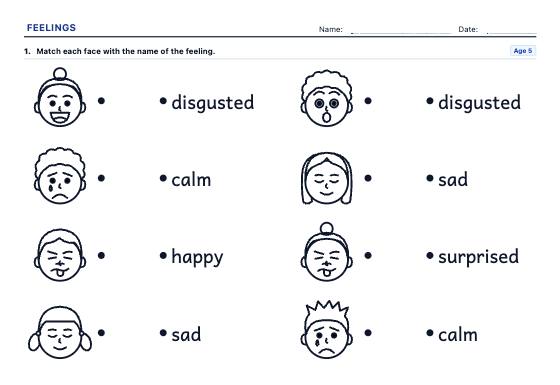
Emotions
Feelings with drawn faces: match faces that feel the same or with their names, how would you feel in everyday situations, draw a feeling, an emotion wheel to colour and a daily check-in, with an answer key.
Arts & Crafts
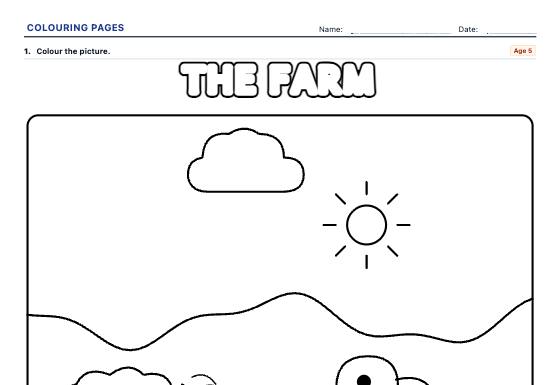
Colouring Pages
Colouring pages drawn anew on every sheet: mandalas, stained glass, geometric mosaics and scenes of the farm, the sea, the garden, space, the town and the savannah, with the line and the size of the spaces set for each age.
Printable Crafts
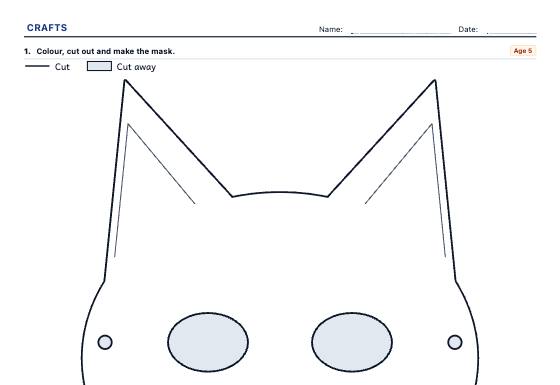
True-size templates to colour, cut out and make: animal masks, a crown sized to the head, finger puppets, a pinwheel, a fortune teller, bookmarks, a paper doll chain and a gift box with lid, with the steps.
Early years activities to look closely, think and talk
Before reading and maths, young children need to notice details, follow a path with their eyes and pencil, and understand words like big, behind, many or empty. These are the foundations that later make letters and numbers easier. These kits turn them into simple, attractive activities on A4: wide-path mazes, pictures that appear when you join the dots, find-the-same and spot-the-odd-one-out puzzles, and opposites to circle, colour or draw. Each sheet is made to be talked about with an adult, not done alone in silence. Print them or save them as a PDF for home or nursery.
Mazes and dot-to-dot for pencil control
Wide-path printable mazes help three-year-olds hold a pencil and plan a route, and grow into dense mazes for older children. Dot-to-dot pictures from 1 to 10 up to 1 to 100, or the alphabet, join counting with drawing and end with a picture to colour.
Visual discrimination and attention
With visual discrimination worksheets, children find the picture that matches the model, spot the odd one out and match pairs. Differences start large, in shape, and become finer: patterns, direction and small details. This careful looking is the same skill they later need to tell b from d.
Basic concepts and opposites
The opposites worksheets practise big and small, long and short, on and under, inside and outside, near and far, many and few, full and empty. Each exercise has one picture that fits, so children circle, colour, cross out or draw and then explain their choice in words.
Tips for using them with young children
Keep sessions short, one sheet or even half a sheet, and stop while it is still fun. Read the instruction aloud and ask what they see before they start. Praise the effort and the talking as much as the result, and let them colour the pictures when they have finished.
Questions about the early years worksheets
Are these worksheets suitable for 3-year-olds?
Yes, at the first level. Mazes have wide paths, visual discrimination shows large differences and opposites use clear pictures. Three-year-olds will need an adult to read the instruction and talk about the pictures, which is part of the learning.
Do early years worksheets need an answer key?
It helps the adult more than the child: the key shows the solved maze path, the finished dot-to-dot picture or the right choice in each row. It is handy when you prepare many sheets for a group and want to check them quickly.
What else can I print for Kindergarten?
Besides these activities, children of this age enjoy counting, shapes, patterns, number tracing and pre-writing strokes. You will find them in the Mathematics and Language & Literacy areas, and each course page groups everything that suits that age.