Music Note Reading
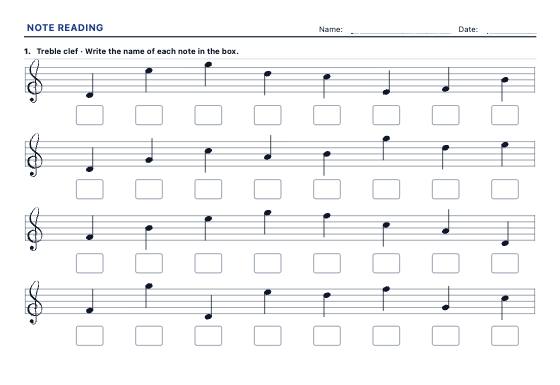
Staff worksheets to name notes, write them and recognise note values, in treble and bass clef, with ledger lines at higher levels.
Printable music theory worksheets to learn to read notes on the staff in treble and bass clef, name and write notes and recognise note values, with an answer key.
Staff worksheets to name notes, write them and recognise note values, in treble and bass clef, with ledger lines at higher levels.
Reading music is a skill like reading words: it comes from short, regular practice until each note is recognised at a glance. Children start with a few notes on the treble clef, add the bass clef, and later read ledger lines above and below the staff. The music note reading worksheets give that practice on clear staves: name the note, write it on the staff, or recognise its value. Every sheet is new, so a child can practise a little every day without learning the answers by heart. Print them for a lesson or save them as a PDF for home practice.
Most children begin with the treble clef, the one used by recorders, violins and the right hand on the piano. The bass clef follows for the left hand, cello or bassoon. Choose one clef or mix both, and keep the range small at first so each note becomes familiar before adding more.
Naming notes trains reading; writing them on the staff trains the opposite direction, which helps memory. Recognising note values, from semibreves to semiquavers, prepares children to clap and play rhythms. Higher levels add ledger lines for notes outside the staff.
One short sheet before an instrument lesson or a music class keeps note reading fresh. Children can check their answers with the key and note which notes still slow them down, so the next sheet can focus on those. Saved templates make it easy to repeat the same settings each week.