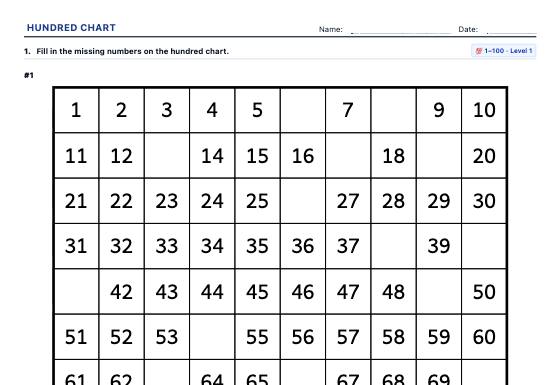
Hundred Chart
A4 hundred chart worksheets: missing numbers, chart pieces, neighbours (+1, −1, +10, −10), skip counting and colouring patterns, in three levels with an answer key.
Kindergarten worksheets for 5-year-olds: phonics, letter formation, numbers to 20 and beyond, comparing, patterns and grid drawing. Free, printable and with answer keys.
A cover, contents and a week of practice in every subject. Open it and change anything you like.
Open the workbook A4 hundred chart worksheets: missing numbers, chart pieces, neighbours (+1, −1, +10, −10), skip counting and colouring patterns, in three levels with an answer key.
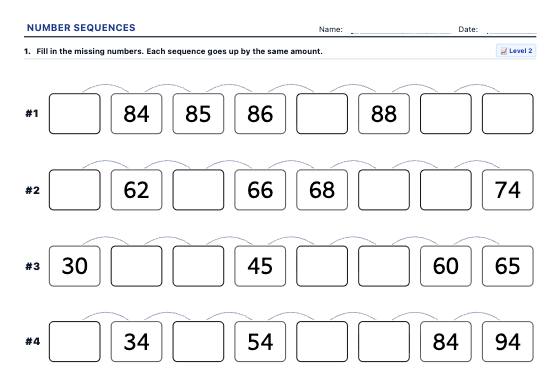
A4 number sequence worksheets: skip counting, counting on and back with missing numbers, continuing a sequence, finding the rule and number patterns, to 20, 100 or 1000.
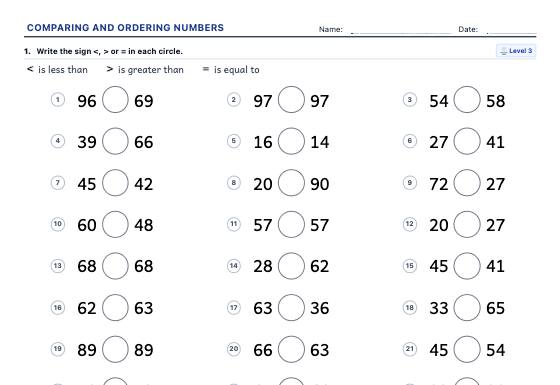
A4 worksheets to compare numbers with the signs <, > and =, compare calculations, order from smallest to greatest, find the greatest and smallest and the numbers in between, 10 to 999,999.
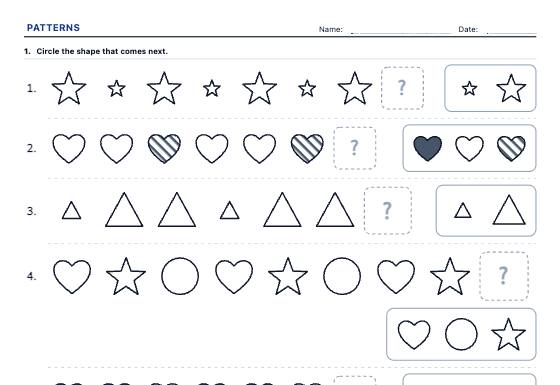
Shape pattern worksheets: what comes next, continue the pattern, what is missing and spot the mistake, with AB, AAB, ABC, AABB… patterns of shape, size, fill, direction or colour, and growing patterns.
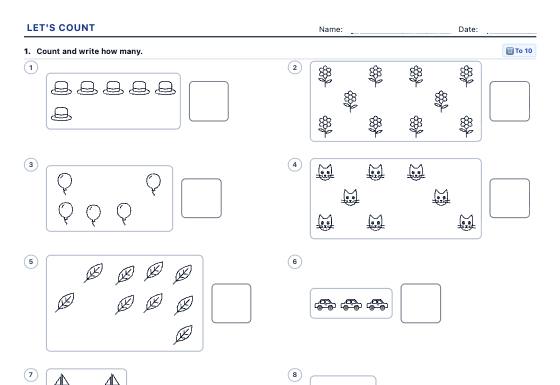
Count and write, circle the number, match each group to its number, draw and colour as many as the number shows and ten frames, with pictures to colour and an answer key.
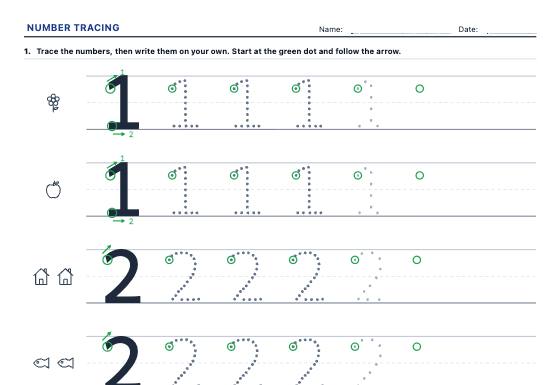
A4 sheets to learn to write the numbers 0 to 20: a model with start dots and arrows, dotted copies that fade, a picture to count and, at the small size, the number word.
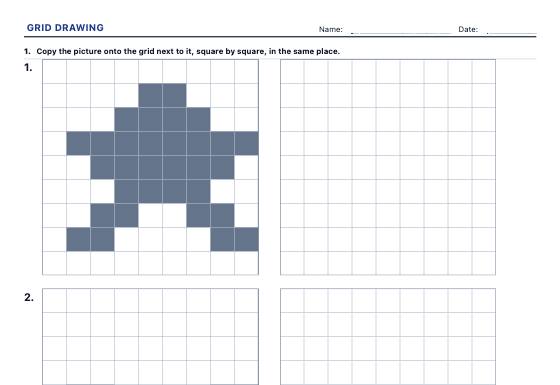
Grid drawing worksheets: copy a picture square by square, follow an arrow code along the grid lines, write the code of a path and colour mystery pictures from coordinates, with an answer key.
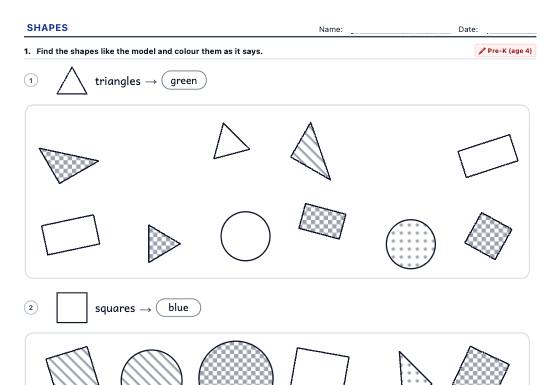
Shapes worksheets: colour the ones like the model, count them in a table, match them to their names, trace them and find them in a picture, from circles, squares and triangles to pentagons and first 3D shapes.
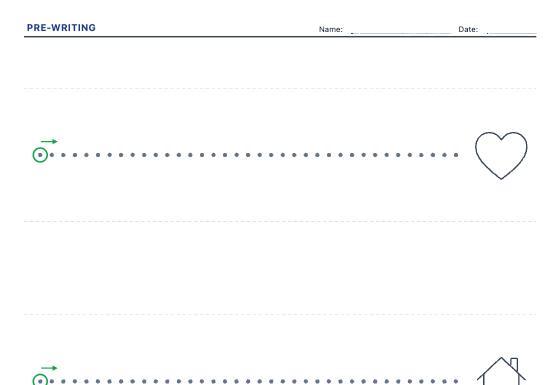
Pre-writing worksheets with dotted strokes to trace: straight lines, zigzags, waves, loops and spirals, with a start dot and graded sizes.
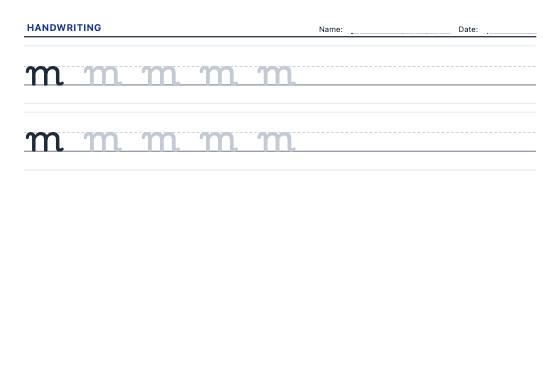
Create A4 handwriting worksheets with letters, words, sentences or your own text to trace and copy, in cursive or print, on Montessori, double, grid or single lines.
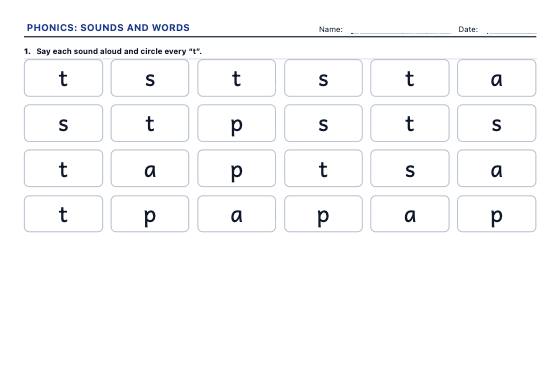
Phonics worksheets with sound buttons: read the sounds, blend them into words, fill in the missing sound and count the sounds, using only the graphemes already taught.
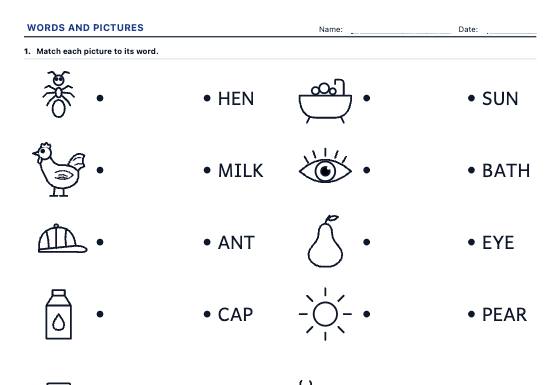
Match each picture to its word, circle it and write it, and match capital and lowercase letters and print to cursive, with over 130 pictures and English words.
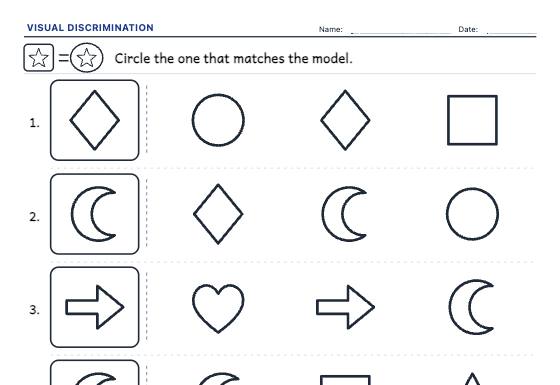
Visual discrimination worksheets for ages 3 to 5: find the one that matches the model, spot the odd one out and match the pairs, with differences in shape, pattern, orientation or small details.
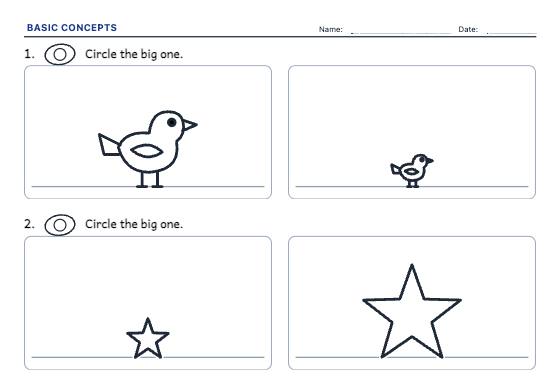
Opposites worksheets for ages 3 to 5: big and small, long and short, tall and short, on and under, inside and outside, in front and behind, near and far, many and few, full and empty. To circle, colour, cross out or draw.
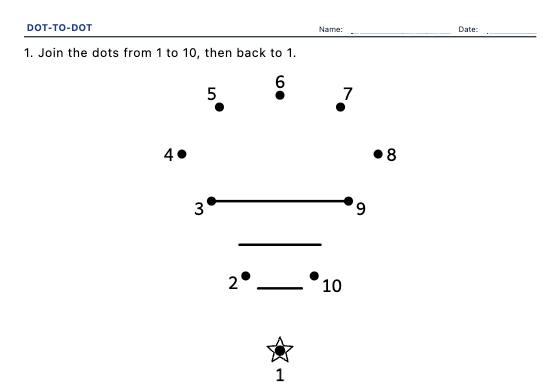
A4 worksheets to join the dots and reveal the picture: from 1-10 up to 1-100, counting in 2s, 5s and 10s or the alphabet, with over 30 pictures and the finished picture in the answer key.
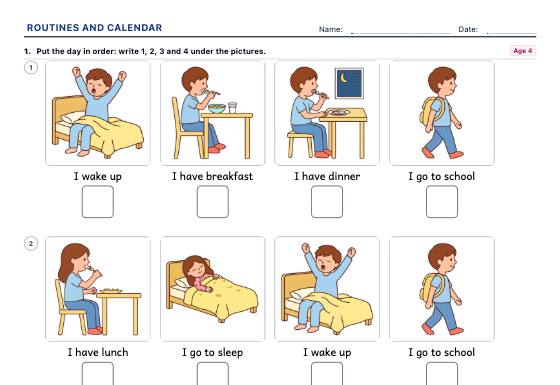
Visual schedules for morning, school, afternoon and bedtime routines, a "Today is" circle time board, the real calendar of any month, ordering the day and the days of the week.
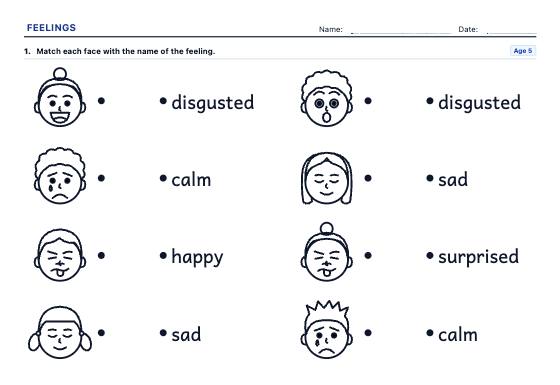
Feelings with drawn faces: match faces that feel the same or with their names, how would you feel in everyday situations, draw a feeling, an emotion wheel to colour and a daily check-in, with an answer key.
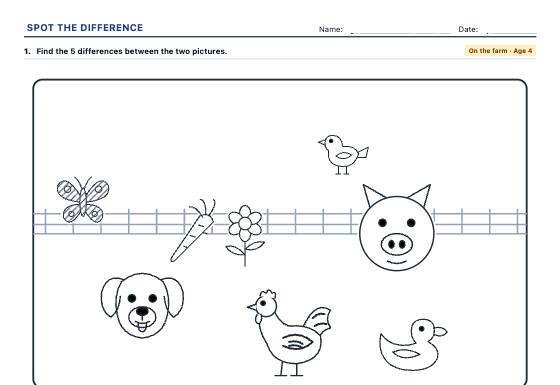
Picture pairs with 3 to 10 differences to find (something missing, swapped, smaller, striped, turned around or moved), in 9 scenes and 4 levels, with the differences circled in the answer key.
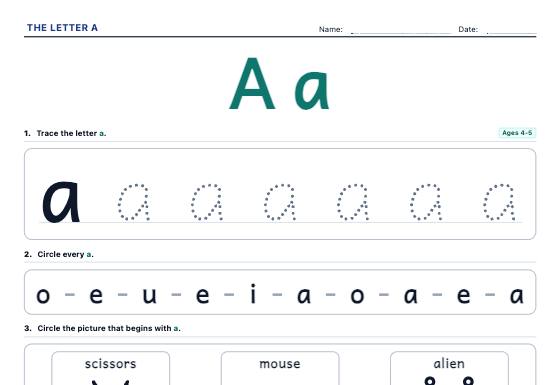
One sheet per letter or number: trace it, circle it among others, find the picture that begins with it and build the word by cutting out or writing, ages 4 to 7, with an answer key.
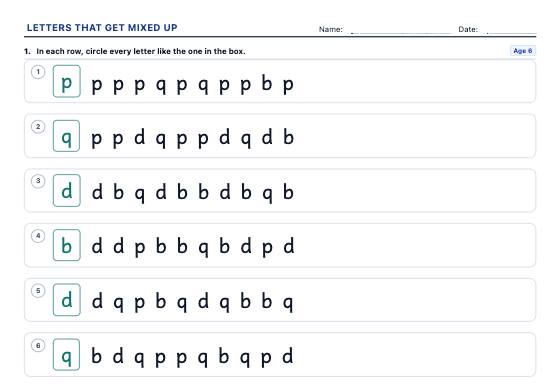
Letters that get mixed up: find b, d, p and q, complete picture words, spot backwards letters and numbers and match strings of similar letters, ages 5 to 8, with an answer key.
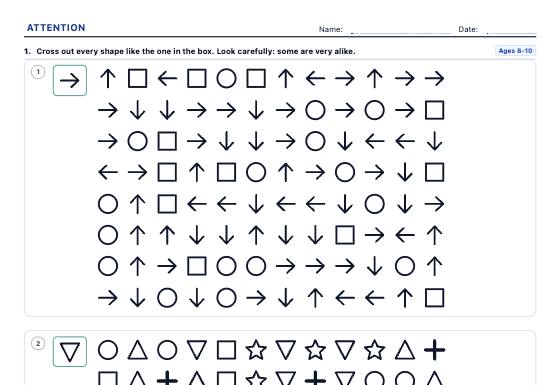
Selective and sustained attention worksheets: cross out shapes, numbers and letters, symbol coding, find the identical row and follow a rule path, ages 5 to 14, with answers.
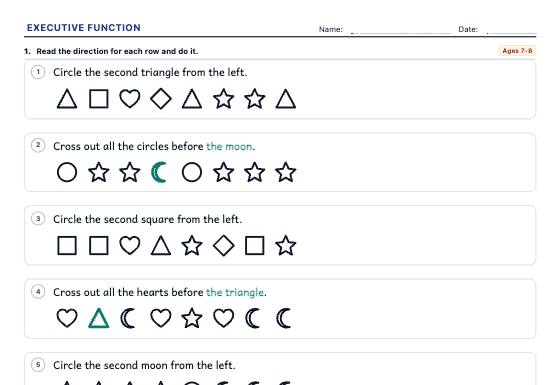
Executive function with shapes: remember where each shape was, follow directions, put the steps of a task in order and circle only what the rule says, ages 5 to 12, with answers.
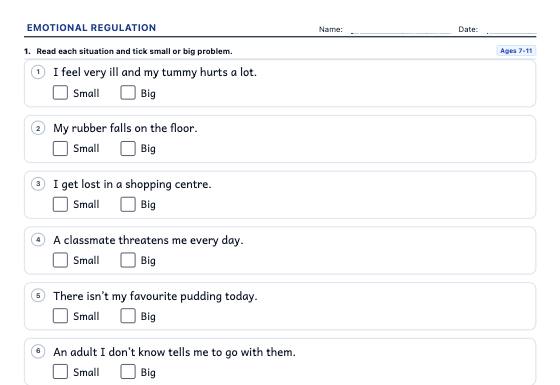
Emotional regulation: big or small problem, a feelings thermometer, where I feel it, a calm-down menu and my plan for anger, fear, sadness or worry, ages 5 to 14.
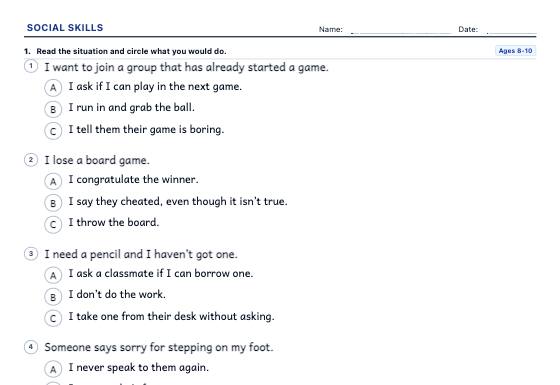
Social skills: what would you do with three options, what each one thinks and feels, conversation steps, solving a conflict and personalised social narratives, ages 5 to 14, with answers.
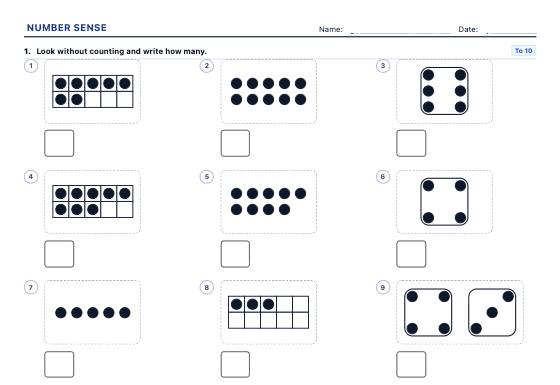
Number sense to 5, 10 and 20: how many at a glance (dice, ten frames, rows of five), amount, numeral and word, which has more, number bonds and number lines without numbers, with answers.
Kindergarten is the year many children start to read and write for real. They learn the sounds of letters and blend them into short words, form letters with a steadier hand, and count, compare and order numbers with growing confidence. They are also ready for simple puzzles that need planning, such as a maze with a few turns or copying a picture square by square. The worksheets for this age keep a clear layout and big writing spaces, while offering just enough challenge to bridge the step to Grade 1.
The phonics worksheets use sound buttons to read sounds, blend them into words and find the missing sound, only with graphemes already taught. For letter formation, the handwriting practice sheets let you trace and copy letters, names or short words in print or cursive on the lines your class uses.
Comparing two groups and saying which has more is the start of number sense. The comparing numbers worksheets begin with pictures and move to numerals, and number sequence strips ask for the missing numbers in counting forwards and backwards. The hundred chart shows the pattern of tens.
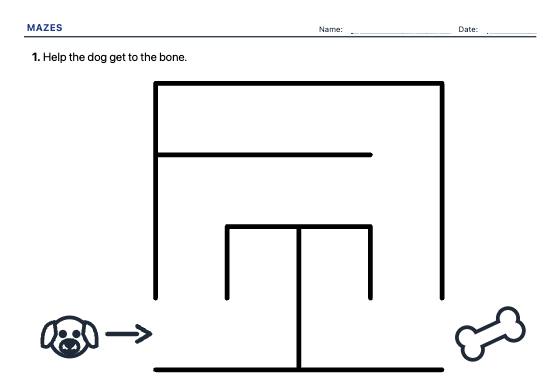
Copying a picture on a grid trains attention, counting and position at the same time: the grid drawing worksheets start with small pictures and arrows to follow. Mazes with more turns and dot-to-dot pictures to higher numbers keep the hand busy while the mind plans ahead.
Use one sheet a day that mixes a phonics exercise with a number one, so reading and maths grow together. When a page goes smoothly, raise the level; when it is a struggle, go back one step. The ready-made workbook on this page gives you a week of varied practice to print in one go and edit as you like.