Four exercise types
Write the plural, write the singular, masculine and feminine nouns, and phrases with this, that, these and those to change into the plural or the singular.
Knowing how to make plurals, and which nouns change for male and female, helps children spell and write their first sentences. This free plural nouns worksheet generator builds every plural from the spelling rules of English: choose the exercise and the level and get a new A4 worksheet with its answer key.
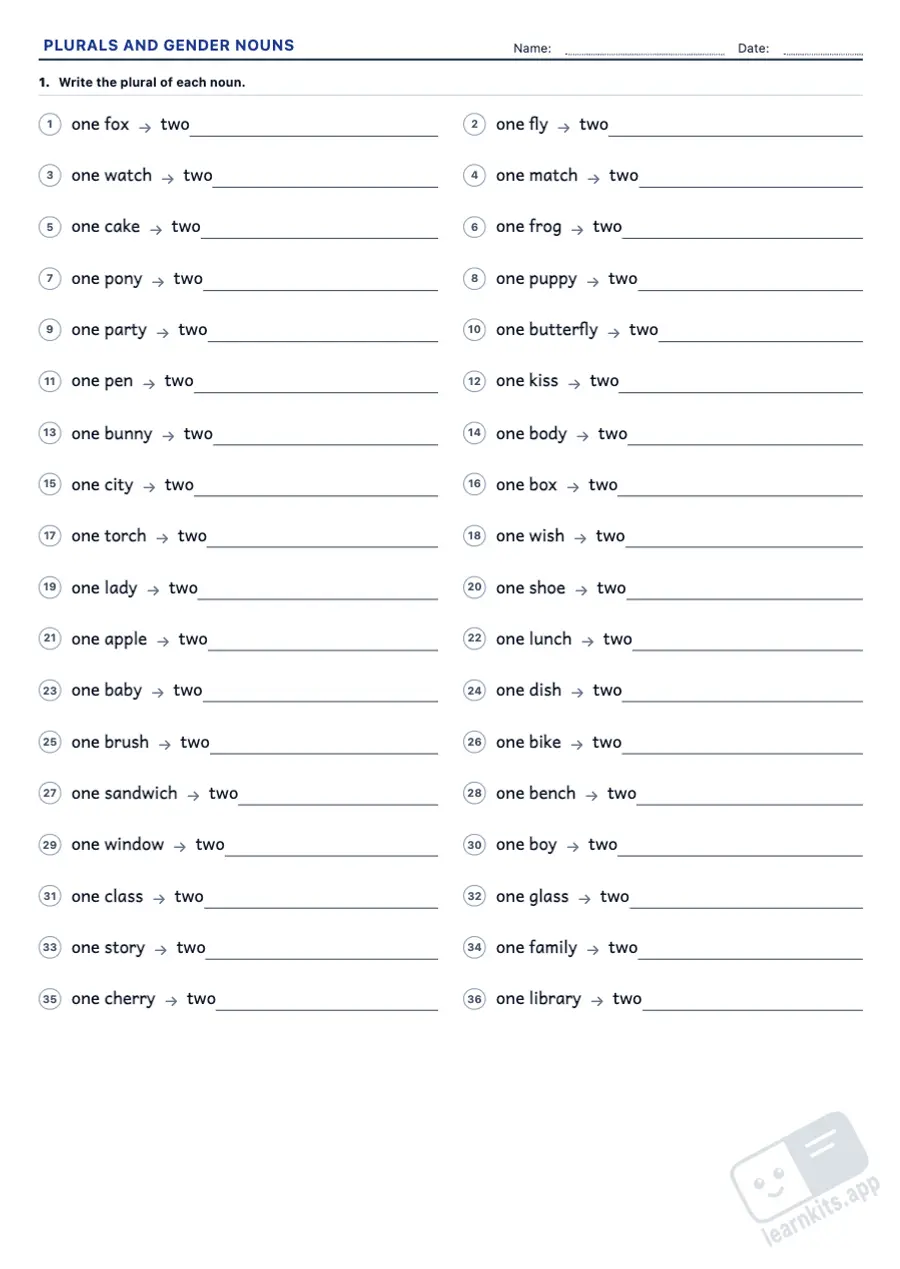 Student worksheet
 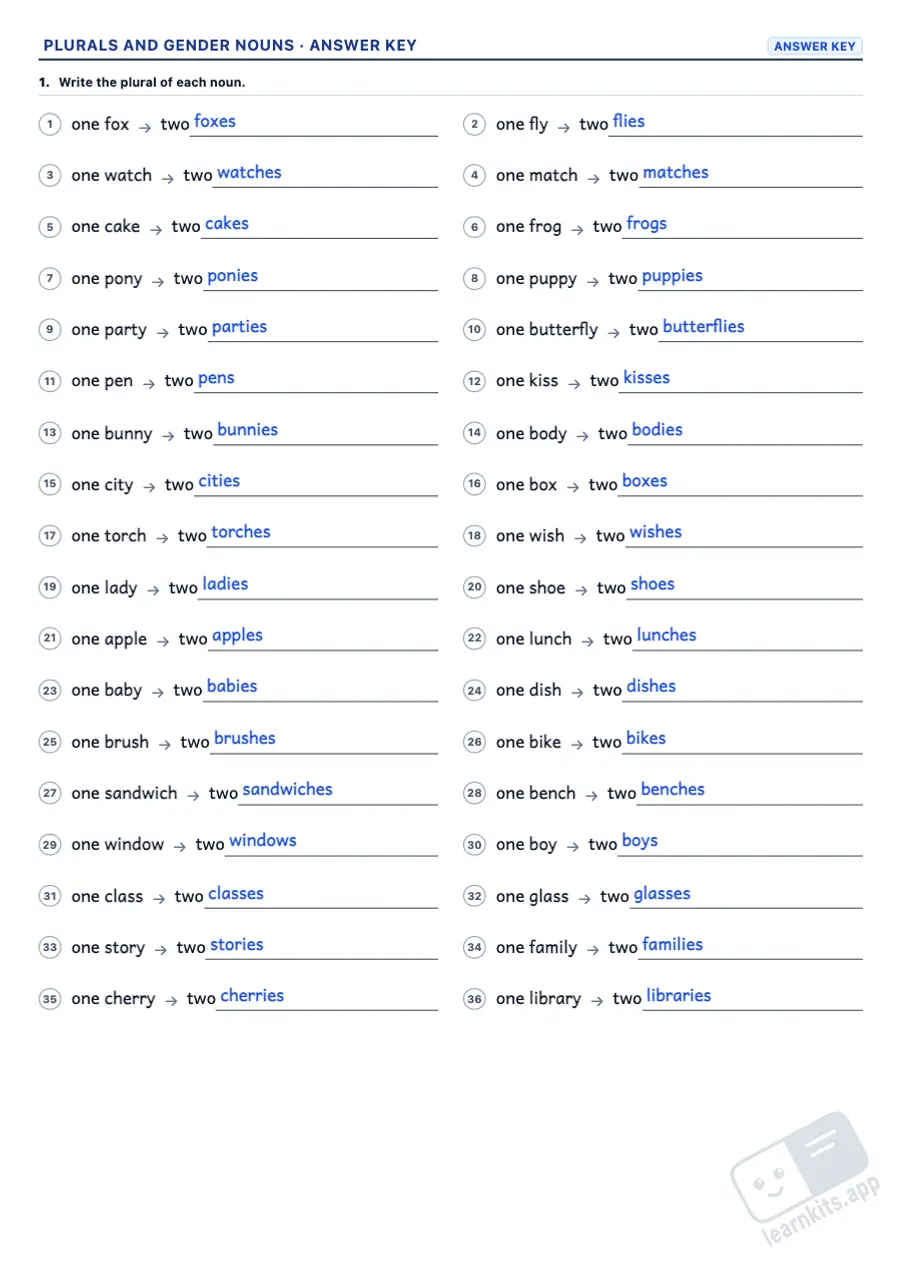 Answer key
 Write the plural, write the singular, masculine and feminine nouns, and phrases with this, that, these and those to change into the plural or the singular.
From adding -s in Grade 1 (cat, cats) to -es and -ies in Grade 2 (box, boxes; baby, babies) and -ves, -oes and irregular plurals in Grade 3 (leaf, leaves; mouse, mice).
Plurals come from the rules: -es after s, ss, sh, ch, x and z, consonant + y to -ies, vowel + y adds -s (boy, boys). Irregular plurals and the -ves and -oes words are checked by hand.
Pairs of masculine and feminine nouns by level: family words, -ess words (prince, princess; lion, lioness) and animals (bull, cow; ram, ewe).
Phrases like “this red box” change into “these red boxes”: the demonstrative and the noun change, the adjective stays the same.
Every answer written in blue on the same worksheet, on separate pages for quick marking.
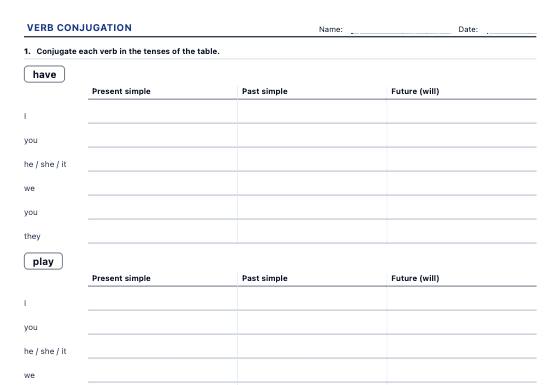
Conjugation tables to complete, name the tense, fill-in sentences and regular or irregular verbs, from the present simple to the present perfect, with the spelling rules.
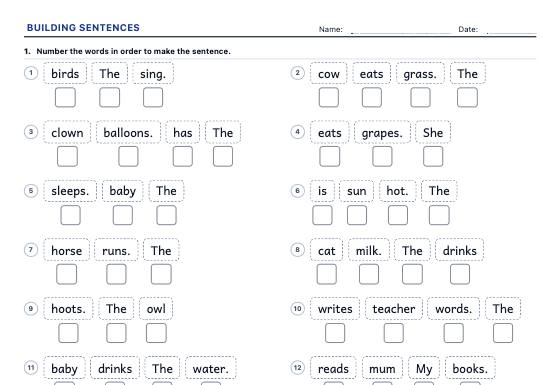
Scrambled sentences to number and unscramble the words, write the sentence with a capital letter and a full stop, pick the right order and count the words.
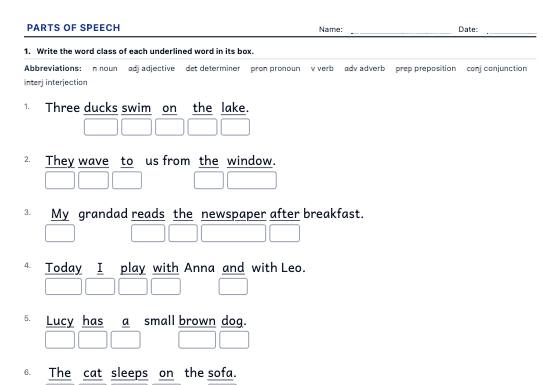
Label the word class of underlined words, circle the nouns, verbs or pronouns and sort every word into a table, with original sentences tagged word by word.