Subject and predicate
Split each sentence into its subject and its predicate and find the head noun and the verb, also in questions, commands and after a fronted adverbial.
Analysing a sentence shows how it works: who or what it is about, what the verb says and what goes with it. This free sentence analysis worksheet generator makes printable worksheets with sentences written for each level and analysed with British school grammar terms (subject, verb, object, complement, adverbial); the answer key draws each analysis as boxes or as a tree. For verb forms, try the verb tenses worksheets; for word order in the early grades, the sentence building worksheets.
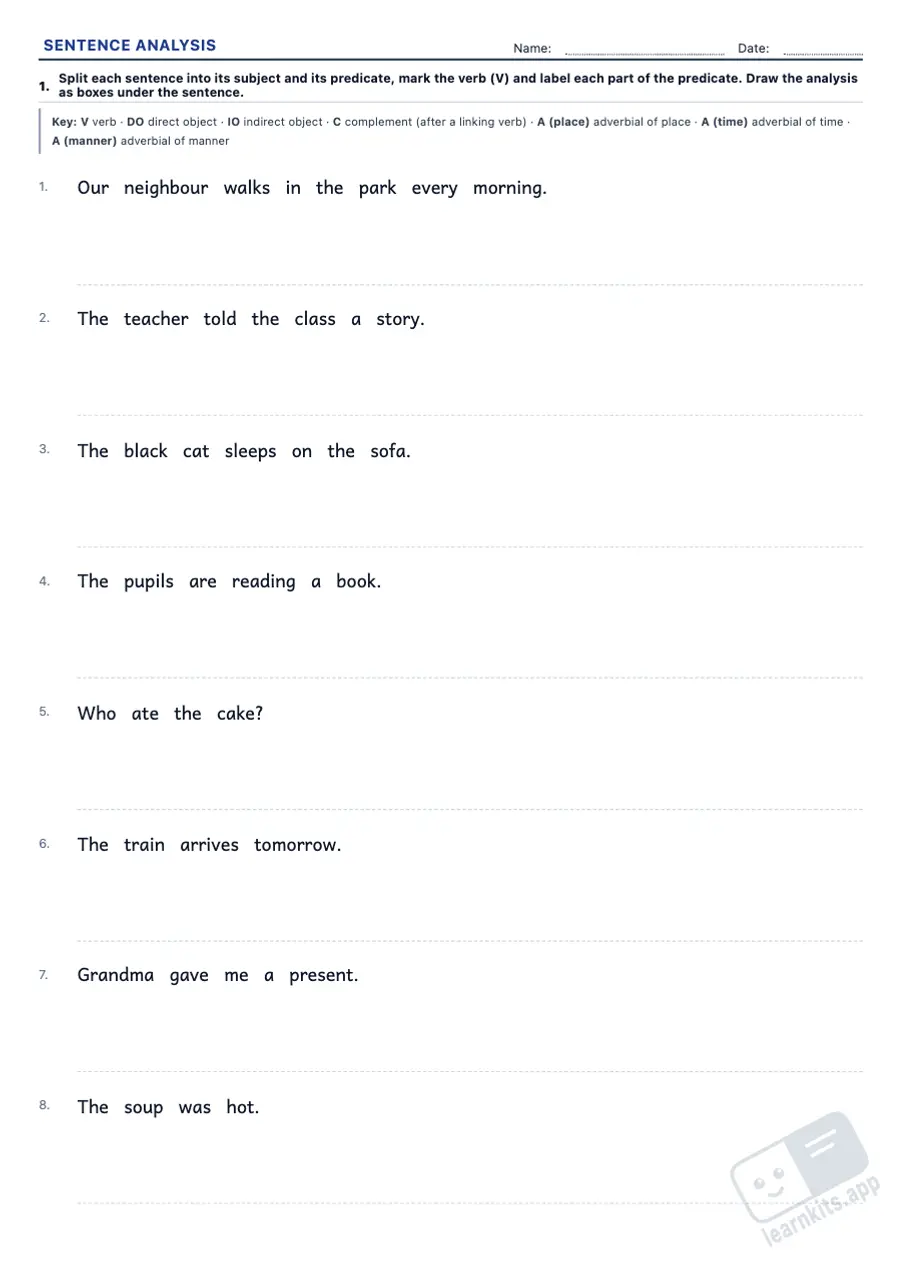 Student worksheet
 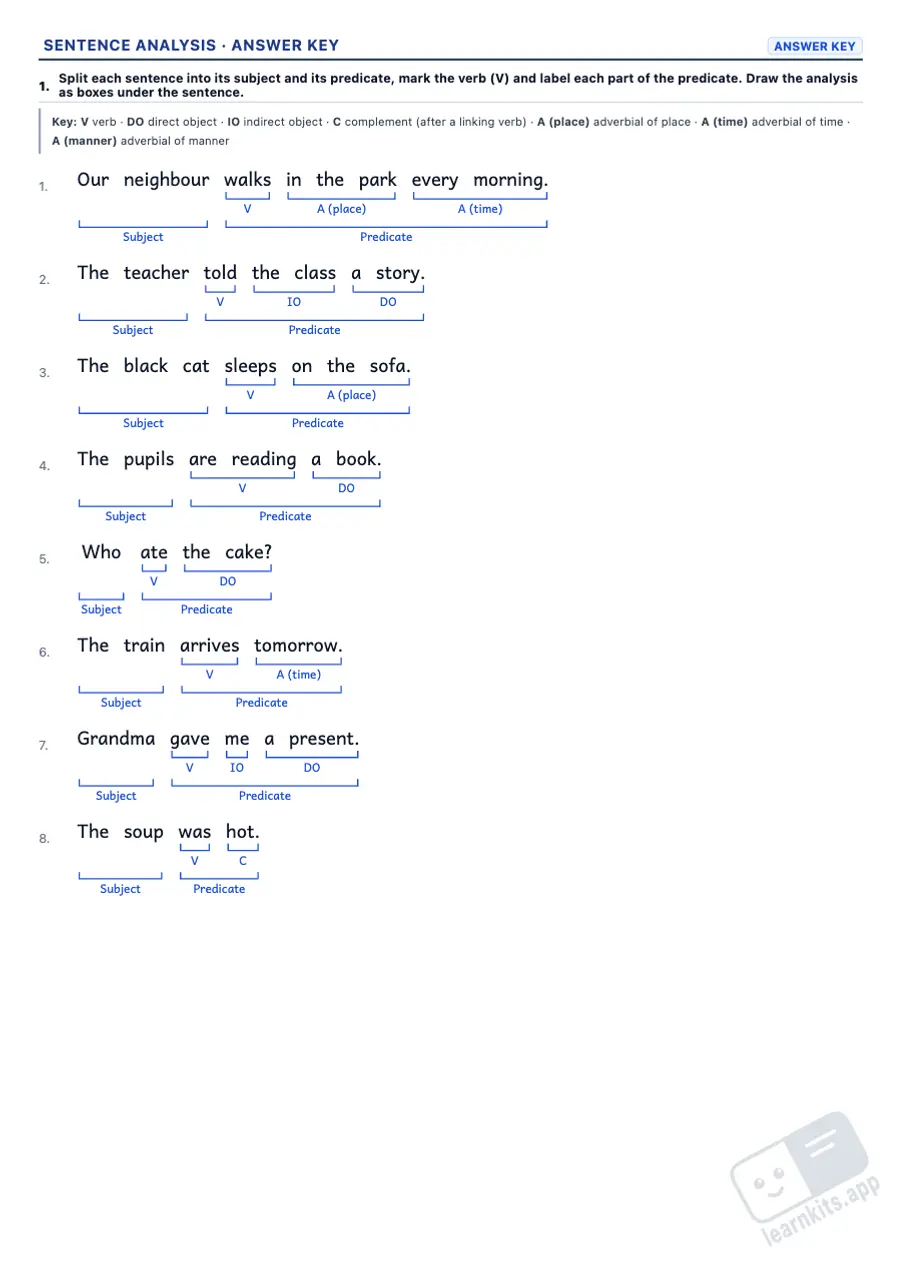 Answer key
 Split each sentence into its subject and its predicate and find the head noun and the verb, also in questions, commands and after a fronted adverbial.
Direct and indirect objects, complements after linking verbs and adverbials of time, place and manner; object complements at level 3.
Noun, prepositional, adjective and adverb phrases with their job in the sentence and the words inside them: determiner, head, modifier, preposition.
Choose how the analysis is drawn: boxes under the sentence or a sentence tree above it.
Statements, questions, commands and exclamations; linking, transitive and intransitive verbs, and passives.
Every sentence is chosen so it has one analysis: no phrasal or prepositional verbs, no indirect objects with to, and exclamations that start with What or How.
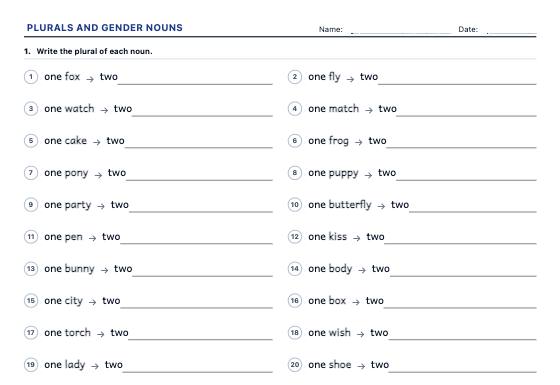
Write plurals and singulars (-s, -es, -ies, -ves and irregular), masculine and feminine nouns, and phrases with this, that, these and those, from the spelling rules.
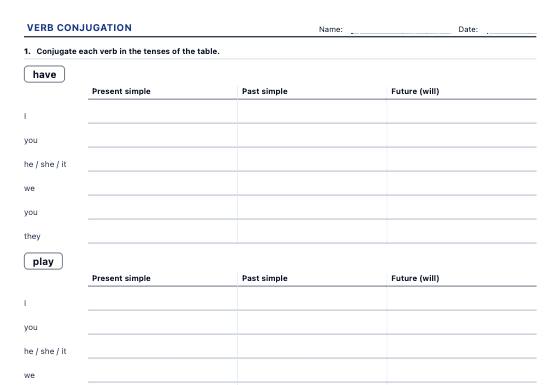
Conjugation tables to complete, name the tense, fill-in sentences and regular or irregular verbs, from the present simple to the present perfect, with the spelling rules.
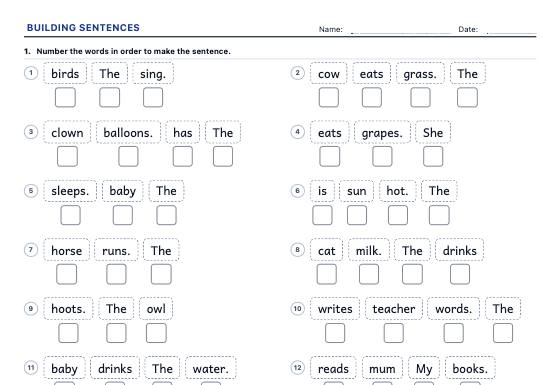
Scrambled sentences to number and unscramble the words, write the sentence with a capital letter and a full stop, pick the right order and count the words.