Smart shopping
Price per item, per kg or per litre, "50% extra free" packs, 3 for 2, second one half price and stacked discounts.
Spotting the best buy, reading an invoice with VAT, drawing up a budget or understanding what a loan really costs are everyday money skills, and financial literacy is one of the domains PISA assesses at 15. This free financial literacy worksheet generator creates A4 worksheets around realistic documents (shelf labels, receipts, invoices, payslips, bank statements) with questions that build in difficulty, always with a step-by-step answer key.
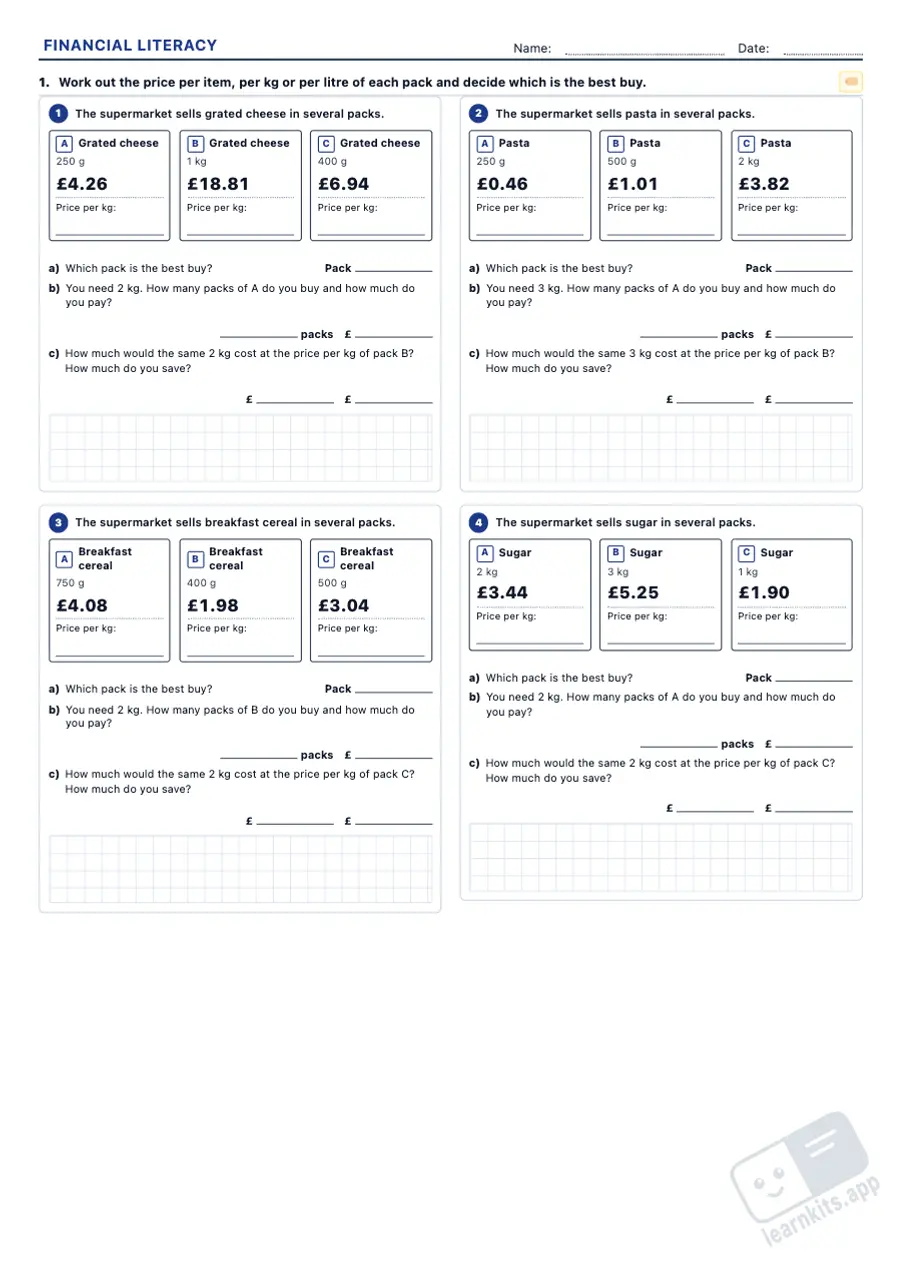 Student worksheet
 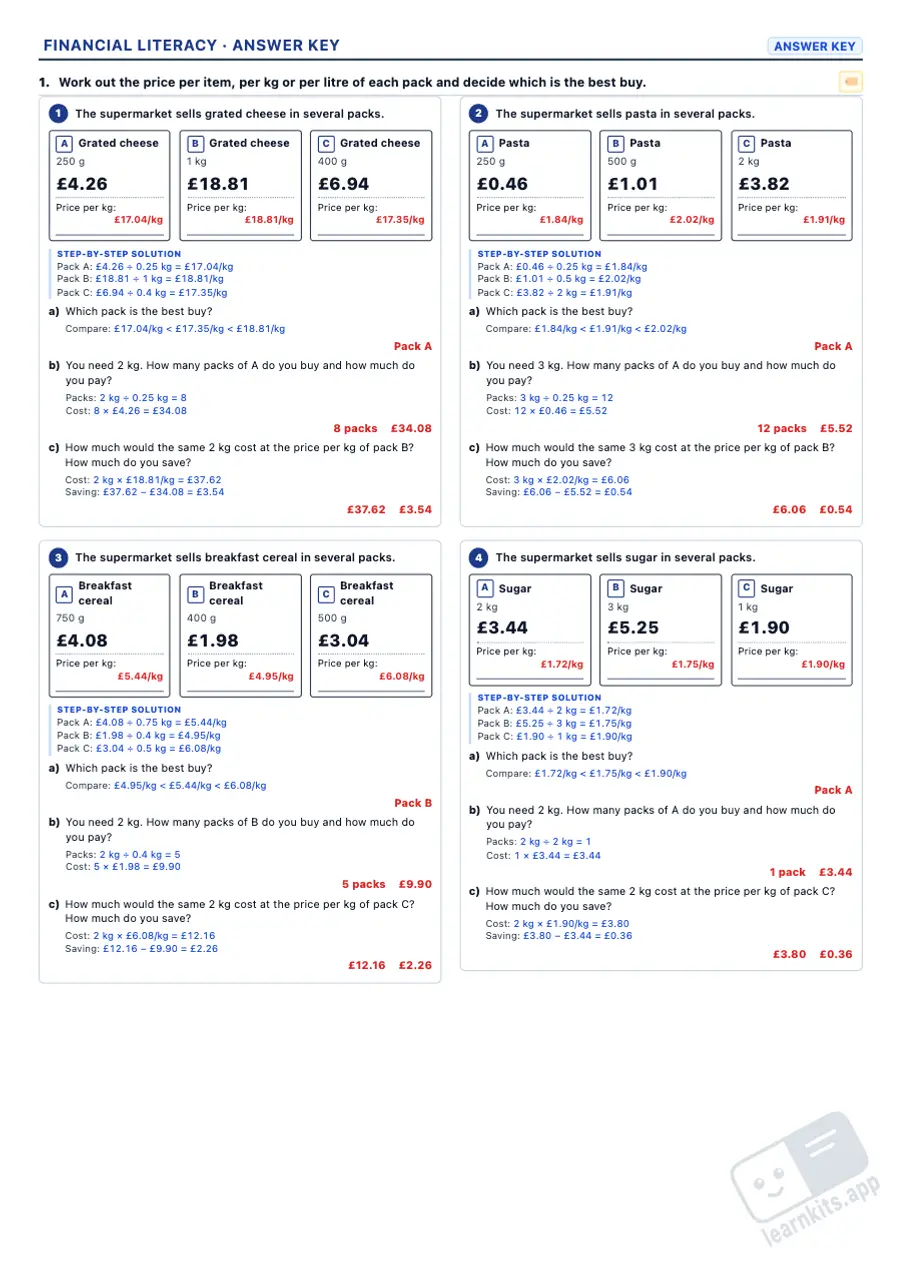 Answer key
 Price per item, per kg or per litre, "50% extra free" packs, 3 for 2, second one half price and stacked discounts.
Subtotal, VAT at one or two rates and the way back: taking VAT out of a price that already includes it. The rates are labelled as examples.
From a month of pocket money to a family budget with fixed and variable costs, the share spent on housing and a saving goal.
Gross pay, deductions and net pay; bank statements with balances to fill in, overdrafts and missing transactions to work out.
Simple interest, compound interest year by year and with the formula, buying in instalments, arrangement fees and a loan repayment table.
The completed document and every calculation written out, with exact pounds and pence and the rounding rules stated.
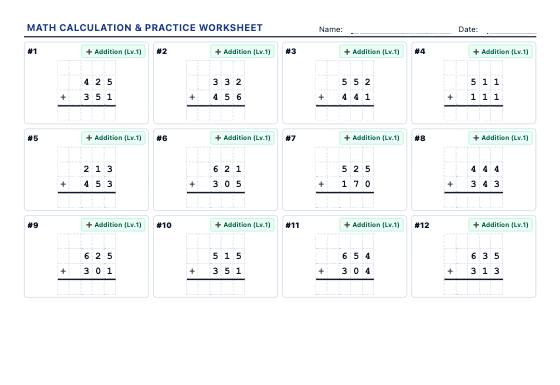
Generate high-density A4 printable worksheets (15-20 problems per sheet) with regrouping addition, borrowing subtraction, multi-digit multiplication, long division, and square roots.
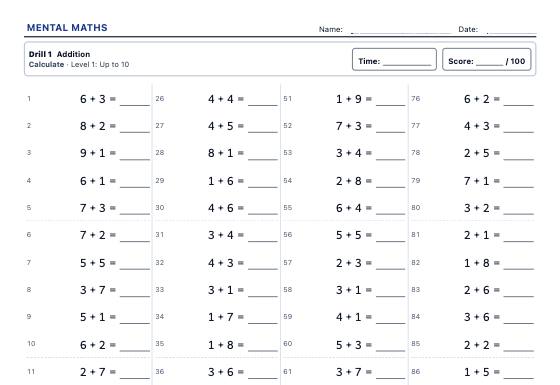
Drills of 50 to 100 quick facts in line with time and score boxes: addition, subtraction, number bonds to 10 and 100, ± 10, doubles and halves, times tables and × 10, 100 and 1000.
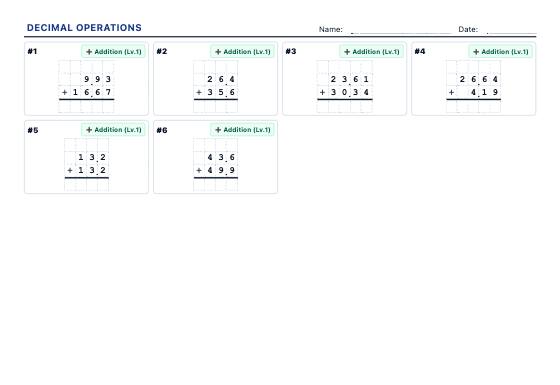
Column addition, subtraction, multiplication and long division with decimals, the decimal point lined up on the grid: placeholder zeros, decimal by decimal, decimal divisors and quotients to 2 decimal places.