Story dice
Dice with our own drawings: a character, a place and an object, plus a problem at level 2 and two characters at level 3. Every copy rolls its own dice.
Imaginative writing grows from a good starting point: dice that throw together a dragon, an island and a key, the first line of a surprising story, or a challenge that asks for lots of different ideas. This free creative writing prompts worksheet generator makes A4 worksheets for Grades 2 to 6 with drawn story dice, story starters and the PISA creative thinking tasks, with a different prompt on every copy and a teacher guide with a rubric.
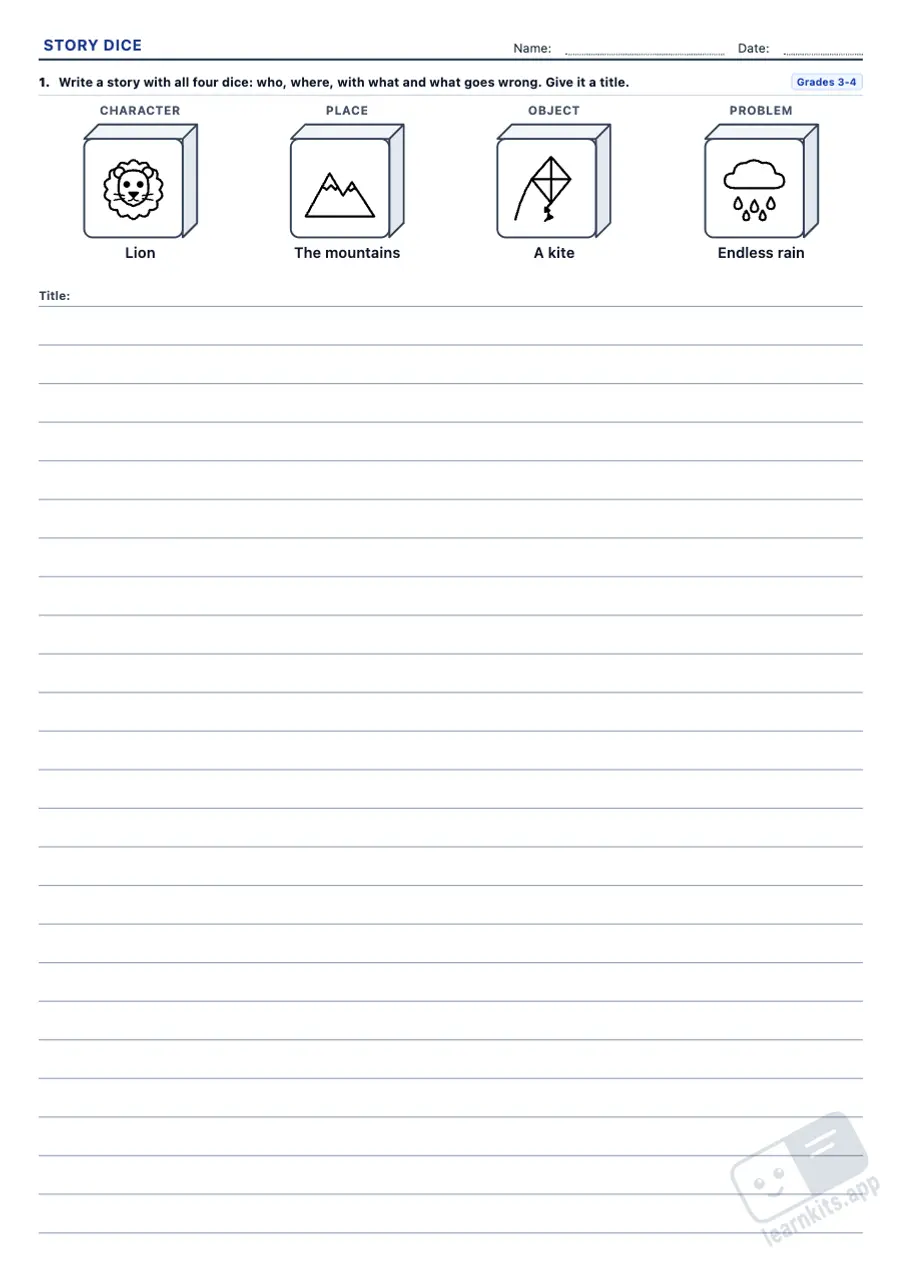 Student worksheet
 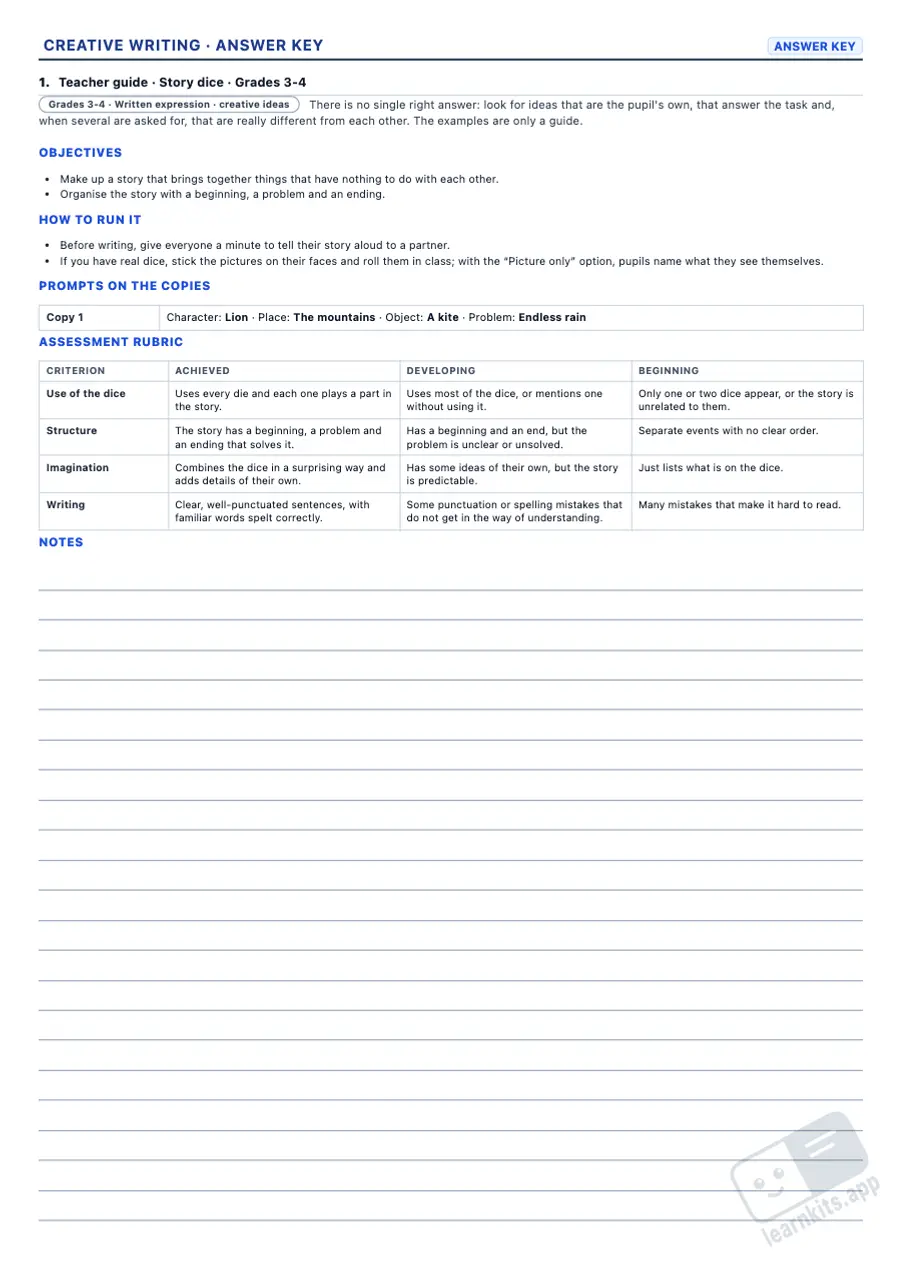 Teacher guide
 Dice with our own drawings: a character, a place and an object, plus a problem at level 2 and two characters at level 3. Every copy rolls its own dice.
The first sentence of a surprising story (“One morning, my dog started to talk.”) and lines to carry it on, with a title from level 2.
Uses for a sock, titles, names or explanations: three or four ideas that are not alike and, at the higher levels, picking the most original.
Invent an animal, a machine or a sport nobody else would think of, and improve someone else's idea without losing it.
A different starting shape on every copy to turn into a drawing with a title, like the PISA visual expression tasks.
Objectives, how to run it, every copy's prompt with example answers and a three-level rubric, with full, partial or no credit for the PISA tasks.
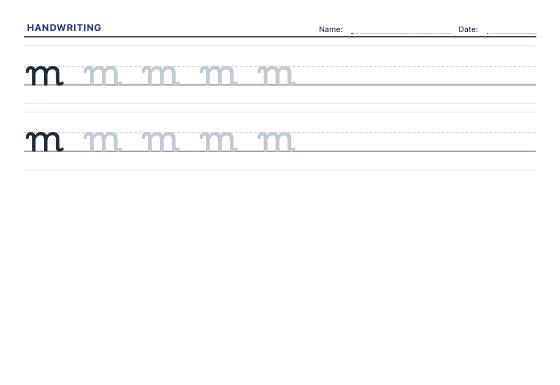
Create A4 handwriting worksheets with letters, words, sentences or your own text to trace and copy, in cursive or print, on Montessori, double, grid or single lines.
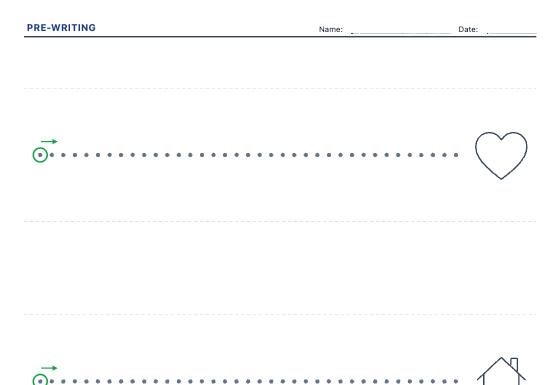
Pre-writing worksheets with dotted strokes to trace: straight lines, zigzags, waves, loops and spirals, with a start dot and graded sizes.
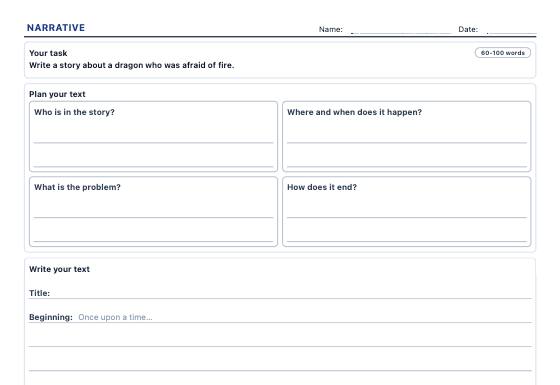
A4 writing frames for stories, descriptions, letters, news reports, opinion texts, instructions and emails: task, planning box, parts of the text, lines by age, a self-check list and a teacher guide with a rubric.