Find the letter
Rows of similar letters where children circle every b, or the letter asked for. At ages 7 and 8 they look for two at once, and n and u join in. Every row has at least two letters to find and three that are not.
Mixing up b and d, p and q or writing a number backwards is normal while children learn to read and write, and usually fades by Year 2 or 3. When it lasts longer, practising telling these letters apart helps. This generator makes new worksheets every time, in print letters, with an answer key.
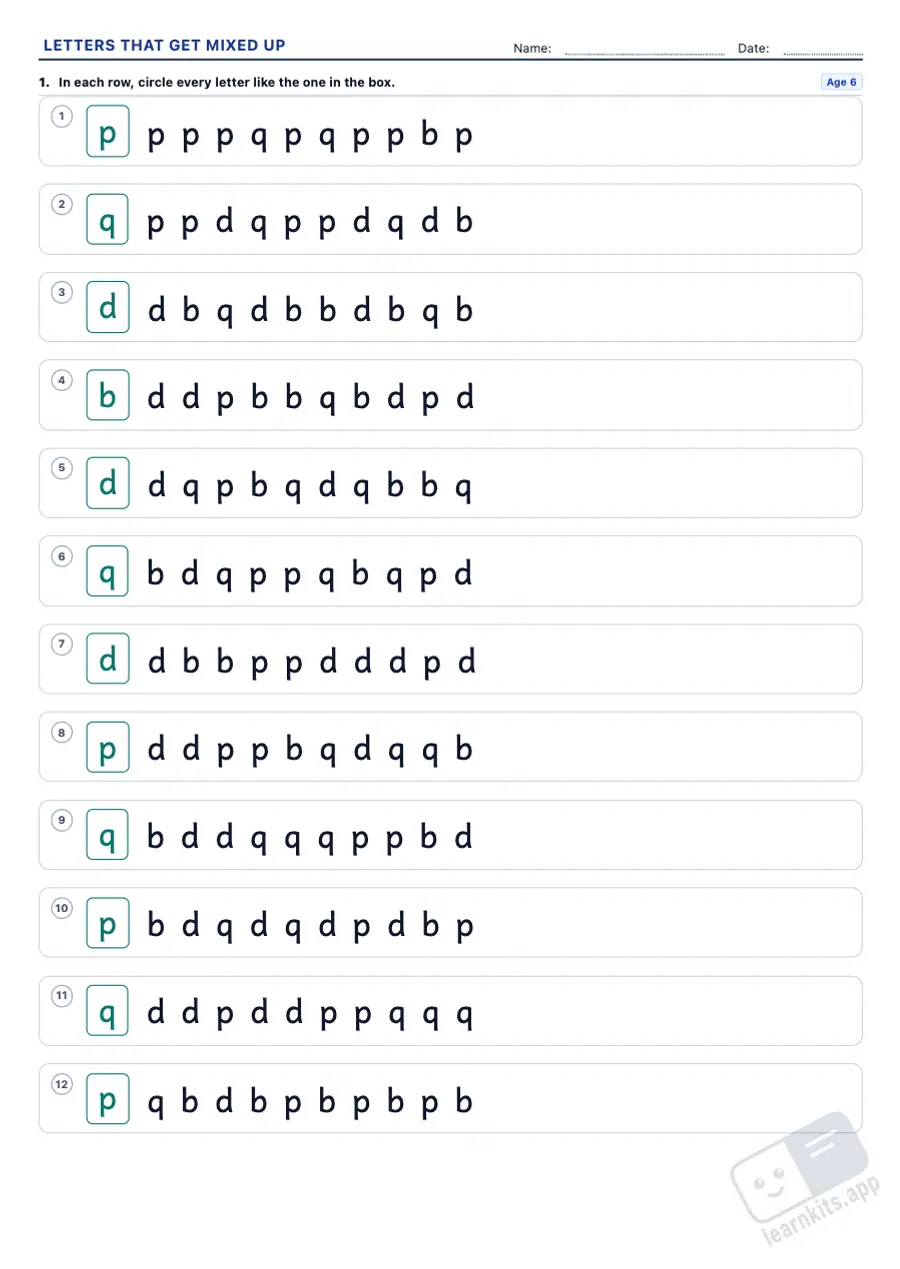 Student worksheet
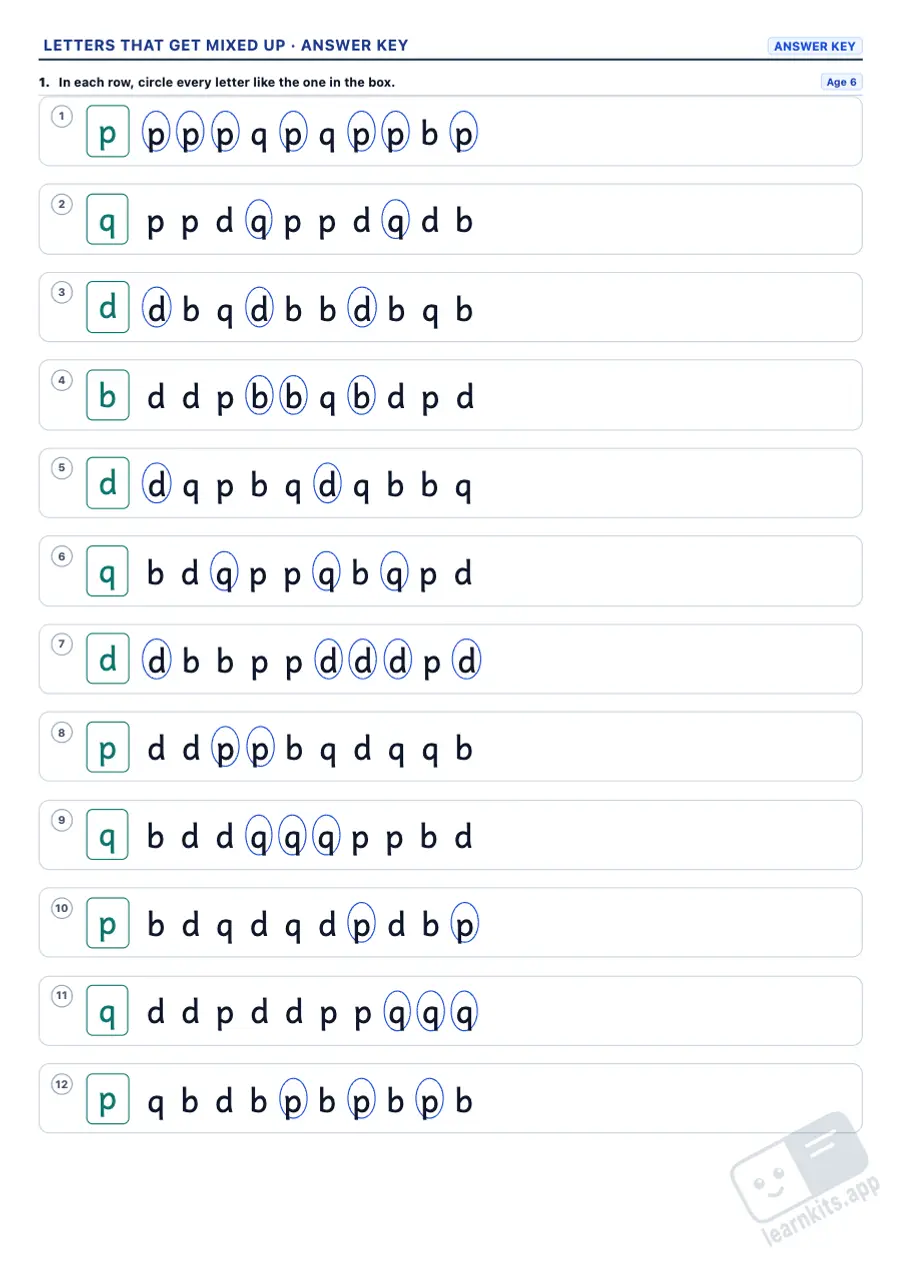 Answer key
Rows of similar letters where children circle every b, or the letter asked for. At ages 7 and 8 they look for two at once, and n and u join in. Every row has at least two letters to find and three that are not.
A picture and its name with a missing letter. The picture says which word it is, so there is one answer even if another letter made a word. At ages 7 and 8 every b, d, p and q of the word is missing.
Letters and numbers written as in a mirror. Only letters that do not turn into another letter are flipped (never b, which would be a d), and numbers such as 2, 3, 5 and 7. At ages 7 and 8, words with one backwards letter.
A model such as "bdp" and four options where only one is the same: the others swap one letter for another of its group. It trains visual discrimination and attention to letter order.
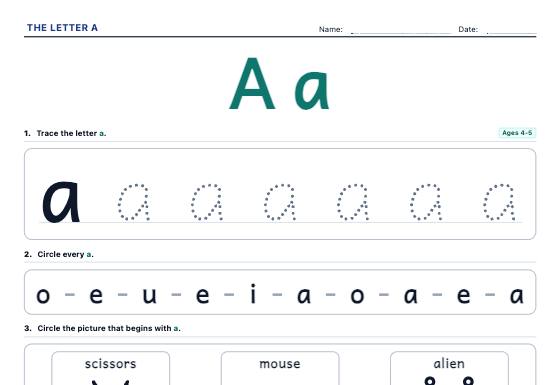
One sheet per letter or number: trace it, circle it among others, find the picture that begins with it and build the word by cutting out or writing, ages 4 to 7, with an answer key.
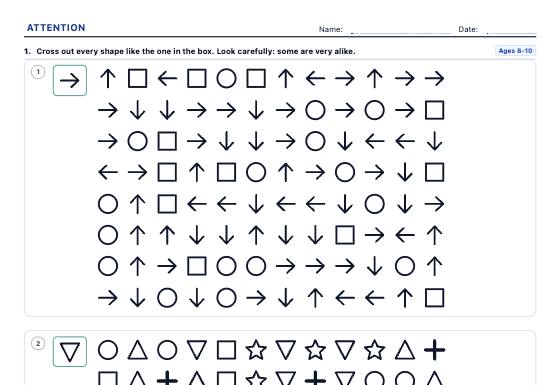
Selective and sustained attention worksheets: cross out shapes, numbers and letters, symbol coding, find the identical row and follow a rule path, ages 5 to 14, with answers.
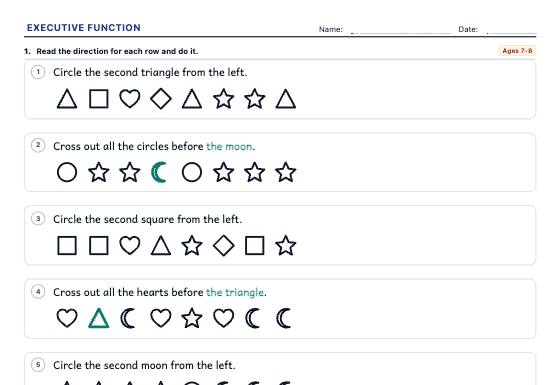
Executive function with shapes: remember where each shape was, follow directions, put the steps of a task in order and circle only what the rule says, ages 5 to 12, with answers.