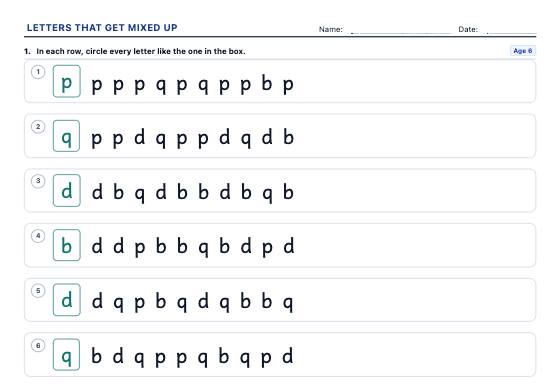
Letter Reversal Worksheet Generator (b, d, p, q)
Letters that get mixed up: find b, d, p and q, complete picture words, spot backwards letters and numbers and match strings of similar letters, ages 5 to 8, with an answer key.
Printable learning support and SEN worksheets: letter reversals, attention, number sense and social and emotional skills, made for intervention sessions, speech and language work and practice at home, free and with answers.
Letters that get mixed up: find b, d, p and q, complete picture words, spot backwards letters and numbers and match strings of similar letters, ages 5 to 8, with an answer key.
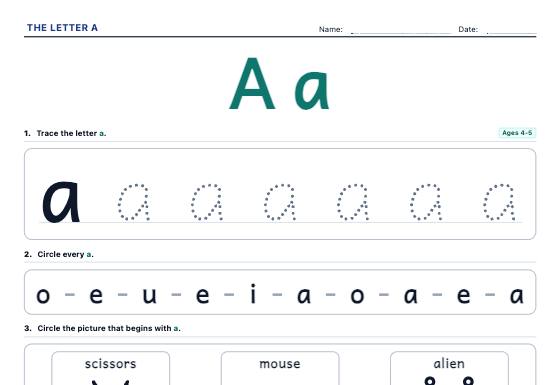
One sheet per letter or number: trace it, circle it among others, find the picture that begins with it and build the word by cutting out or writing, ages 4 to 7, with an answer key.
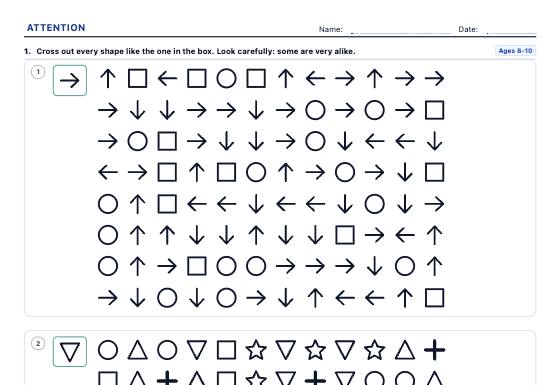
Selective and sustained attention worksheets: cross out shapes, numbers and letters, symbol coding, find the identical row and follow a rule path, ages 5 to 14, with answers.
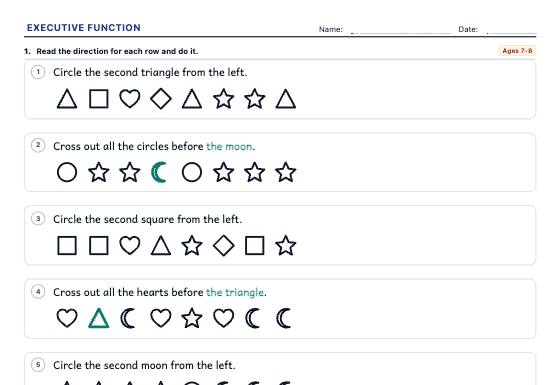
Executive function with shapes: remember where each shape was, follow directions, put the steps of a task in order and circle only what the rule says, ages 5 to 12, with answers.
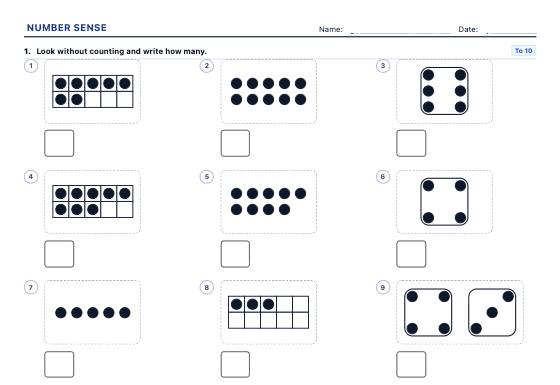
Number sense to 5, 10 and 20: how many at a glance (dice, ten frames, rows of five), amount, numeral and word, which has more, number bonds and number lines without numbers, with answers.
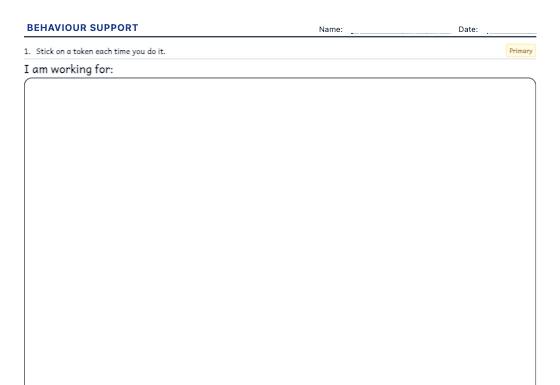
Positive behaviour support: token boards of 3, 5 or 10 tokens, reward charts, first-then boards, behaviour contracts, self-monitoring checklists and an ABC chart, with your own targets, ages 3 to 14.
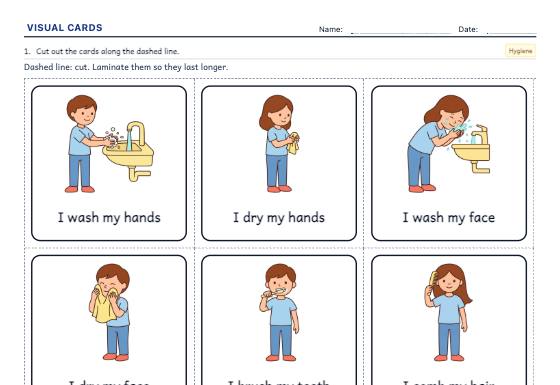
Printable visual cards by topic (hygiene, the toilet, getting dressed, eating, school and bedtime): cards to cut out, steps in order, first-then and choice boards, with a child doing each action and the sentence in the first person.
This area brings together generators made for learning support: the work SENCOs, teaching assistants, specialist teachers, speech and language therapists and educational psychologists do in their sessions, and that families carry on at home. They are practice worksheets, new every time and with several levels, that fit the child’s real level rather than their year group. They are not tests or a treatment: whoever knows the child decides what to practise, how much and how.
The b, d, p and q worksheets help children tell apart letters that get mixed up: find the letter in a row, complete a picture word, spot letters and numbers written backwards and match strings of similar letters. Every answer is checked so there is only one.
In learning support, what a child can already do matters more than their year group. Levels describe the content, not the age: a Year 4 child can work on Reception reversals without anything on the sheet saying so, and move up a level when they find it easy.
In the page settings, learning support spaces out instructions, adds a picture of the action, colours syllables in reading texts and puts each exercise on a new sheet. The vision setting prints larger in very legible type, and everything can be saved as a template for the next session.
Many worksheets from other areas also work for intervention: visual discrimination and mazes in Early Years, phonics and reading fluency in Language, and counting and the number line in Math. The learning support page groups them by need.
Social & Emotional Skills
Emotional Regulation
Emotional regulation: big or small problem, a feelings thermometer, where I feel it, a calm-down menu and my plan for anger, fear, sadness or worry, ages 5 to 14.
Self-Esteem and Strengths
Self-esteem: all about me, my strengths, cards for classmates to say what they value, things I am proud of, kind self-talk, a gratitude journal and a goal in small steps, ages 6 to 16.
Social Skills
Social skills: what would you do with three options, what each one thinks and feels, conversation steps, solving a conflict and personalised social narratives, ages 5 to 14, with answers.