What would you do?
Playground and classroom situations and, from Year 6, group chats and group work, with three responses: one that helps and two that hurt or ignore. The options change order every time and the answer key circles the right one.
Knowing what to do when a classmate falls over, how to join a game or how to sort out an argument comes with practice. This generator makes social skills worksheets for ages 5 to 14, for PSHE, support sessions or work with autistic children and children who find social situations hard.
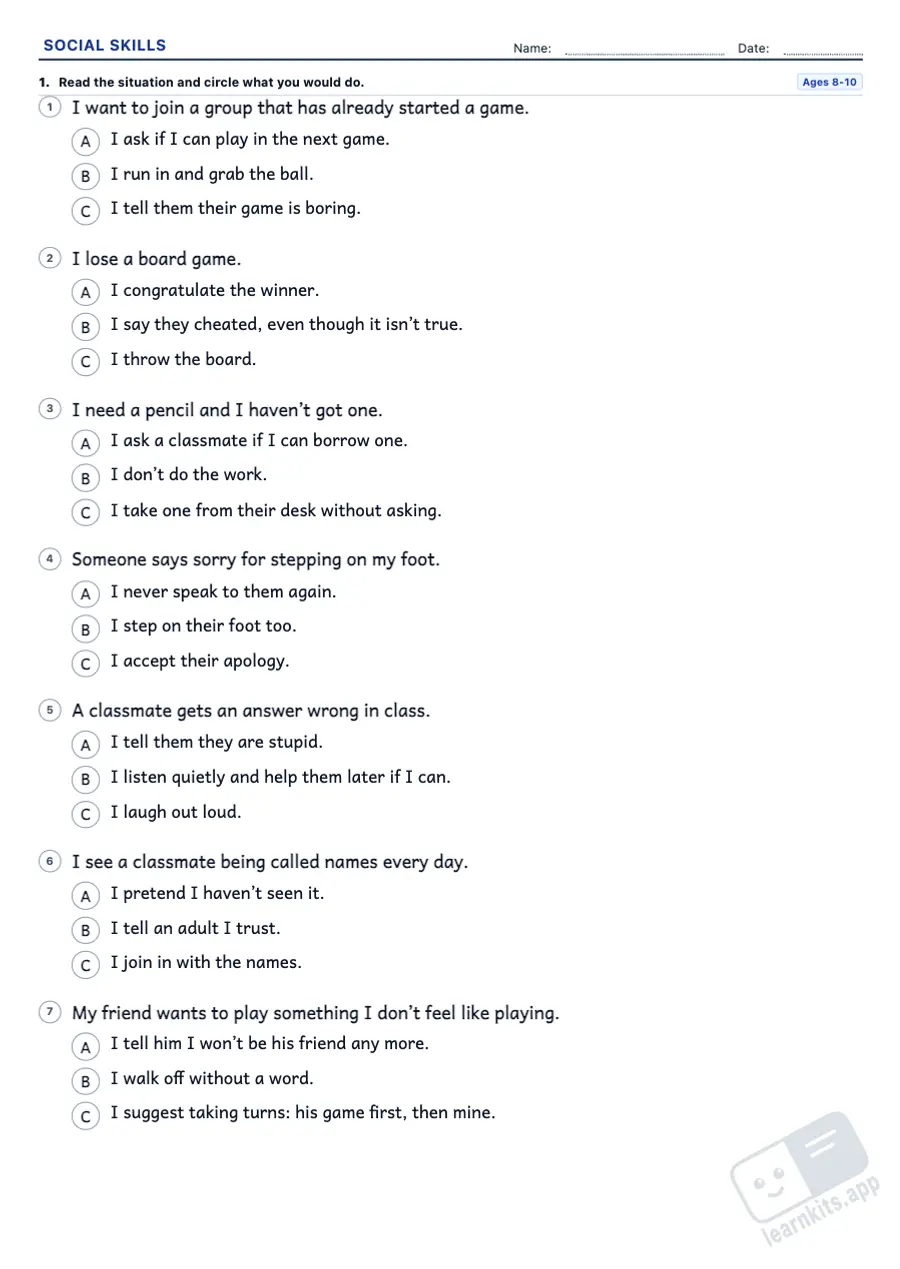 Student worksheet
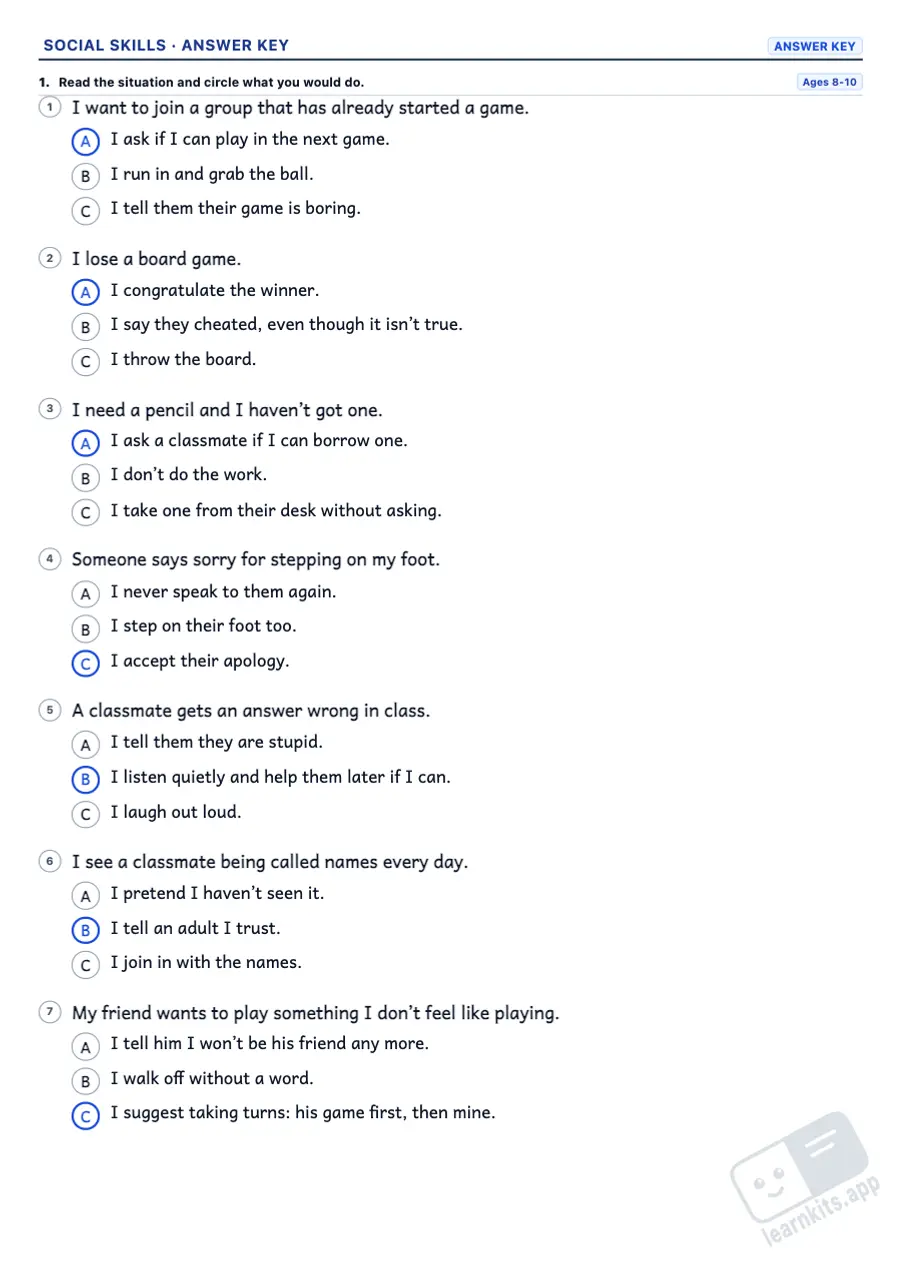 Answer key
Playground and classroom situations and, from Year 6, group chats and group work, with three responses: one that helps and two that hurt or ignore. The options change order every time and the answer key circles the right one.
Two children in a scene, with faces showing how they feel and a thought bubble to write what each one thinks and feels. Practises empathy and perspective taking.
The steps of saying hello, joining a game, asking for help or saying sorry to put in order, and a conflict between two children to solve step by step: stop, explain, say how we feel, think of solutions and choose one.
Write a first-person story, one sentence per line, to prepare for a particular situation: a visit to the doctor, moving class, the end of break. Each sentence is a page of the booklet; if it names something we have a drawing of, the page shows it.
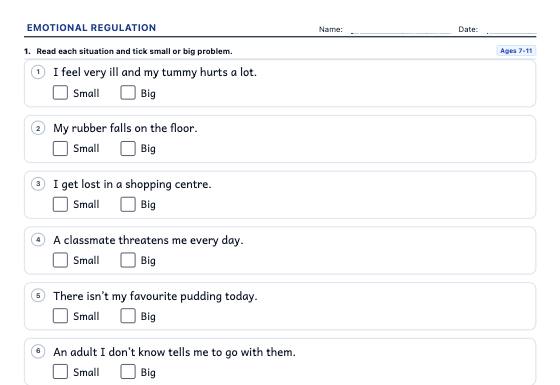
Emotional regulation: big or small problem, a feelings thermometer, where I feel it, a calm-down menu and my plan for anger, fear, sadness or worry, ages 5 to 14.
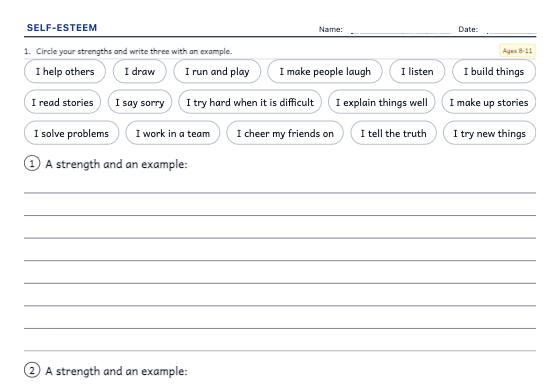
Self-esteem: all about me, my strengths, cards for classmates to say what they value, things I am proud of, kind self-talk, a gratitude journal and a goal in small steps, ages 6 to 16.
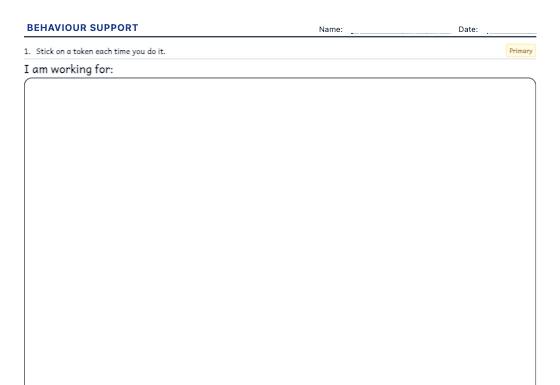
Positive behaviour support: token boards of 3, 5 or 10 tokens, reward charts, first-then boards, behaviour contracts, self-monitoring checklists and an ABC chart, with your own targets, ages 3 to 14.