Year → century
The "hundreds + 1" rule, with the boundary years that trip pupils up: 1500 is in the 15th century and 1501 in the 16th.
Placing events in time is a key skill in history and social studies. This free centuries and chronology worksheet generator creates unlimited exercises to turn years into centuries, read and write Roman numerals, work out elapsed years, put events in order and mark dates on a timeline, always with a worked answer key.
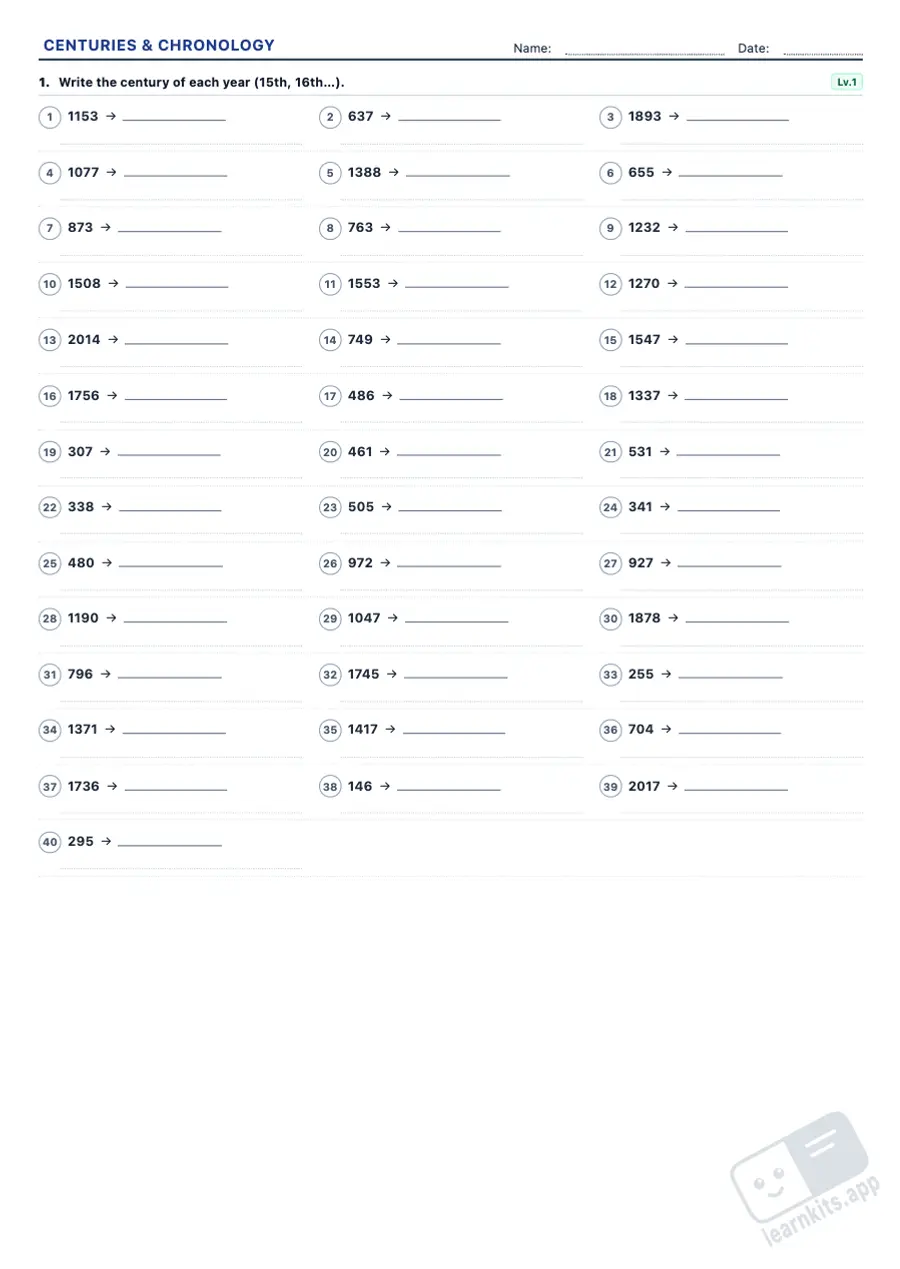 Student worksheet
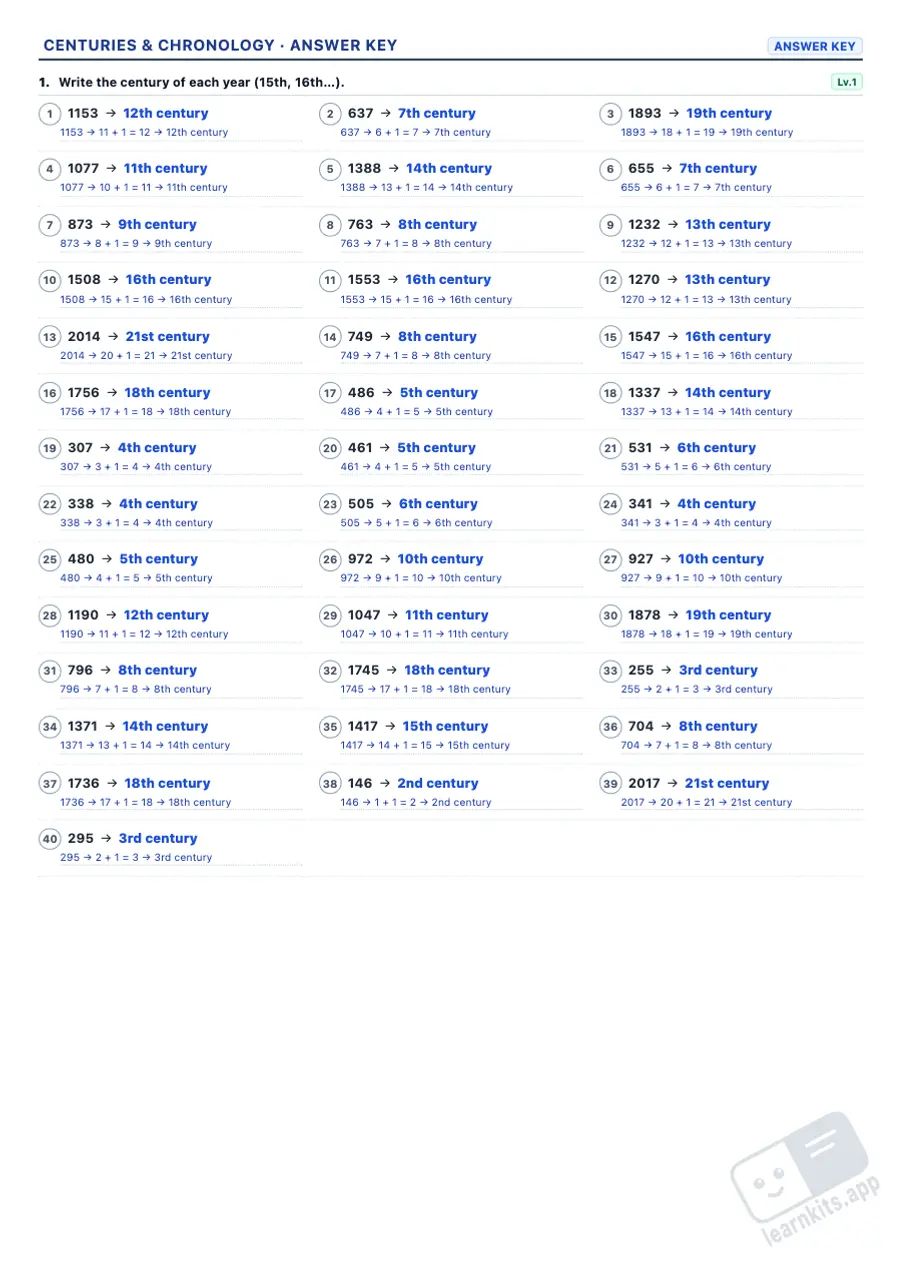 Answer key
The "hundreds + 1" rule, with the boundary years that trip pupils up: 1500 is in the 15th century and 1501 in the 16th.
Converting Roman numerals to ordinary numbers and back, with century numbers and dates like the ones on monuments.
Durations between two dates, including BC to AD, remembering there is no year 0: from 50 BC to AD 50 is 99 years.
Timelines drawn to scale with century marks, to place dates and see how BC years count backwards.
A bank of more than 90 well-known events from Prehistory to today, with a focus on Spanish and European history.
Every answer shows the reasoning step by step (1492 → 14 + 1 = 15 → 15th) so marking is quick and mistakes are easy to explain.
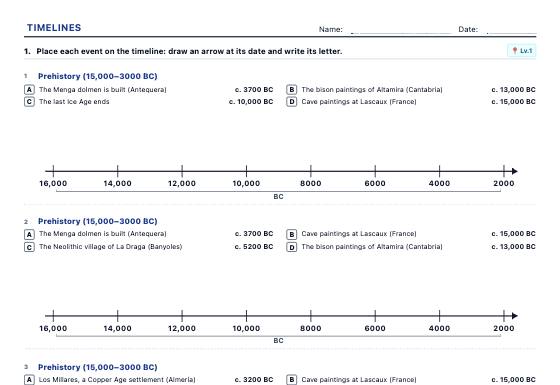
Timelines drawn to scale to place and order events from Prehistory to today, work out elapsed time and draw a timeline of your own life or family, with an answer key.
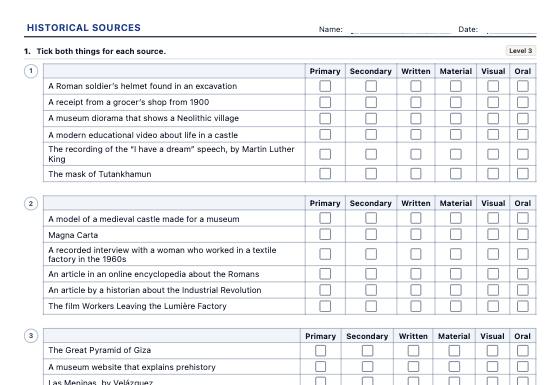
Worksheets for working with historical sources: primary or secondary, written, material, visual or oral, the card of a real source (author, date, place, purpose), dating and ordering sources, fact and opinion and comparing two sources on one event, in three levels with an answer key.
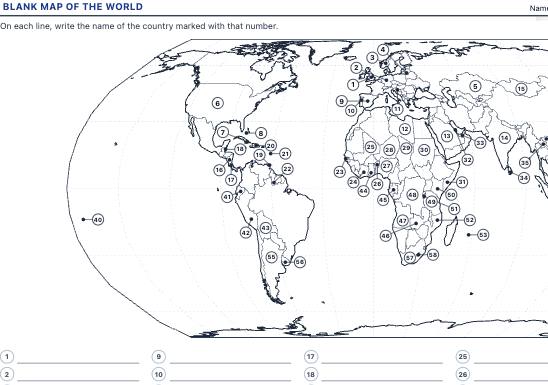
A4 blank maps to locate countries, capitals and continents, plus the rivers and relief of Spain, with numbered markers to label and an answer key with every name filled in.