Fluency word lists
Real words in columns, graded by difficulty: short vowels, blends and long vowels, two-syllable words and longer words, from the phonics and syllable word lists.
Fluent readers read accurately, at a good pace and with expression, and fluency is the bridge between decoding and understanding. This free reading fluency worksheet generator makes A4 word lists and timed reading passages, all original, with a running word count on every line, a words per minute log and a progress graph so pupils can see themselves improve. Pair them with reading comprehension worksheets and, for beginning readers, phonics worksheets.
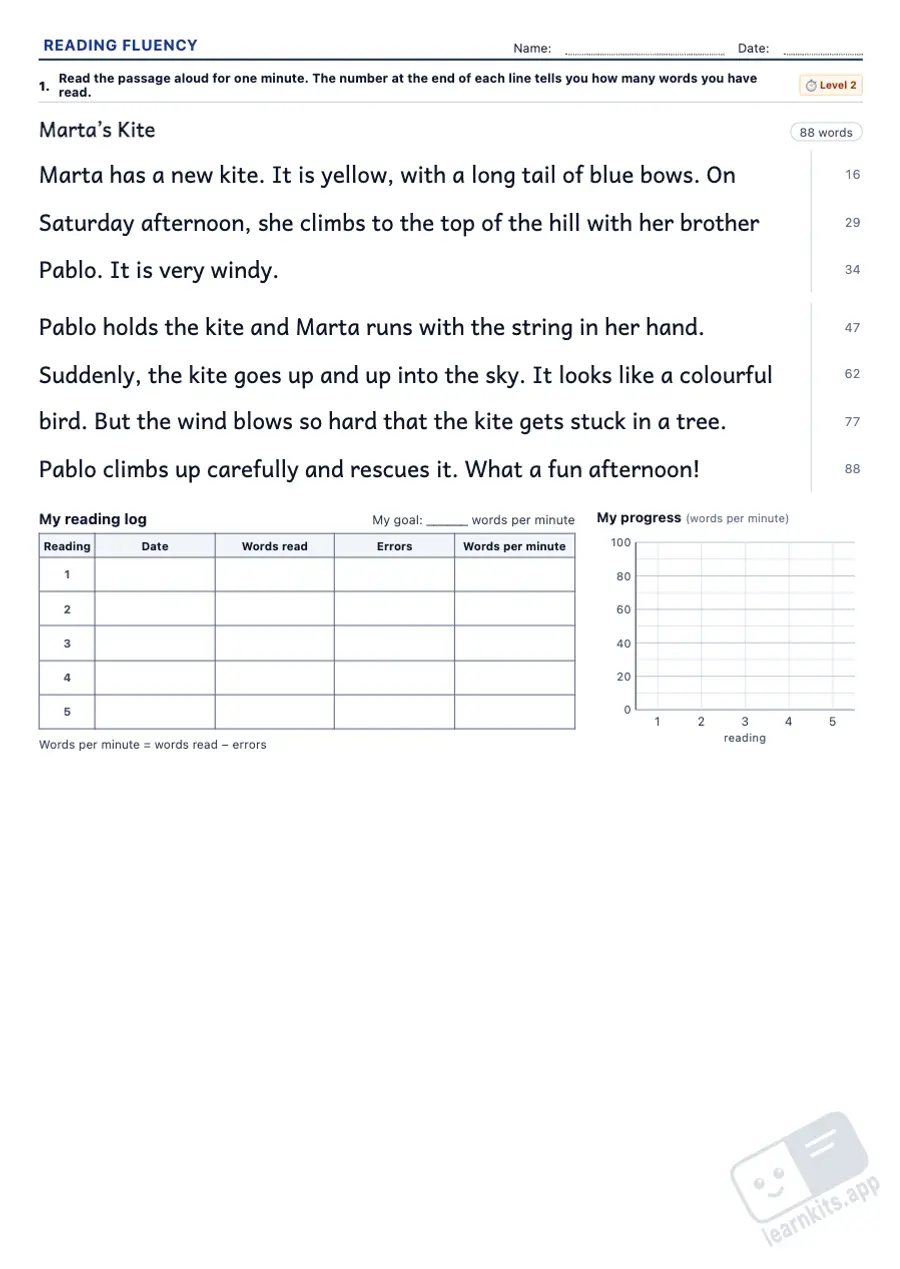 Student worksheet
 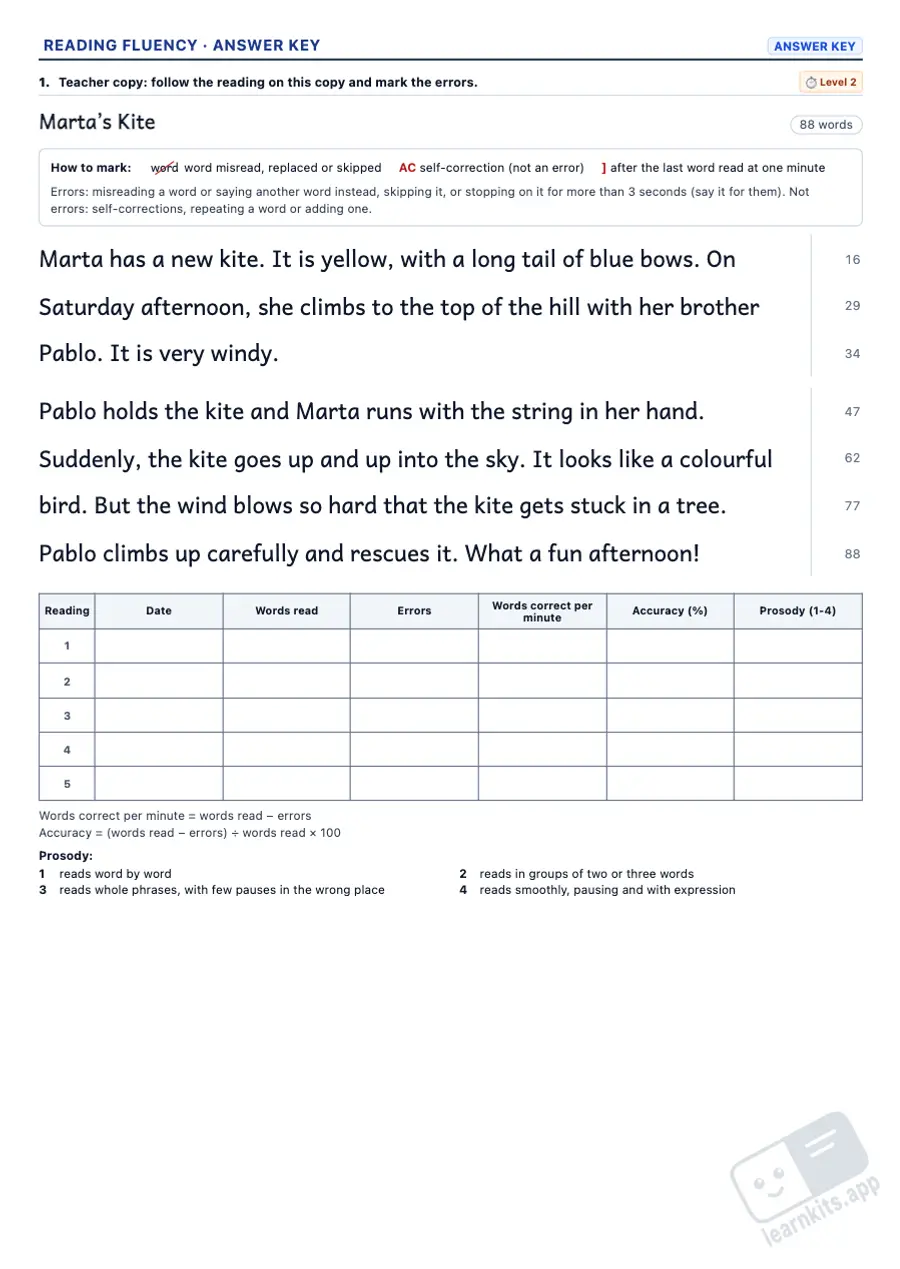 Answer key
 Real words in columns, graded by difficulty: short vowels, blends and long vowels, two-syllable words and longer words, from the phonics and syllable word lists.
Sixteen original passages, stories and information texts, for Grades 1 to 4: from about 50 words in short sentences to more than 150.
Every line and every row ends with the number of words read so far, counted on the sheet as it prints, so you know at a glance how many words were read in a minute.
A table for the date, words read, errors and words per minute of each reading, and a progress graph to plot them on.
The same reading with its word counts, how to mark errors, accuracy and a four-point prosody scale to rate expression.
One level per grade, Grades 1 to 4, for both word lists and passages.
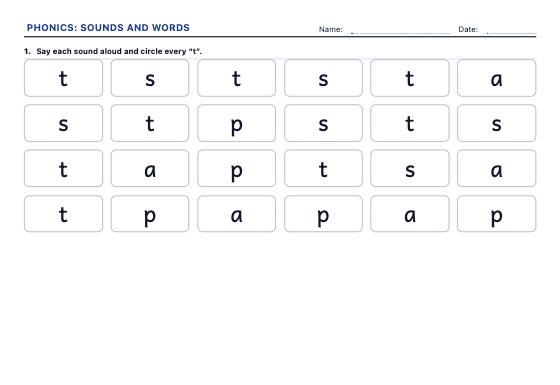
Phonics worksheets with sound buttons: read the sounds, blend them into words, fill in the missing sound and count the sounds, using only the graphemes already taught.
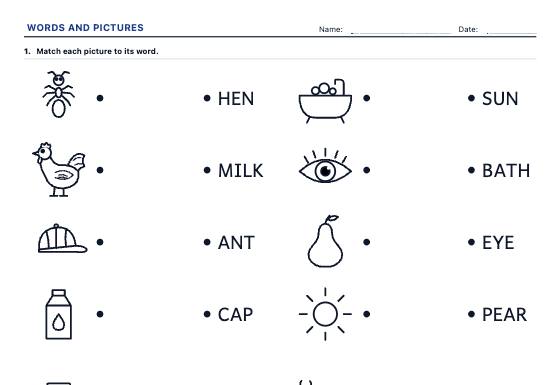
Match each picture to its word, circle it and write it, and match capital and lowercase letters and print to cursive, with over 130 pictures and English words.
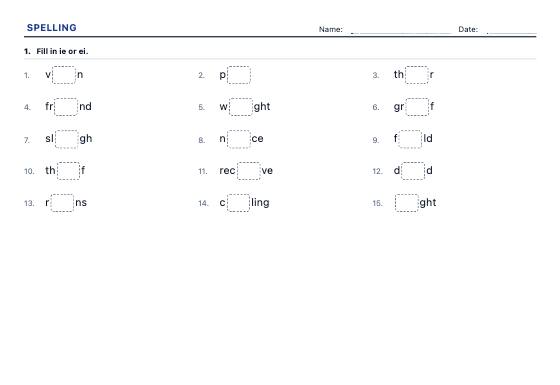
Words to fill in with the right letters, choose between two spellings or sort into columns: ie/ei, silent letters, double consonants, -tion/-sion, c/k/ck and homophones.