At a glance (subitizing)
Cards with dice, five and ten frames and rows of five dots to say how many without counting one by one. Cut them out and use them as flash cards.
Before calculating, children need to see amounts: knowing there are five without counting, that ten is five and five, that 8 is closer to 10 than to 0. This generator makes number sense worksheets to 5, 10 and 20 for the early years, Key Stage 1 and support sessions.
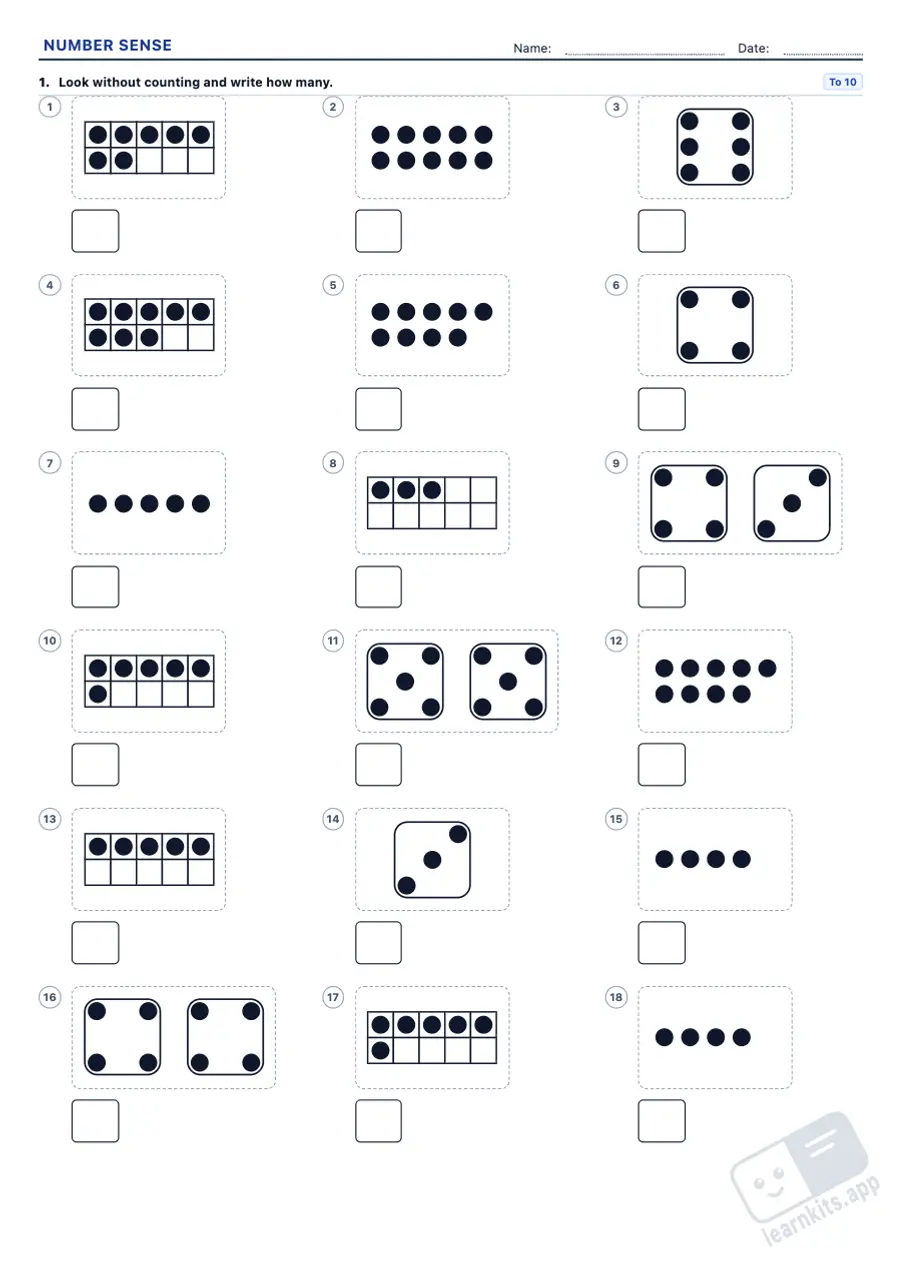 Student worksheet
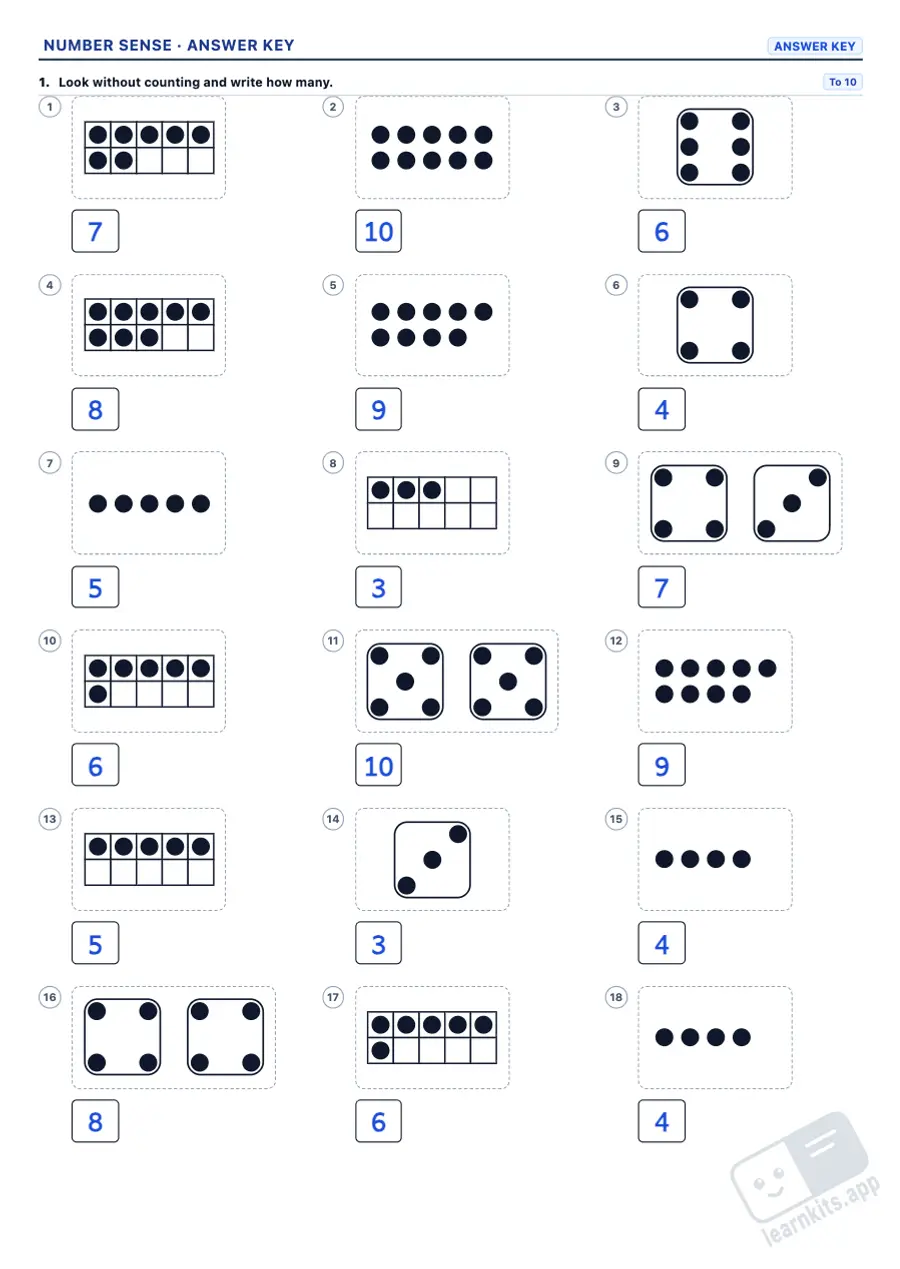 Answer key
Cards with dice, five and ten frames and rows of five dots to say how many without counting one by one. Cut them out and use them as flash cards.
Four drawn amounts with their numerals and names in a jumble to join up, so children link the three ways of saying a number.
Two groups that differ enough to see without counting, and a number line without numbers with a dot to decide which end it is closer to.
Ten frames with full and empty counters and a part-part-whole diagram: 3 and 2 make 5, 7 and 3 make 10, 10 and 4 make 14.
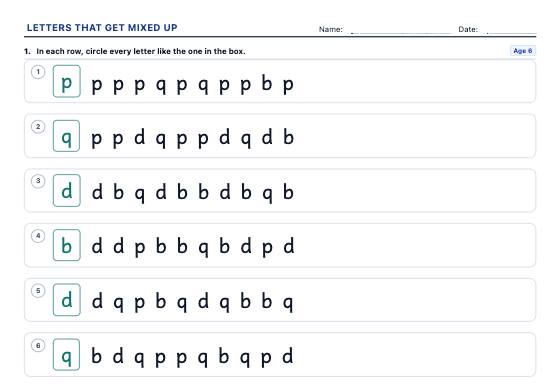
Letters that get mixed up: find b, d, p and q, complete picture words, spot backwards letters and numbers and match strings of similar letters, ages 5 to 8, with an answer key.
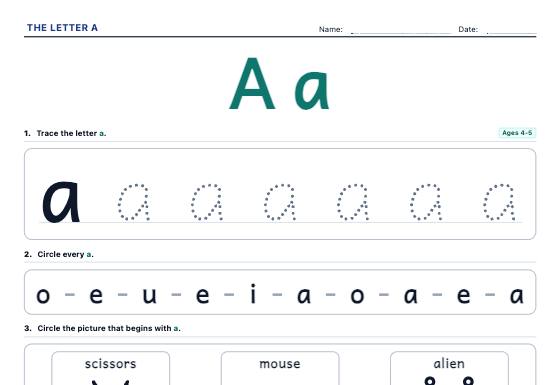
One sheet per letter or number: trace it, circle it among others, find the picture that begins with it and build the word by cutting out or writing, ages 4 to 7, with an answer key.
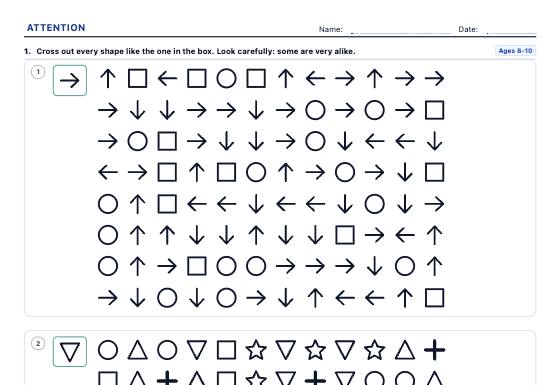
Selective and sustained attention worksheets: cross out shapes, numbers and letters, symbol coding, find the identical row and follow a rule path, ages 5 to 14, with answers.