Compare numbers
Two numbers and a circle for the sign. From two digits up: pairs that start the same, swapped digits (47 and 74) and the 98 and 105 trap.
Comparing numbers is understanding place value: a child who looks at the tens, hundreds or thousands first knows which number is greater without counting. This free comparing and ordering numbers worksheet generator builds A4 worksheets with the greater than, less than and equal to signs (<, >, =), from pictures to count in Kindergarten to six-digit numbers in Grade 4, each with its answer key.
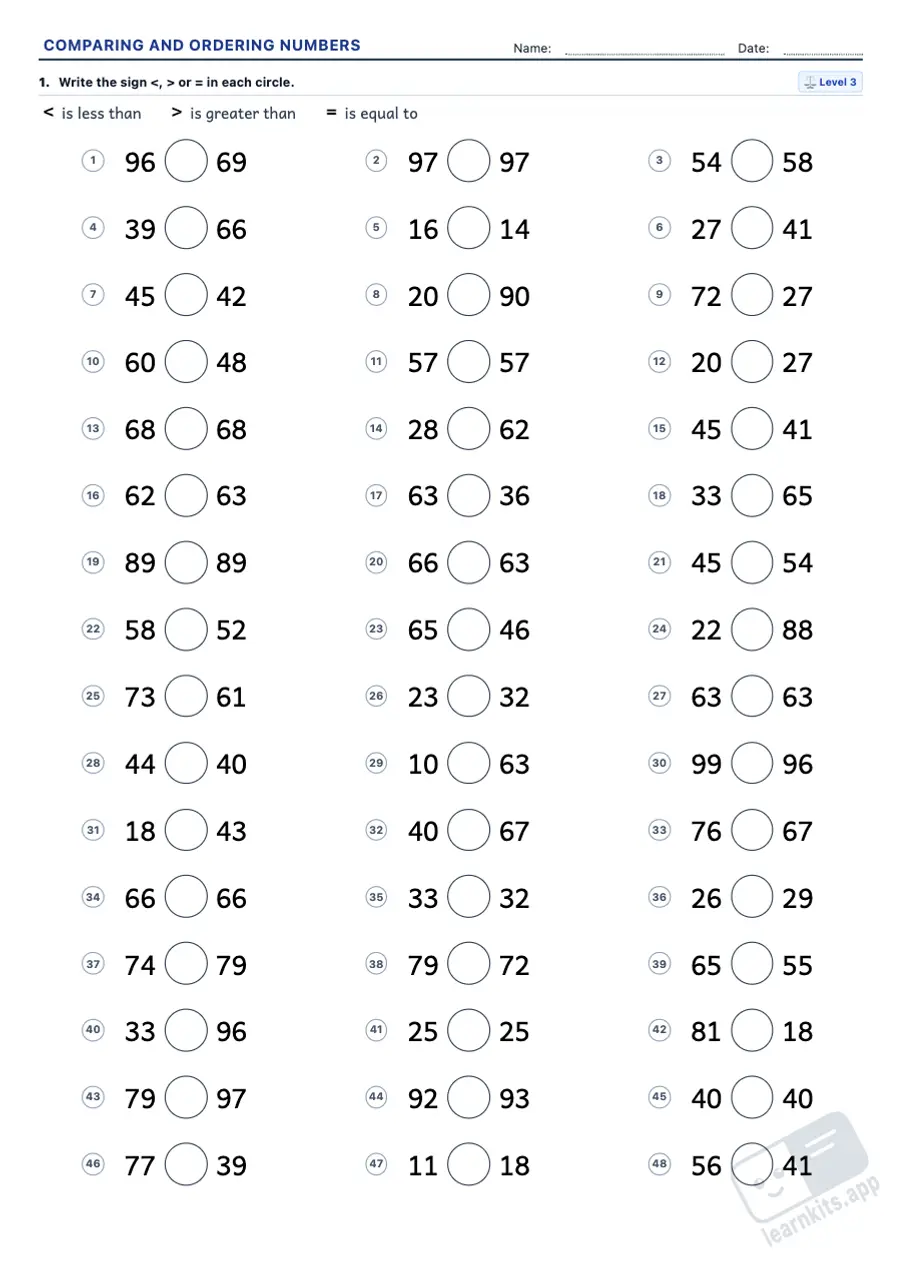 Student worksheet
 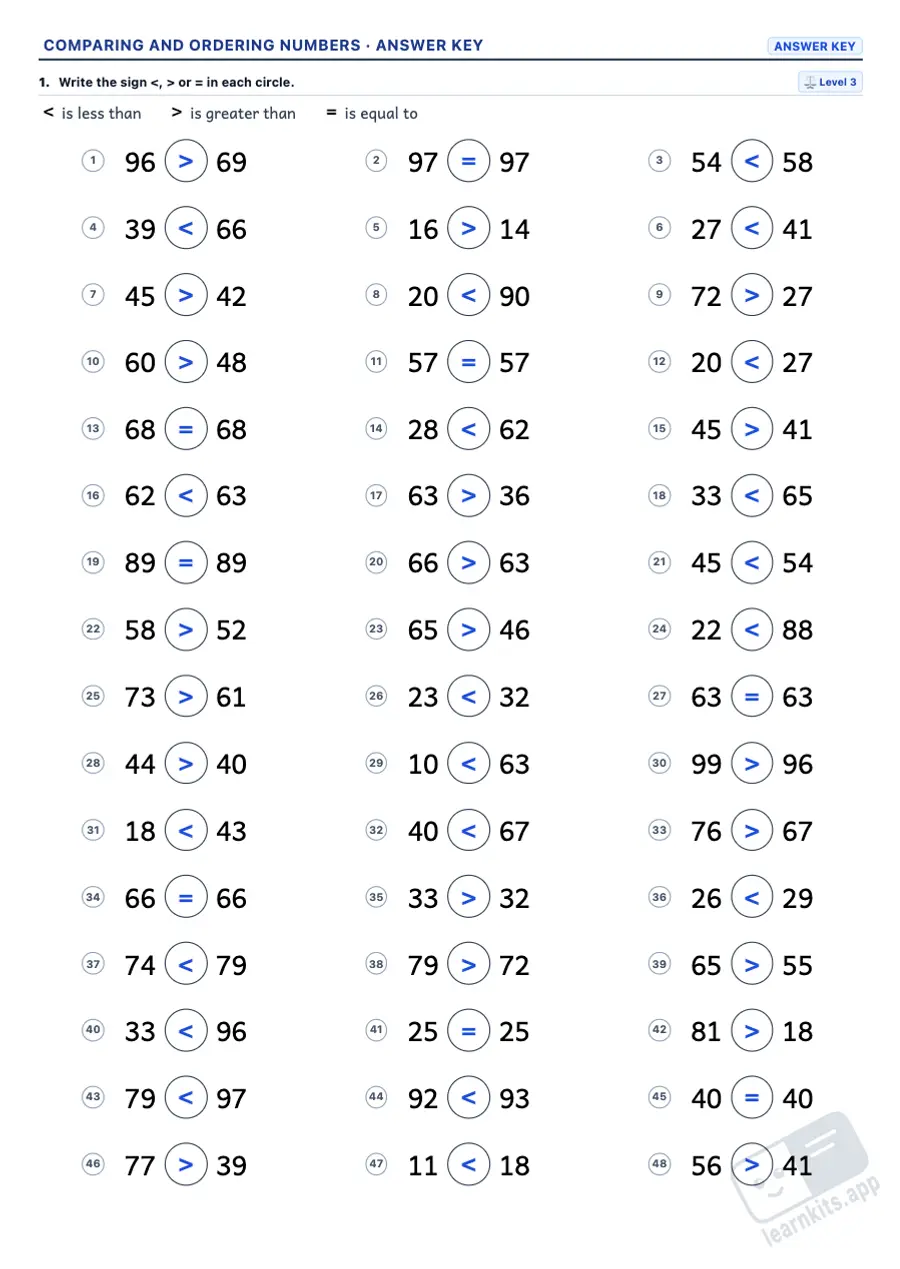 Answer key
 Two numbers and a circle for the sign. From two digits up: pairs that start the same, swapped digits (47 and 74) and the 98 and 105 trap.
At level 1, two groups of pictures in a ten frame or scattered: pupils count them, write the number and add the sign.
Additions and subtractions against a number or another calculation, with results 1 or 2 apart, so pupils really have to work them out.
Smallest to greatest or greatest to smallest, with the < or > signs between the boxes. You choose the direction or let it take turns.
Circling the greatest and crossing out the smallest in a group where the greatest numbers start the same.
The numbers between two given ones, often across a ten, a hundred or a thousand: 398, 399, 400, 401, 402.
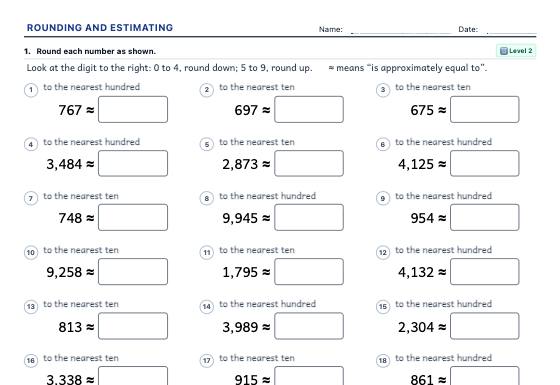
A4 worksheets to round numbers to the nearest ten, hundred and thousand on a number line and in tables, round decimals, estimate sums, differences and products and decide whether an answer is reasonable.
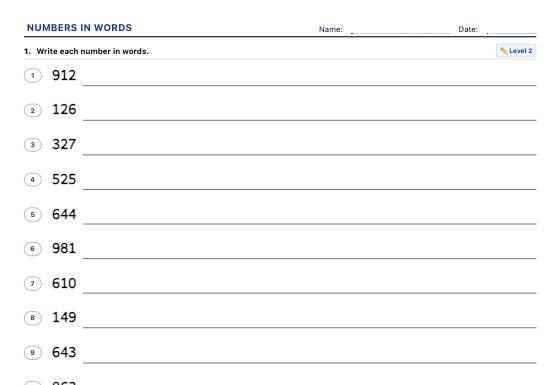
A4 worksheets to write numbers in words and in figures with the right hyphens and spelling, fill in missing words, match, spot the mistake and ordinals, 99 to millions.
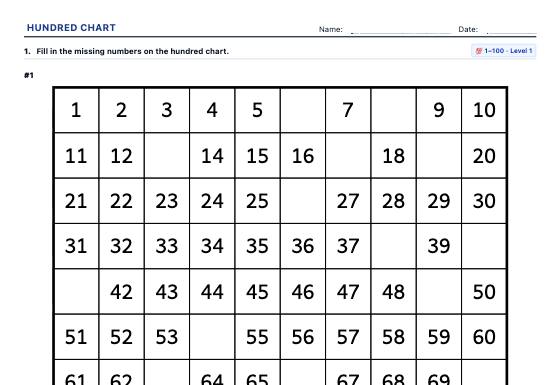
A4 hundred chart worksheets: missing numbers, chart pieces, neighbours (+1, −1, +10, −10), skip counting and colouring patterns, in three levels with an answer key.