Multiples and factors
The first multiples of a number, the multiples between two numbers, every factor found in pairs and the difference between "is a multiple of" and "is a factor of".
Factors and multiples are about when one number divides another exactly. In Grades 5 and 6 pupils list multiples and factors, learn the divisibility rules and spot prime numbers; in Grade 7 they write numbers as products of primes and find the HCF and LCM to solve problems. This free generator creates A4 worksheets for every step, with an answer key that shows the division, digit sum or prime factorisation behind each answer.
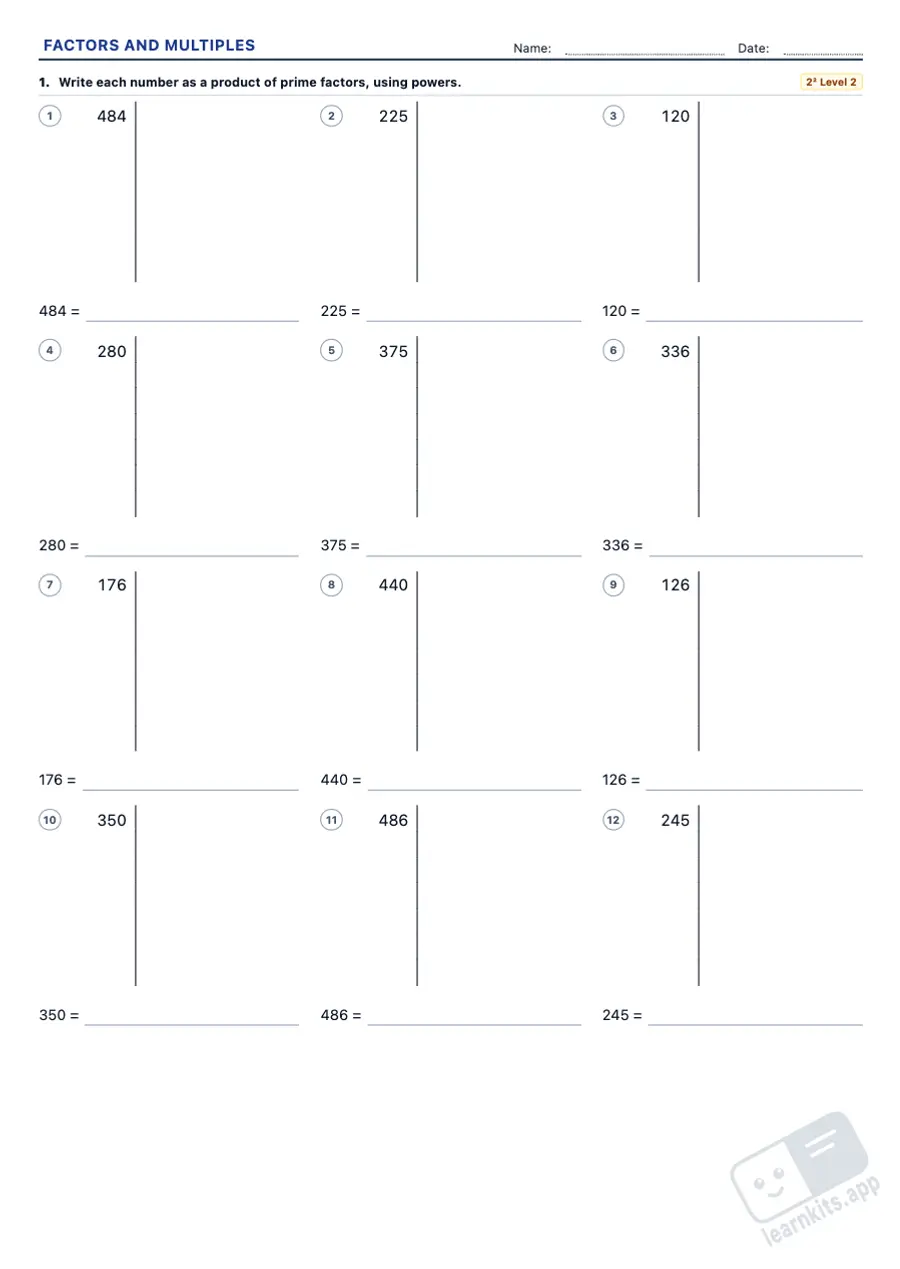 Student worksheet
 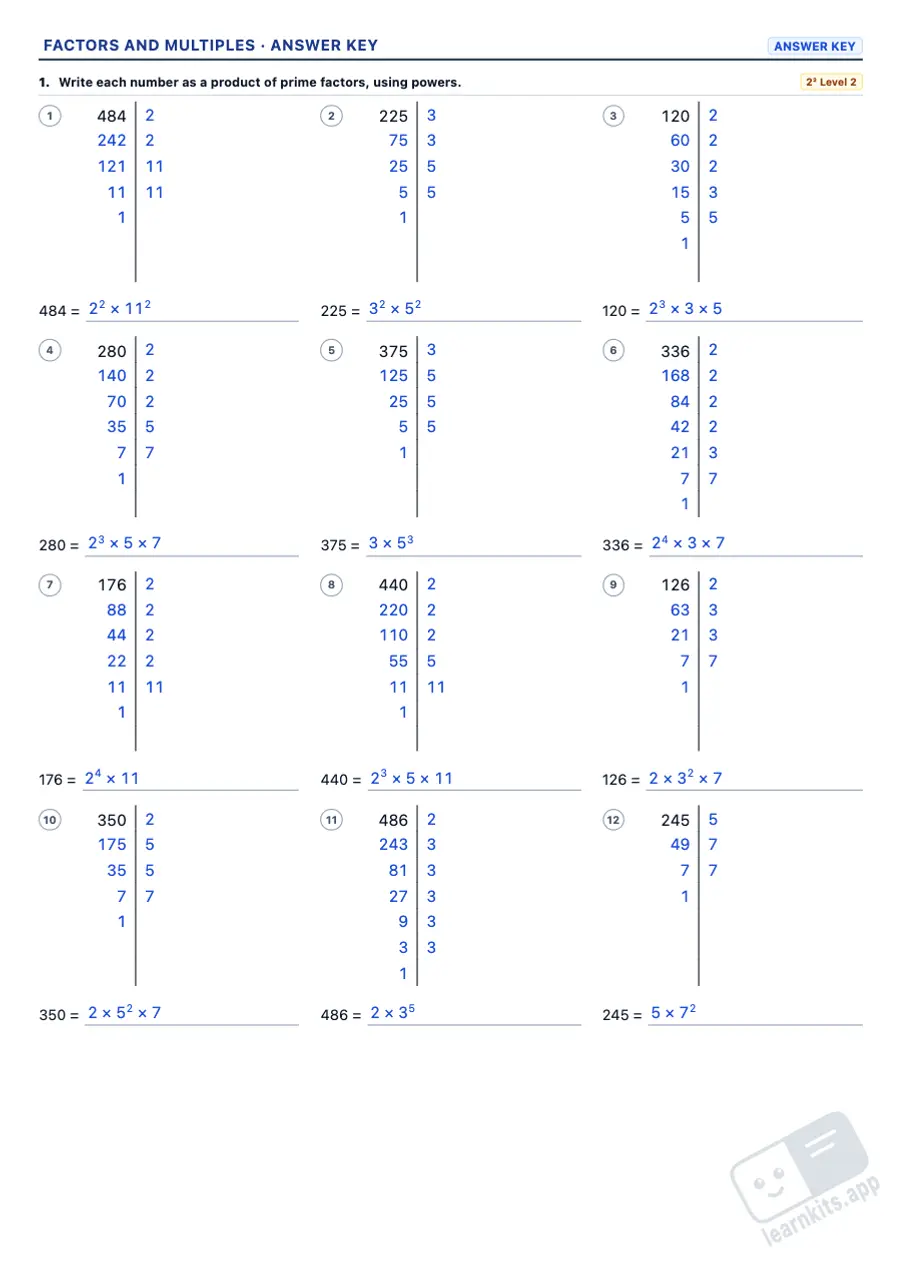 Answer key
 The first multiples of a number, the multiples between two numbers, every factor found in pairs and the difference between "is a multiple of" and "is a factor of".
By 2, 5 and 10 from the last digit; by 3 and 9 from the digit sum; by 4 from the last two digits; by 6 and 11 in Grade 7.
Prime or composite up to 50, up to 100 and from 101 to 199, trying the primes until their square is larger than the number.
The column method (number | prime): divide by the smallest prime until you reach 1, then write the answer with powers, as a factor tree does.
First by listing factors and multiples, then by prime factors: the common primes with the lowest power (HCF) or every prime with the highest (LCM).
Buses that leave together again, ribbons to cut, bags of sweets or a box full of cubes: pupils decide whether they need the LCM or the HCF.
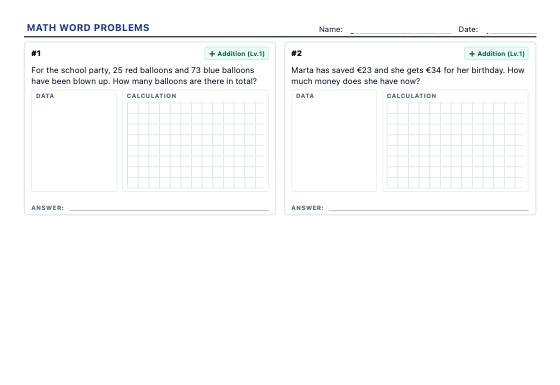
Printable real-world math word problems with dedicated sections for given data, workspace calculation grid, and sentence answer formulation.
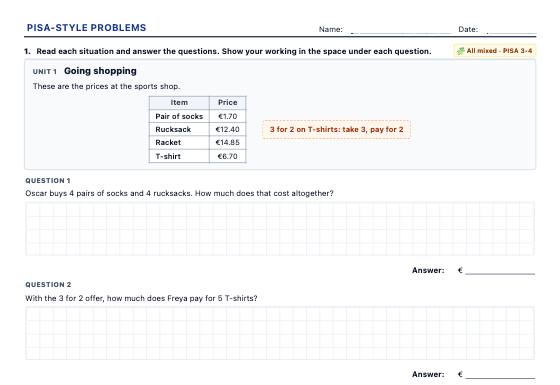
PISA-style units: prices, recipes, timetables, charts, chance, tariffs, maps and floor plans to scale, with questions of rising difficulty and a marking guide with full, partial and no credit.
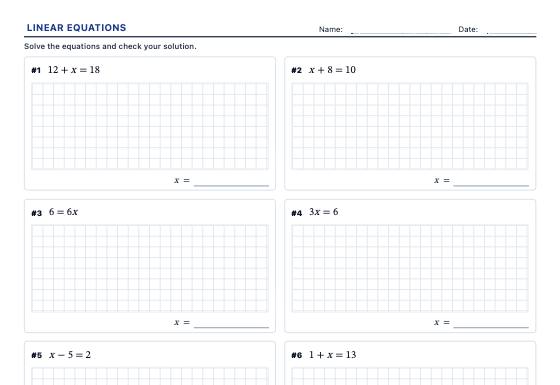
One-step and two-step linear equations, x on both sides, brackets and fractions, with whole, negative or fraction solutions and a step-by-step answer key with the check.