Read the clock
An analogue clock and two boxes to write the digital time. The hour hand moves on with the minutes, just like a real clock.
Telling the time means reading two hands at once: the short hand gives the hour and the long hand the minutes. This free telling time worksheet generator builds A4 worksheets with analogue and digital clocks, from o'clock in Grade 1 to the minute and the 24-hour clock in Grade 3, with the time in words (quarter past, half past, quarter to) and an answer key for every clock.
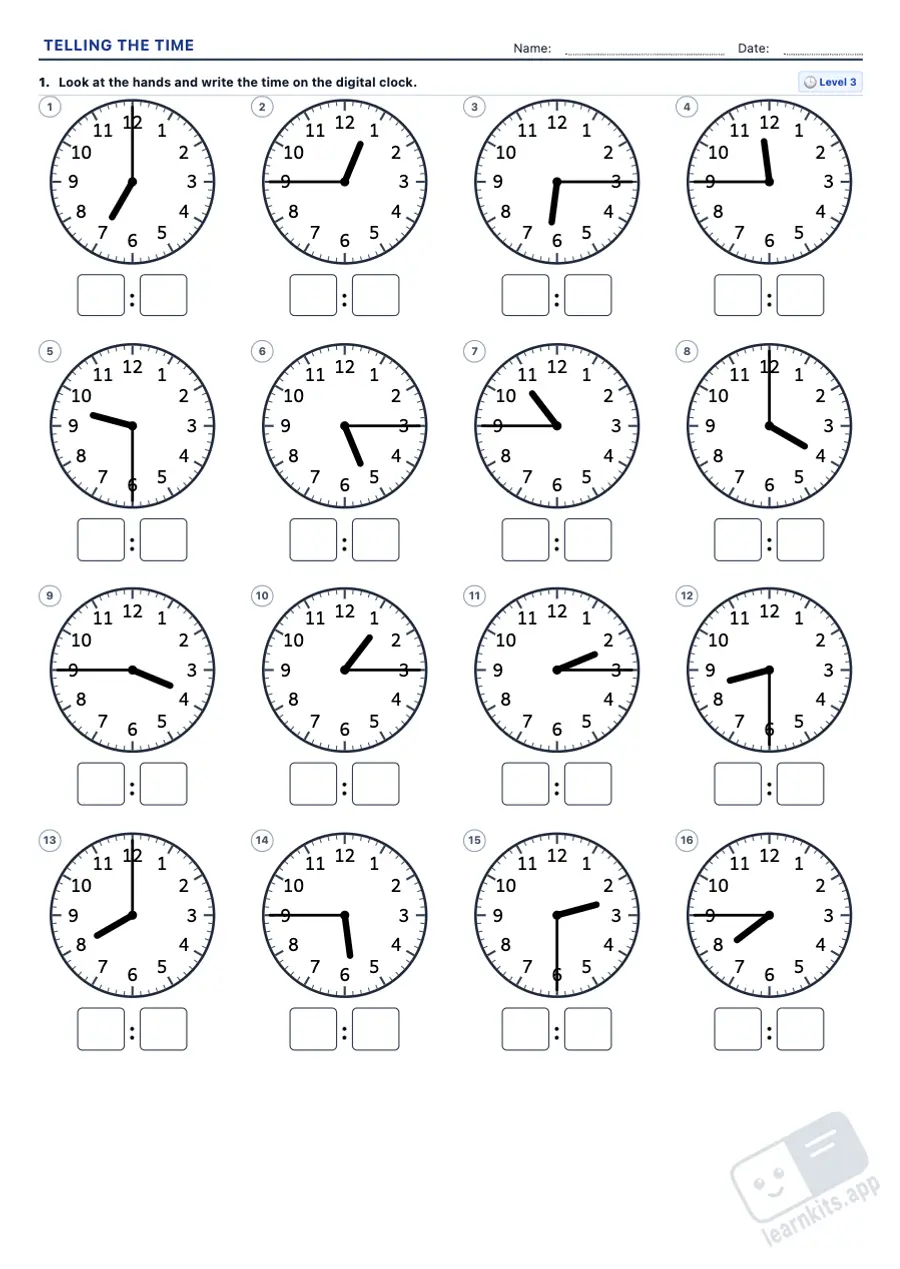 Student worksheet
 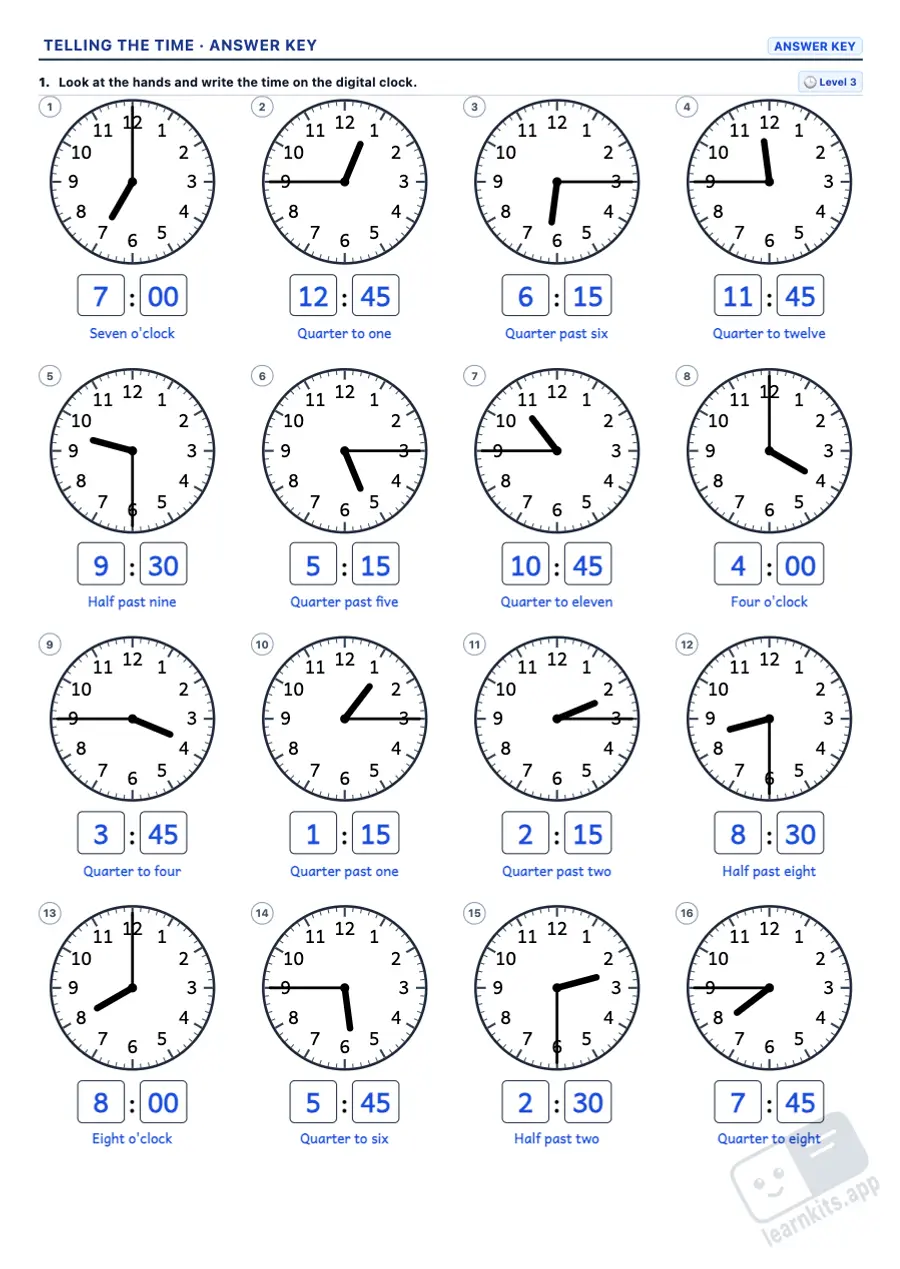 Answer key
 An analogue clock and two boxes to write the digital time. The hour hand moves on with the minutes, just like a real clock.
A digital time and a blank clock face with the numbers and minute marks, big enough for young children to draw both hands.
Three ways of saying the time and only one is right: quarter to four, quarter to three or quarter past three. The usual mistakes are the traps.
The time written the way we say it (twenty-five to six) to show with the hands on the clock.
A clock and a length of time: one hour, half an hour, a quarter of an hour or a few minutes later. Exact times first, then any minute.
At level 6, morning, afternoon and evening times: three o'clock in the afternoon is 15:00.
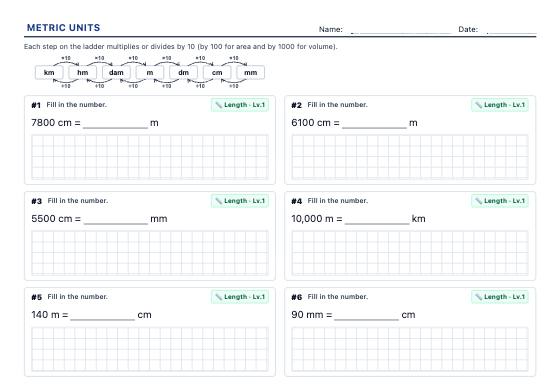
Metric conversion worksheets: length, mass, capacity, area and volume, with mixed units, comparing and ordering, and an answer key showing how the decimal point moves.
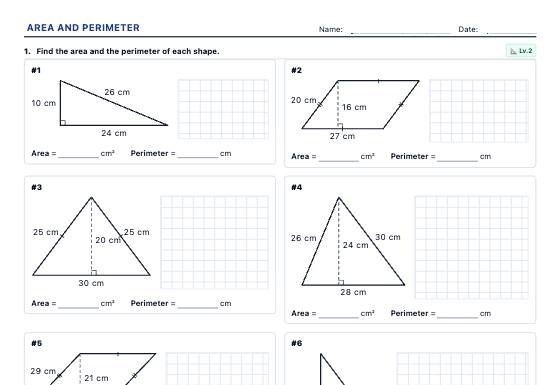
Area and perimeter worksheets with shapes drawn to scale: squared grids, polygons, circles, composite shapes, estimating irregular areas on a map and missing sides, with a step-by-step answer key.
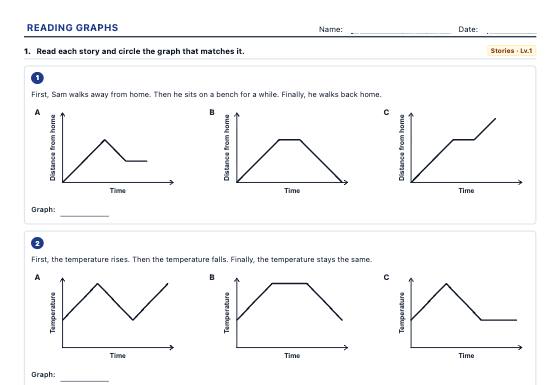
Everyday graphs to match to a story, read values and rates of change, describe trends, compare two series and spot misleading graphs, with an answer key.