Read and draw
Count the blocks in a picture and write the number, then go the other way: draw a number with squares, sticks and dots. On the answer key the blocks are drawn in blue.
Base ten blocks make the decimal system visible: 10 cubes make a rod and 10 rods make a flat. This free base ten blocks worksheet generator puts the manipulative on paper: pictures of flats, rods and cubes to read, draw, regroup, compare, add and subtract, with the answer key ready. Choose the exercise and the level and every worksheet is different.
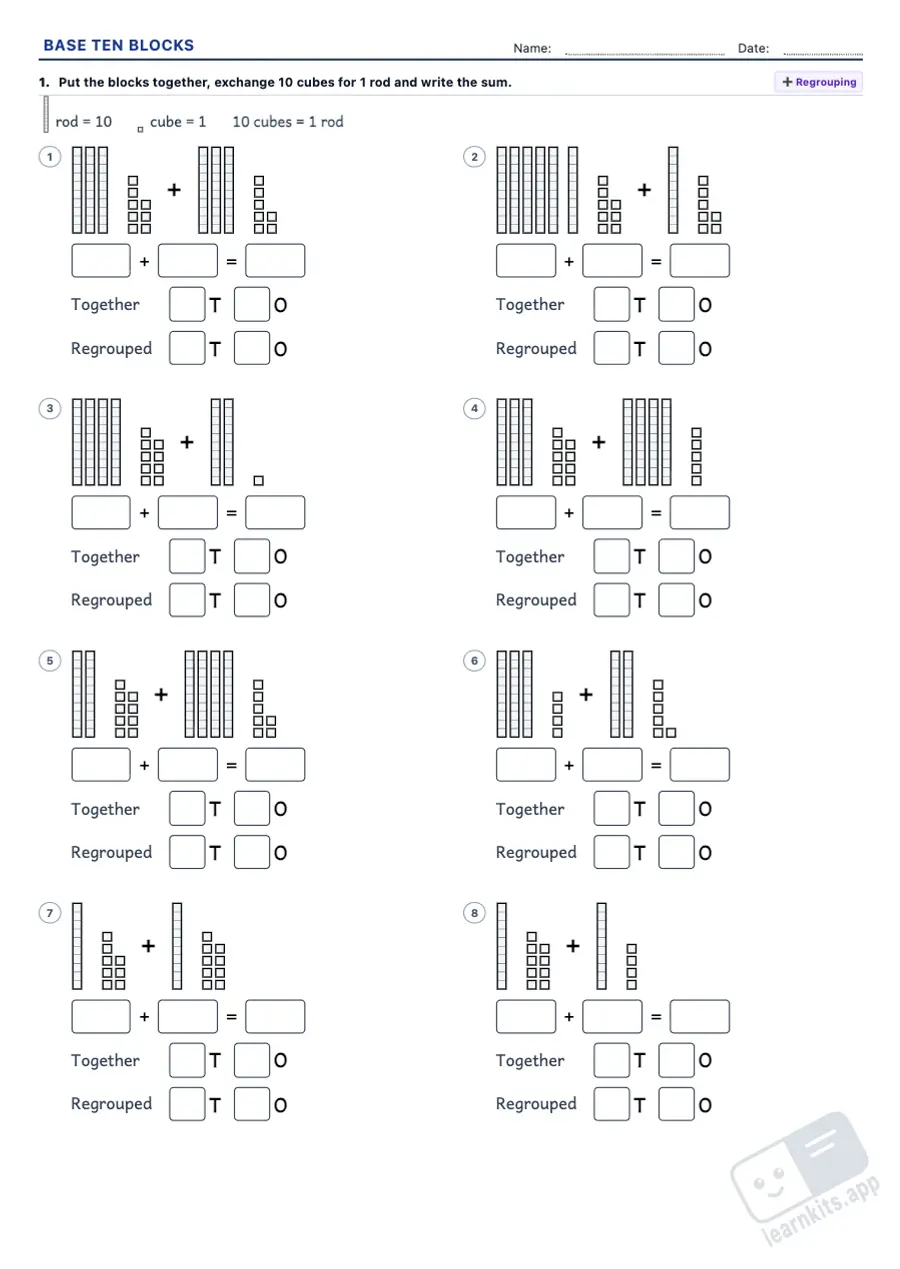 Student worksheet
 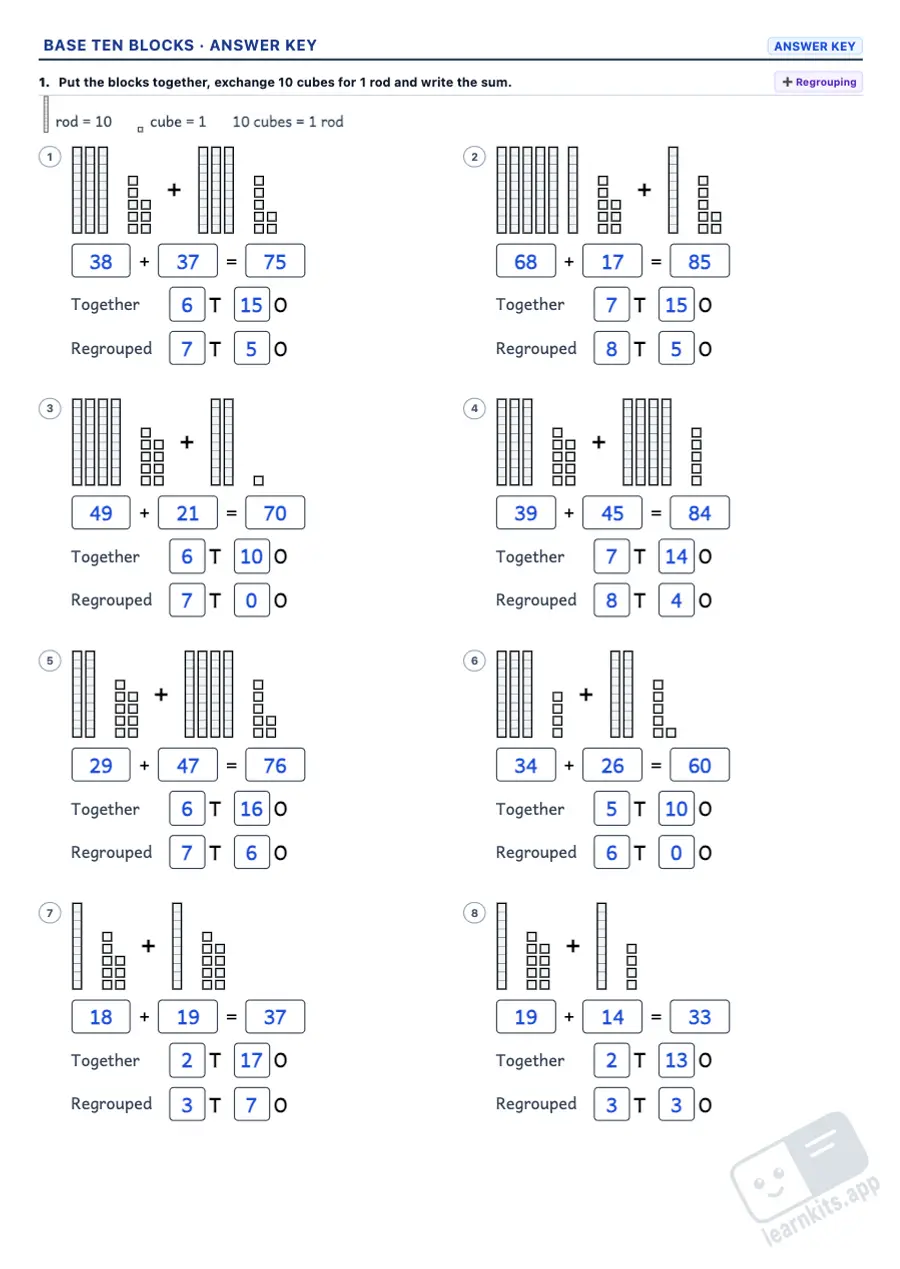 Answer key
 Count the blocks in a picture and write the number, then go the other way: draw a number with squares, sticks and dots. On the answer key the blocks are drawn in blue.
10 cubes = 1 rod and 10 rods = 1 flat. Pictures with 14 cubes or 12 rods to regroup and, at level 3, two exchanges in a row: the idea behind carrying and borrowing.
Two pictures to compare with <, > or =. Some pairs have more blocks in the smaller number (29 and 31), so children learn to look at the rods before the cubes.
Join two pictures and exchange when there are 10 cubes or more; take a number away, breaking up a rod or a flat when there are not enough. The answer key draws the exchange and crosses out the blocks taken away.
34 is 3 rods and 4 cubes, but also 2 rods and 14 cubes. Showing a number in two or three ways prepares subtraction with regrouping and mental maths.
Every answer is computed from the blocks drawn: the counts, the number, the exchanges, the sign and the result, with the chain of exchanges written out.
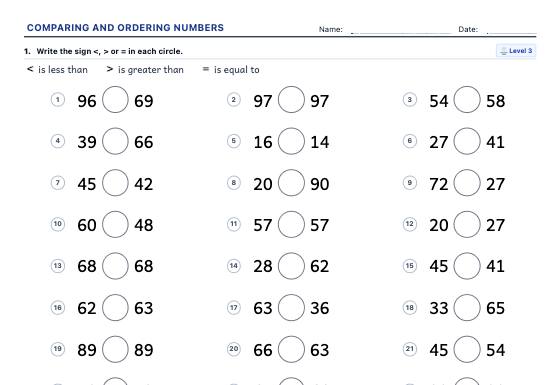
A4 worksheets to compare numbers with the signs <, > and =, compare calculations, order from smallest to greatest, find the greatest and smallest and the numbers in between, 10 to 999,999.
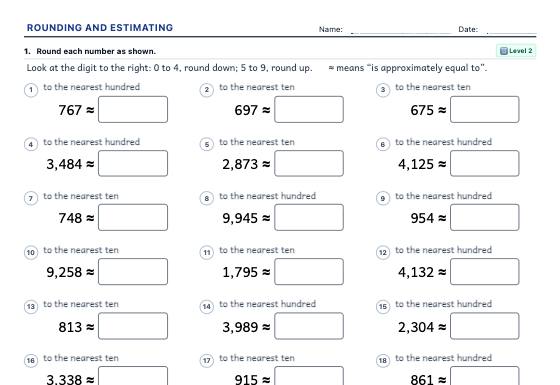
A4 worksheets to round numbers to the nearest ten, hundred and thousand on a number line and in tables, round decimals, estimate sums, differences and products and decide whether an answer is reasonable.
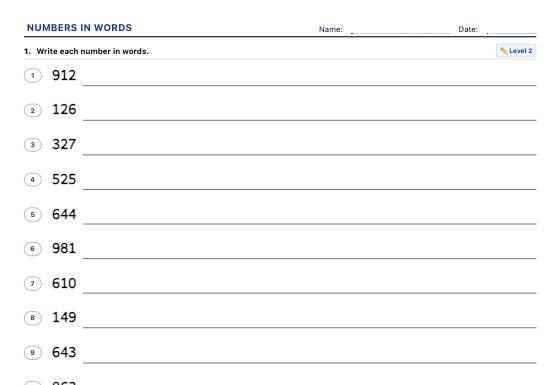
A4 worksheets to write numbers in words and in figures with the right hyphens and spelling, fill in missing words, match, spot the mistake and ordinals, 99 to millions.