The number line
The first step: the number marked between two tens (or hundreds) and the question of which end is nearer. The halfway point shows why 5 rounds up.
Rounding is choosing the nearest round number, and estimating is working with those round numbers to know, in your head, roughly what a calculation will give. This free rounding and estimating worksheet generator builds A4 worksheets to round to the nearest ten, hundred, thousand and ten thousand, round decimals and estimate sums, differences and products, from Grade 3 to Grade 6, with an answer key for every exercise.
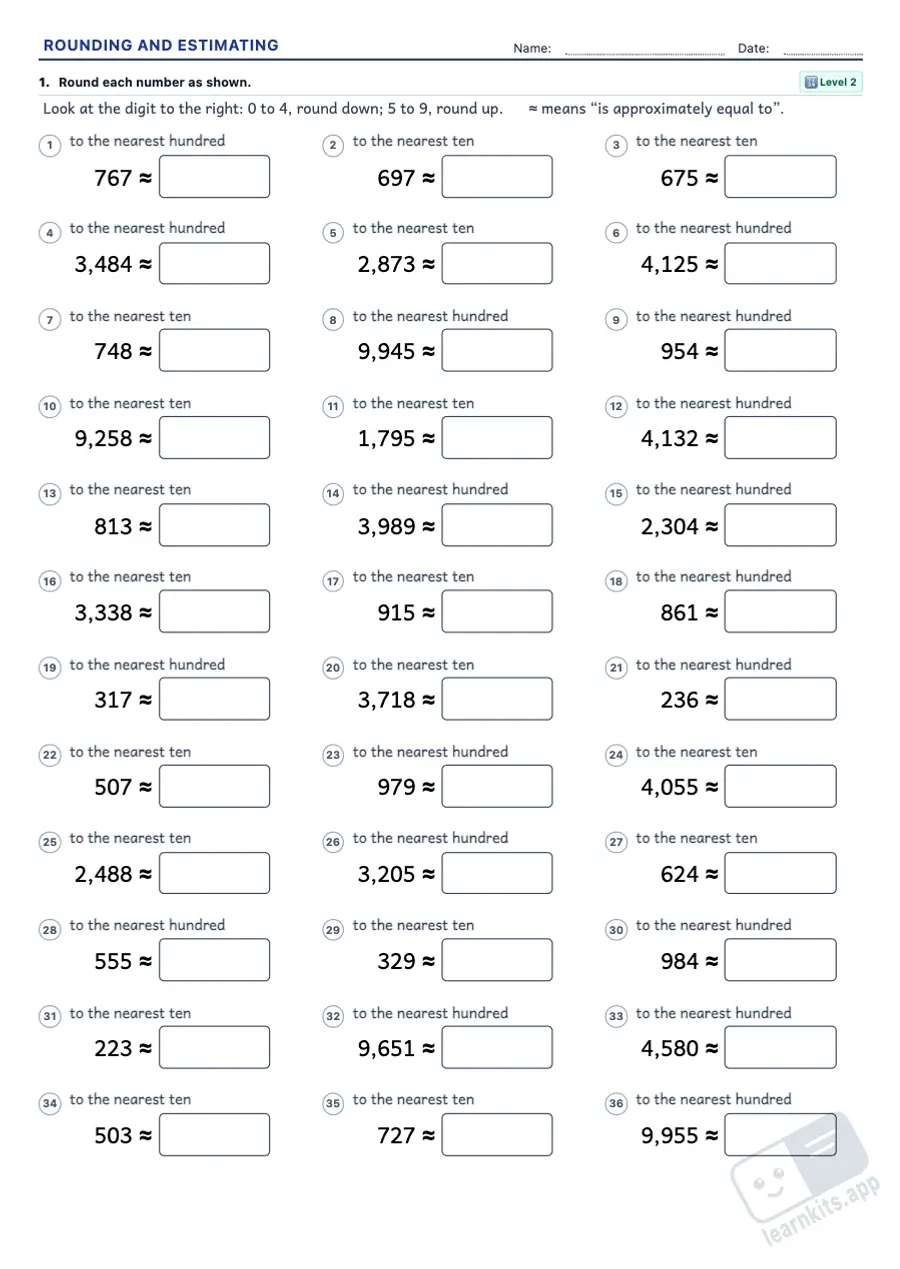 Student worksheet
 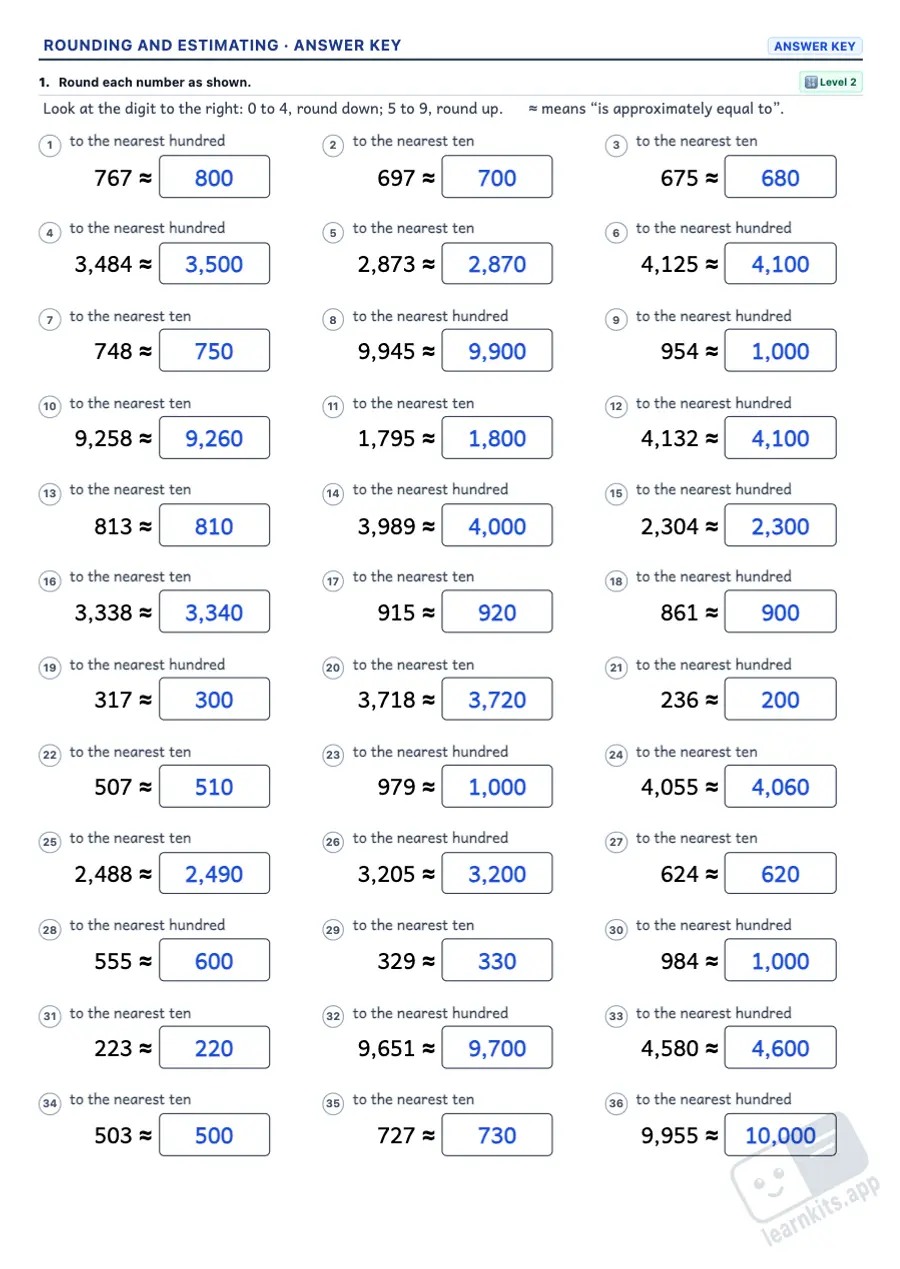 Answer key
 The first step: the number marked between two tens (or hundreds) and the question of which end is nearer. The halfway point shows why 5 rounds up.
Each number with its place. The tricky cases always come up: a 5 to the right and the 9 that carries into the next place (4,960 → 5,000).
The same number rounded to the nearest ten, hundred and thousand, so pupils see that the answer depends on the place.
To the nearest whole number, to 1 and to 2 decimal places, keeping the decimal place even when it is a zero (5.97 → 6.0).
Sums, differences and products with round numbers and, if you like, the exact answer too, to compare them.
A calculation already done, sometimes right and sometimes with a big mistake: the estimate tells whether the answer makes sense, as in competency tests.
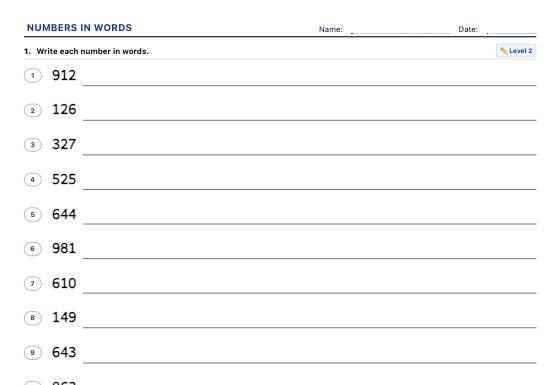
A4 worksheets to write numbers in words and in figures with the right hyphens and spelling, fill in missing words, match, spot the mistake and ordinals, 99 to millions.
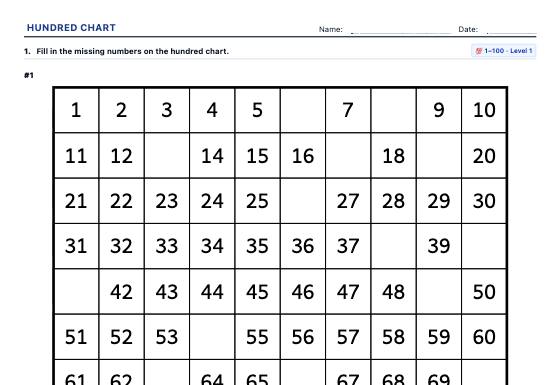
A4 hundred chart worksheets: missing numbers, chart pieces, neighbours (+1, −1, +10, −10), skip counting and colouring patterns, in three levels with an answer key.
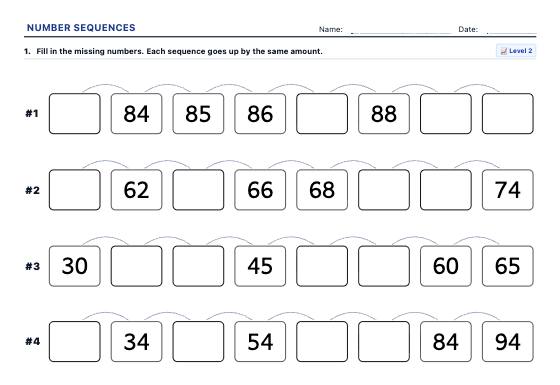
A4 number sequence worksheets: skip counting, counting on and back with missing numbers, continuing a sequence, finding the rule and number patterns, to 20, 100 or 1000.