Simple Machines and Mechanisms Worksheets

Printable A4 worksheets on simple machines and drive systems: classes of lever and the law of the lever, gears, pulleys and belts, bicycle gears, fixed and movable pulleys, block and tackle and the inclined plane, with schematics drawn from the data. Grades 6 to 9, with an answer key.

What do you want to practise?

Teacher guide ↓

Teaching Guide: Simple Machines and Mechanisms

Simple machines and drive systems are a core topic of design and technology and physics in Grades 6 to 9: levers and pulleys first, then gears, belts and gear trains. This free generator makes lever, gear and pulley worksheets with schematics drawn from the data and a computed answer key.
For
Elementary 6th · Middle & High 7th, 8th, 9th (ages 11-14)
Subject
Technology › Mechanisms
Includes
Student sheet and answer key
Format
A4, to print or save as PDF; new exercises every time
Price
Free, no sign-up
Available in
Catalan, Spanish, English
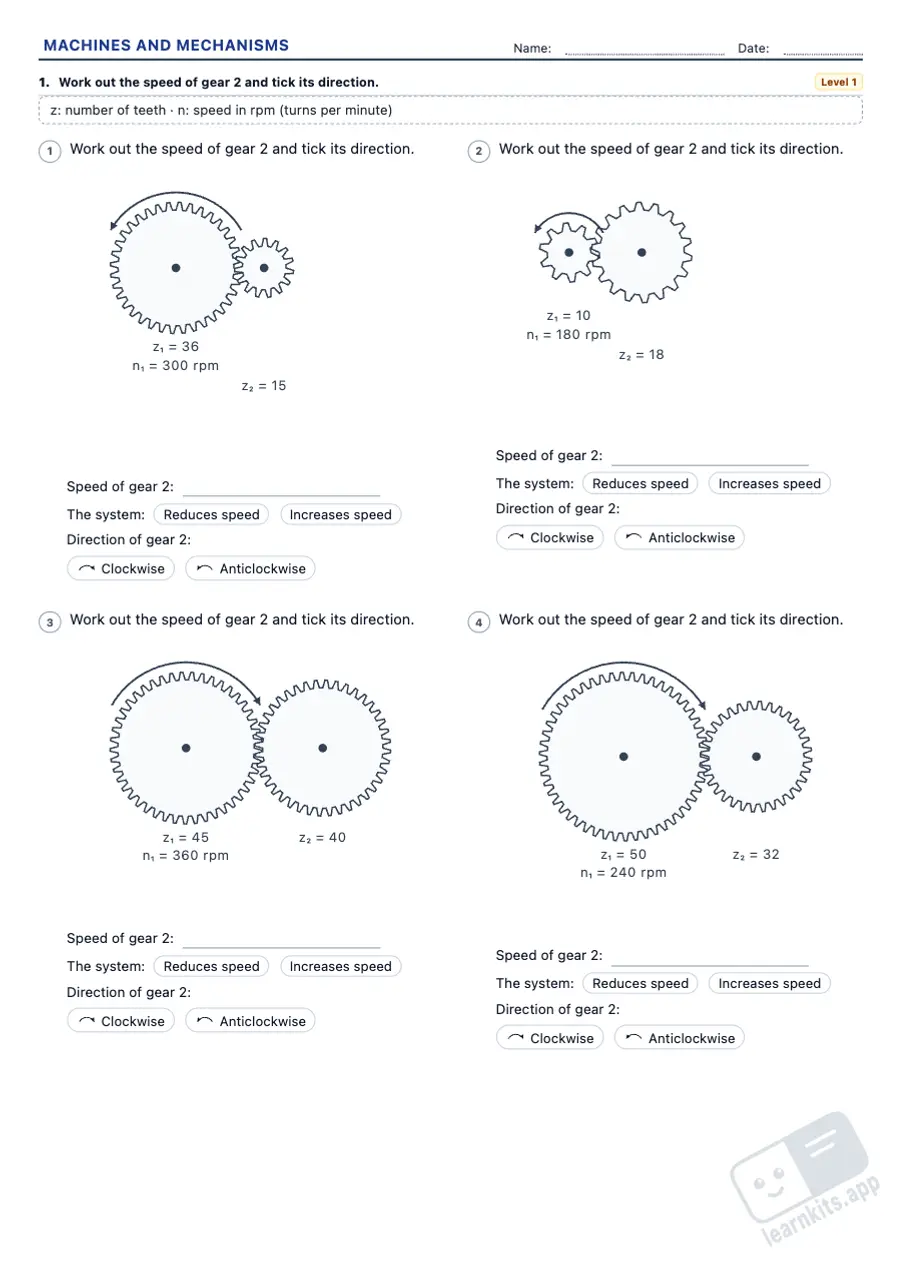
Simple Machines and Mechanisms Worksheets: sample printable A4 worksheet, first page of the student sheet Student worksheet
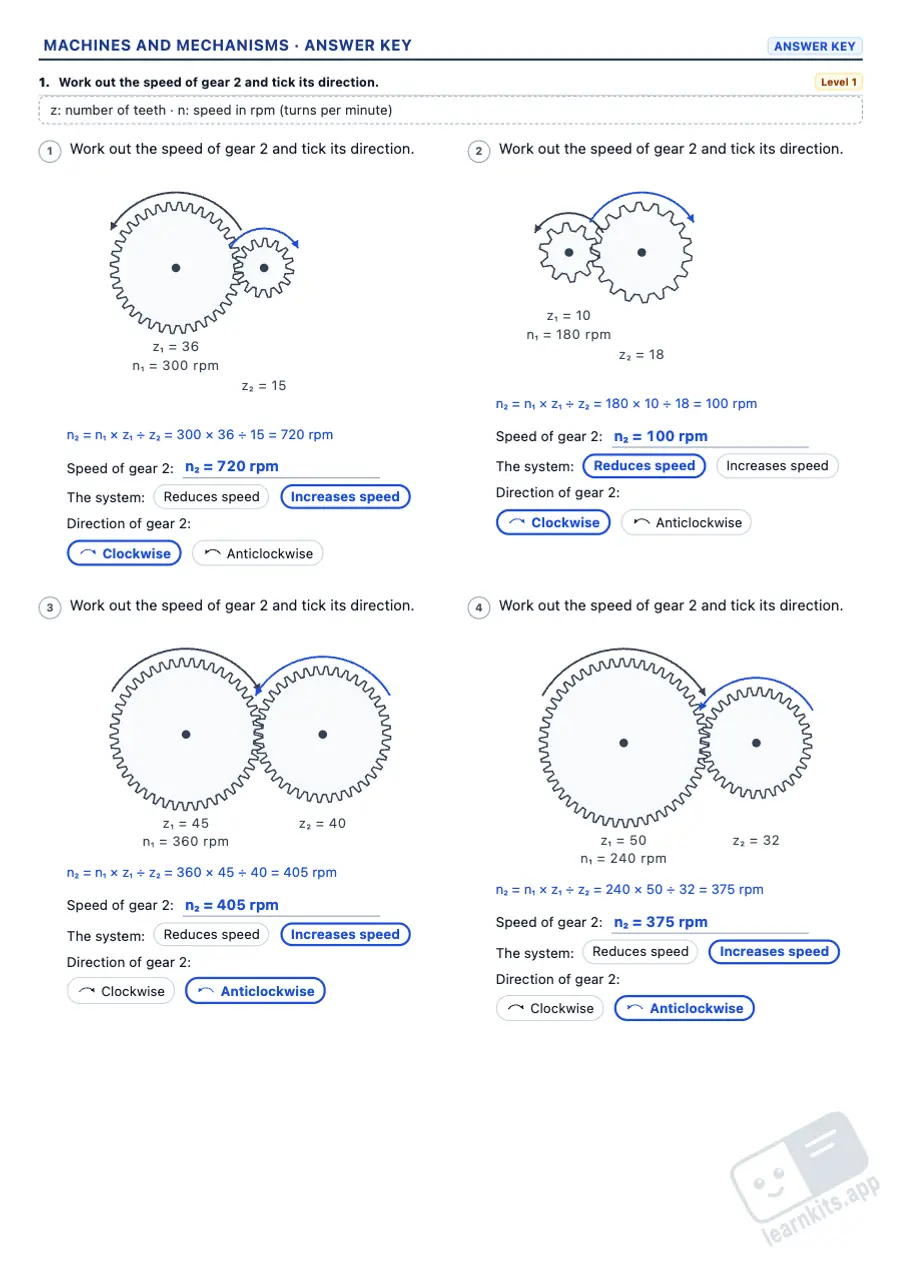
Simple Machines and Mechanisms Worksheets: sample answer key of the same worksheet, first page Answer key
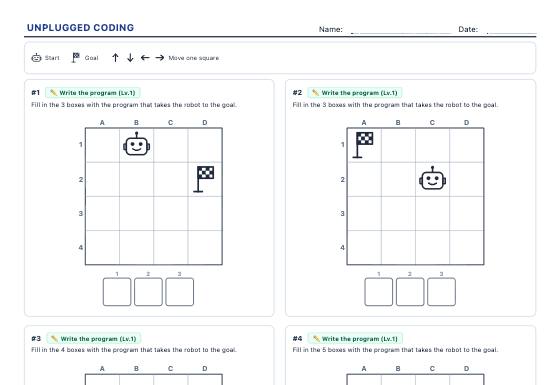
Sample made with LearnKits. Every worksheet is new: choose the topic, level and amount and print it for free.

Levers

The three classes in drawings and everyday objects, and the law of the lever with any unknown.

Gears

Two gears, the idler gear that changes the direction and compound gear trains with their speed ratio.

Pulleys and belts

Open and crossed belts and pulley trains with a double pulley.

The bicycle

Chainring and sprocket: turns of the wheel, speed in rpm, gears and distance travelled.

Lifting loads

Fixed and movable pulleys, a block and tackle by counting the sections of rope, and the inclined plane.

Answer key

Every result with its formula, the values and the direction of every wheel.
Frequently asked questions about the mechanisms worksheets

Which grades are they for?
Classes of lever, the bicycle and fixed and movable pulleys for Grades 6-7; the law of the lever, gears and belts for Grade 8; compound trains and the inclined plane for Grade 9.
How do I tell the class of a lever?
By what is in the middle: the fulcrum makes a first-class lever (seesaw, scissors), the load a second-class lever (wheelbarrow, nutcracker) and the effort a third-class lever (tweezers, fishing rod).
How do I work out the speed of a gear?
With n₁ · z₁ = n₂ · z₂: speed times teeth is the same for the driver and the driven gear. For belts it is the same with the diameters: n₁ · D₁ = n₂ · D₂. Every pair of gears and every crossed belt reverses the direction.
Which ratio do the worksheets use?
The speed ratio n₂ : n₁ = z₁ : z₂ (or D₁ : D₂): below 1 the system reduces speed, above 1 it increases it. Some books write the gear ratio the other way up (driven teeth to driver teeth); the answer key always shows the fraction it uses.
Which other worksheets go well with these?
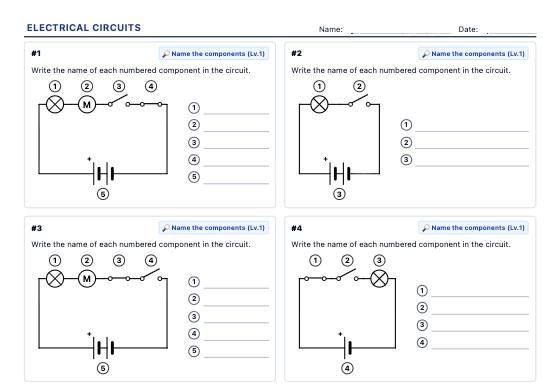
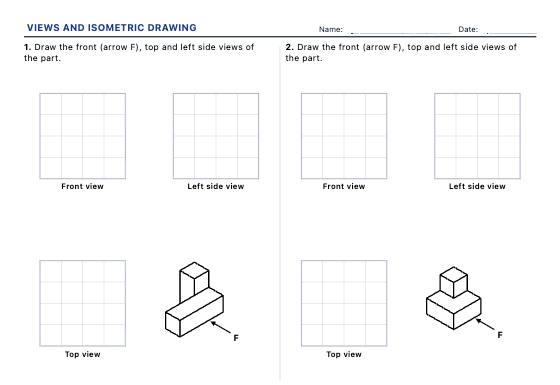
Electrical circuits, technical drawing views and physics problems for forces. You will find every resource in technology worksheets.
How do I print only the answer key?
Click Print and choose “Answer key”, or “Worksheet and answer key” for both. You can also save it as a PDF from your browser’s print dialog.