Three exercise types
Find the one that matches the model, spot the odd one out and match the pairs: three ways of comparing that can be mixed on one worksheet.
Visual discrimination is the ability to see how two pictures are alike and how they differ, a foundation for reading (telling b from d) and for maths. This free visual discrimination worksheet generator builds A4 worksheets for ages 3 to 5 with big pictures and differences that get finer and finer.
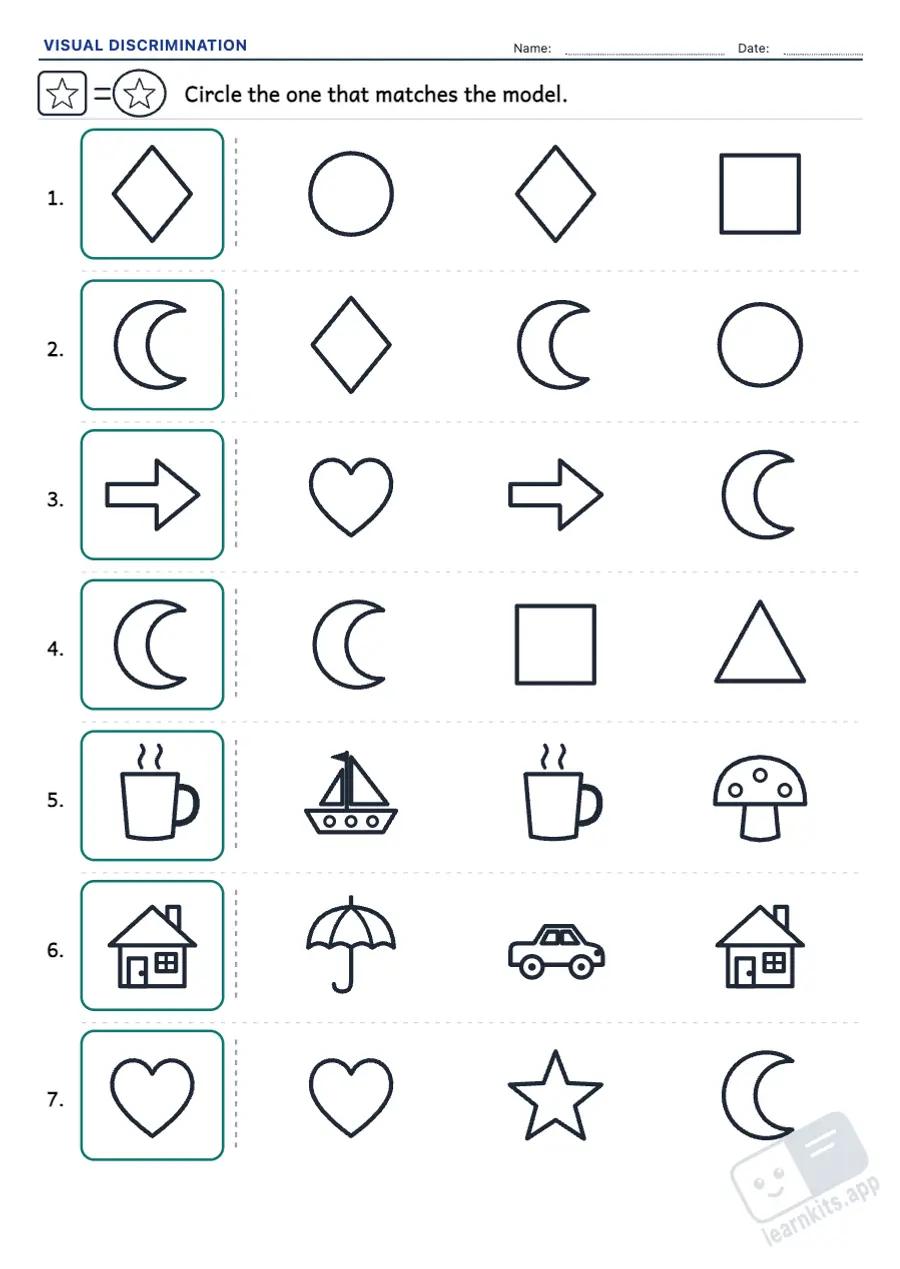 Student worksheet
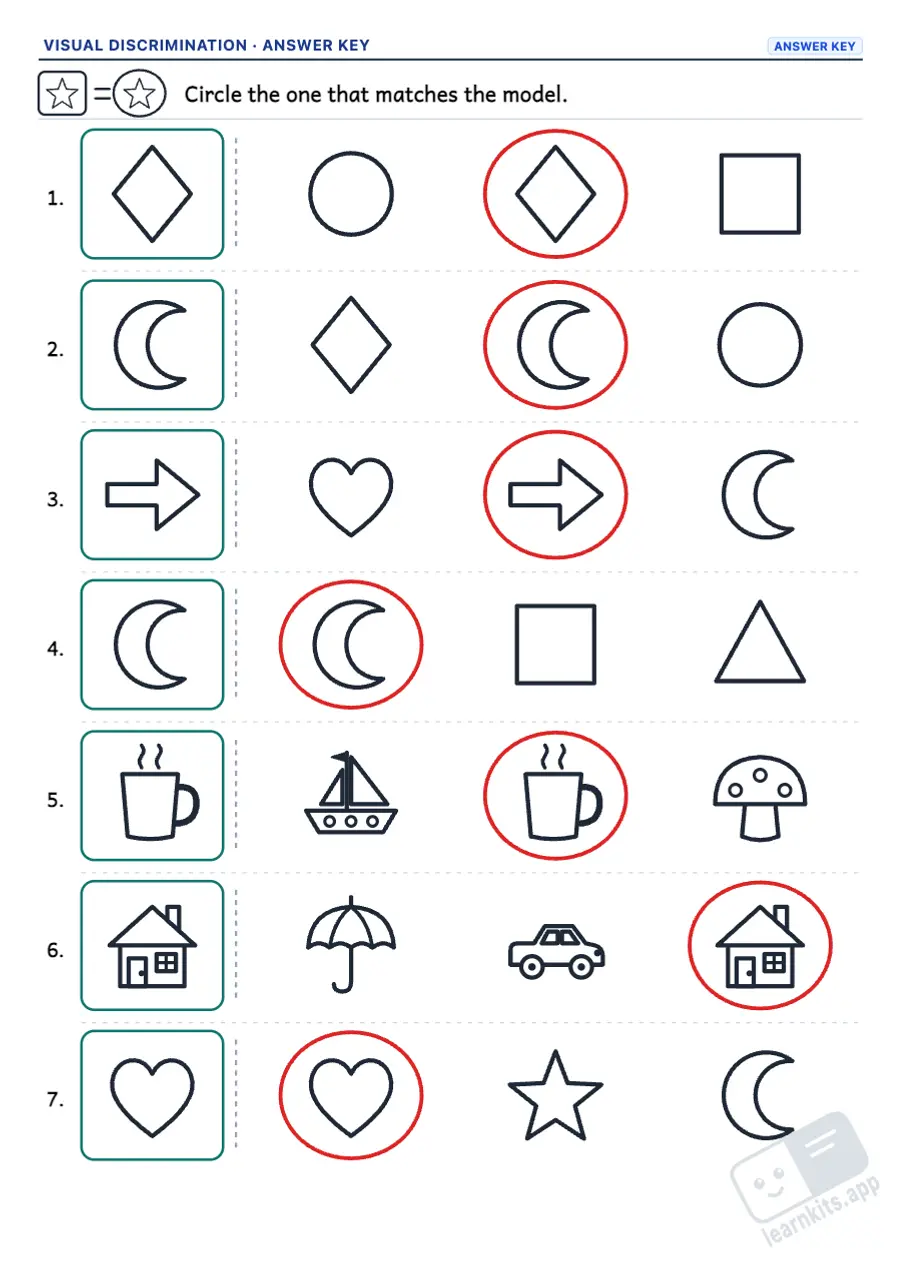 Answer key
Find the one that matches the model, spot the odd one out and match the pairs: three ways of comparing that can be mixed on one worksheet.
At age 3 the shape changes; at age 4, the pattern or the way the picture faces; at age 5, only a small detail such as a dot or a stripe.
Every group of rows starts with a pictogram that shows what to do (circle, cross out or join) and a very short sentence.
Pattern differences (stripes, dots, checks, solid) look just as clear on a black-and-white printer. Colour is optional.
The same worksheet with the answer marked in red: the matching picture circled, the odd one crossed out and the pairs joined.
Every row is drawn at random from 14 pictures and 9 geometric shapes: tap an exercise and press “New” for a different version.
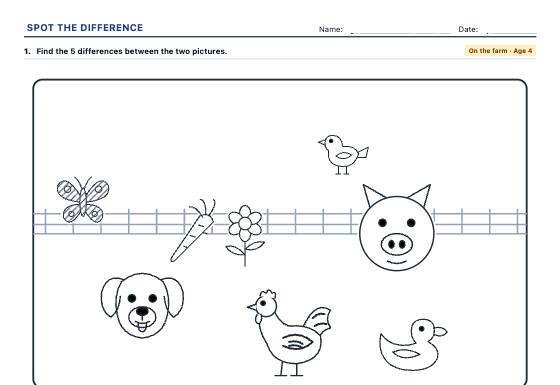
Picture pairs with 3 to 10 differences to find (something missing, swapped, smaller, striped, turned around or moved), in 9 scenes and 4 levels, with the differences circled in the answer key.
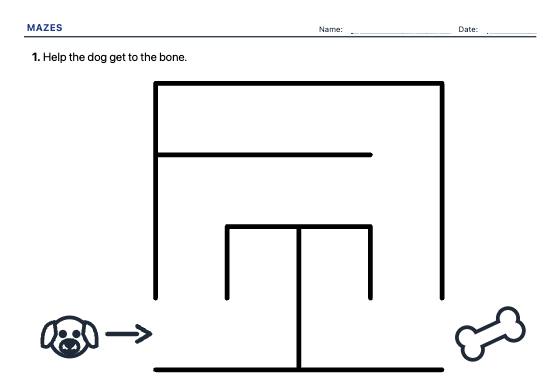
Unlimited A4 mazes, from wide paths for preschool to dense mazes for elementary, square or circular, with the solved path in the answer key.
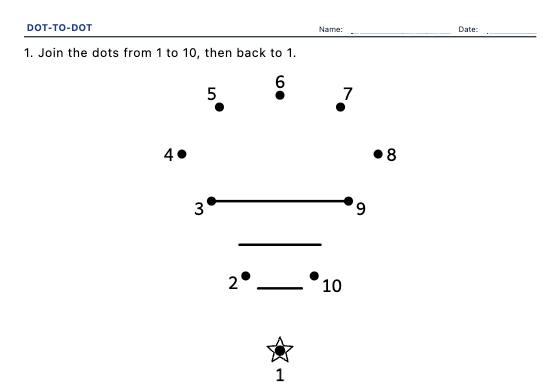
A4 worksheets to join the dots and reveal the picture: from 1-10 up to 1-100, counting in 2s, 5s and 10s or the alphabet, with over 30 pictures and the finished picture in the answer key.