9 pairs of opposites
Size (big and small, long and short, tall and short), position (on and under, inside and outside, in front and behind, near and far) and quantity (many and few, full and empty).
Basic concepts (big and small, inside and outside, on and under, many and few…) are the first words children use to make sense of the world, and a foundation for maths and language. This free basic concepts worksheet generator builds A4 worksheets for ages 3 to 5 with our own pictures, a short instruction with a pictogram and an answer key.
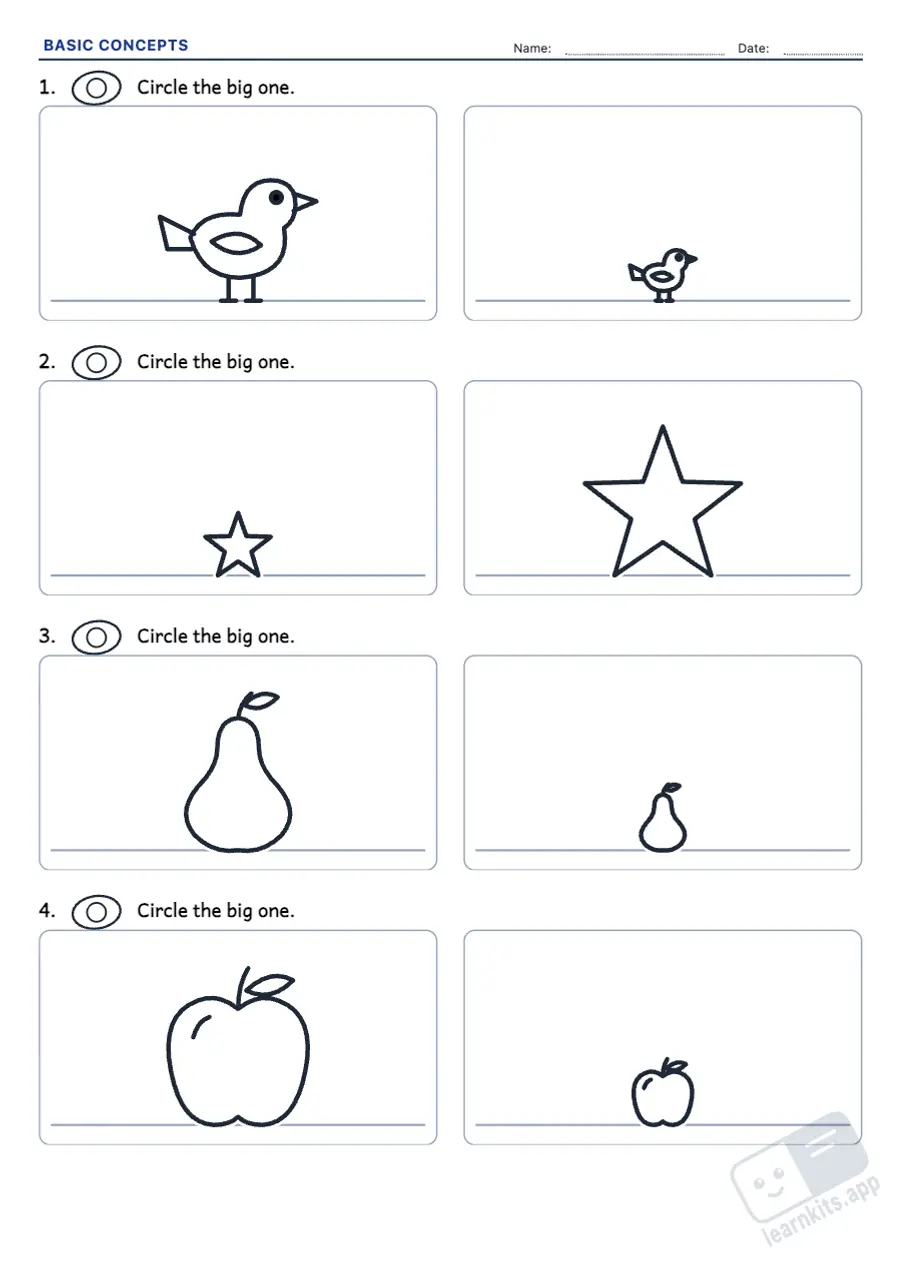 Student worksheet
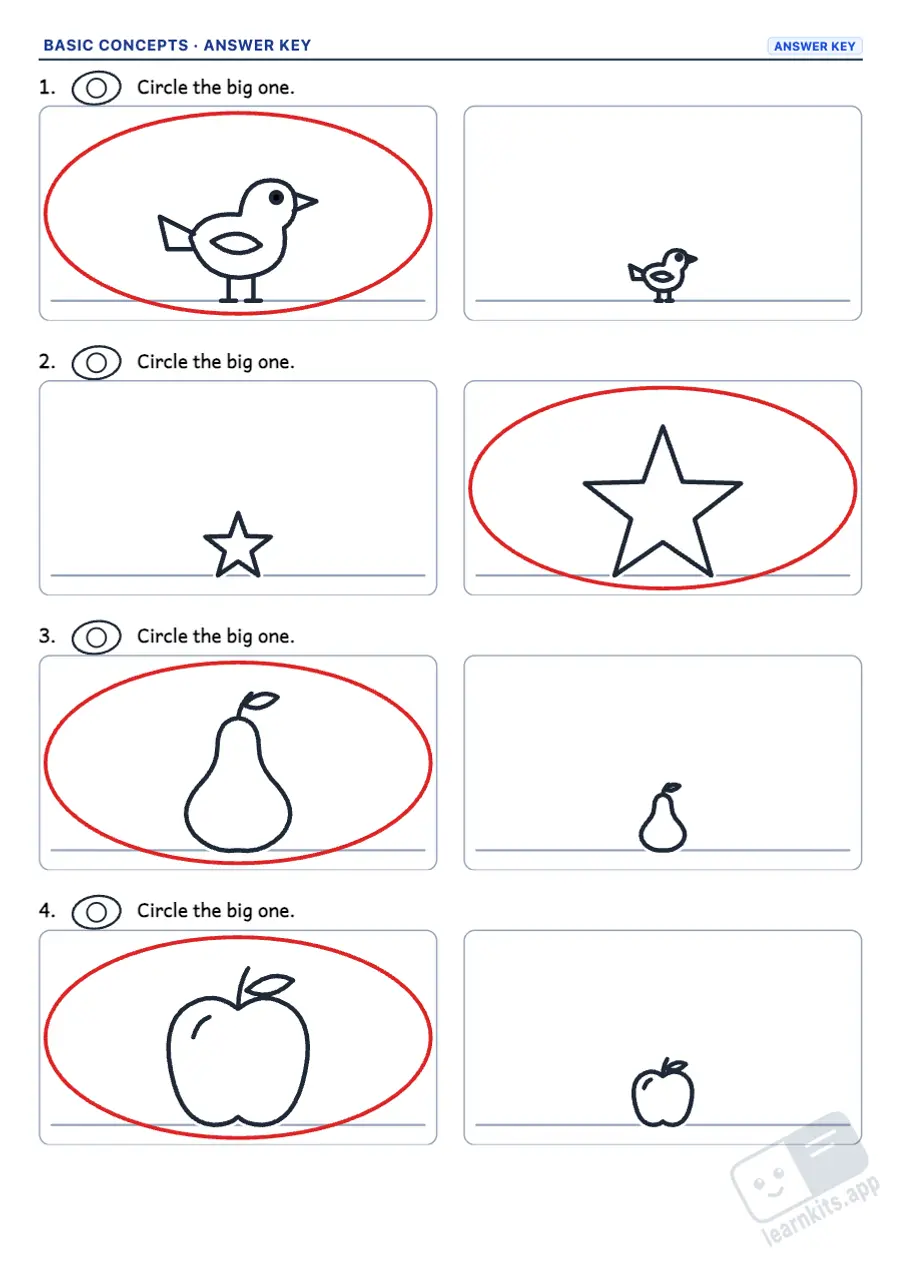 Answer key
Size (big and small, long and short, tall and short), position (on and under, inside and outside, in front and behind, near and far) and quantity (many and few, full and empty).
Circle, colour or cross out the right picture, or draw what is asked: a ball under the table, a taller tower, lots of apples in the basket.
At age 3, two very different pictures; at age 4, three with one in between; at age 5, four with small differences, different objects and amounts to count.
Every exercise has a pictogram of the action (circle, colour, cross out or draw) and a short sentence for the teacher to read aloud.
Thick line drawings with no backgrounds, made for colouring and for printing or photocopying in black and white.
The same worksheet with the right picture circled, crossed out or marked in red, and an example of what to draw.
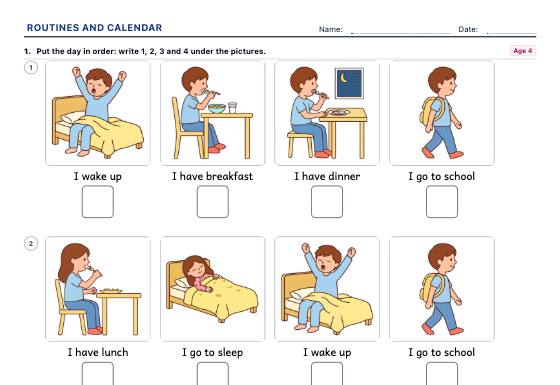
Visual schedules for morning, school, afternoon and bedtime routines, a "Today is" circle time board, the real calendar of any month, ordering the day and the days of the week.
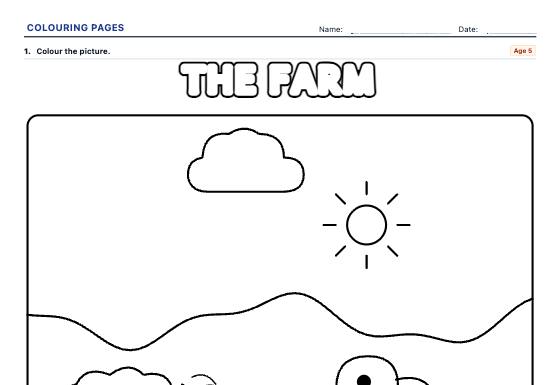
Colouring pages drawn anew on every sheet: mandalas, stained glass, geometric mosaics and scenes of the farm, the sea, the garden, space, the town and the savannah, with the line and the size of the spaces set for each age.
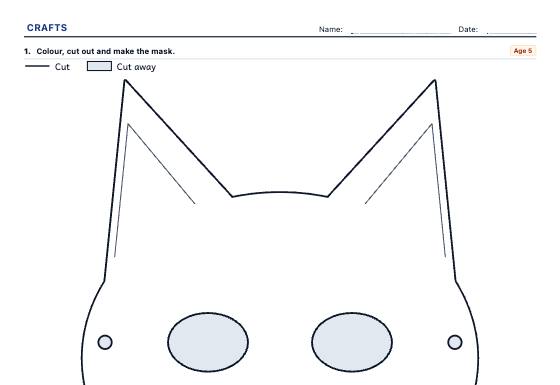
True-size templates to colour, cut out and make: animal masks, a crown sized to the head, finger puppets, a pinwheel, a fortune teller, bookmarks, a paper doll chain and a gift box with lid, with the steps.