Big or small problem?
Everyday situations to decide whether they are a small problem I can solve or let go, or a big problem that needs an adult straight away. Only situations everyone would agree on are used, and the answer key marks them.
Recognising a feeling is the first step; the next is knowing what to do when it arrives. This generator makes emotional regulation worksheets for ages 5 to 14 for PSHE, learning support or home: a feelings thermometer, where I feel it in my body, calming ideas and my own plan.
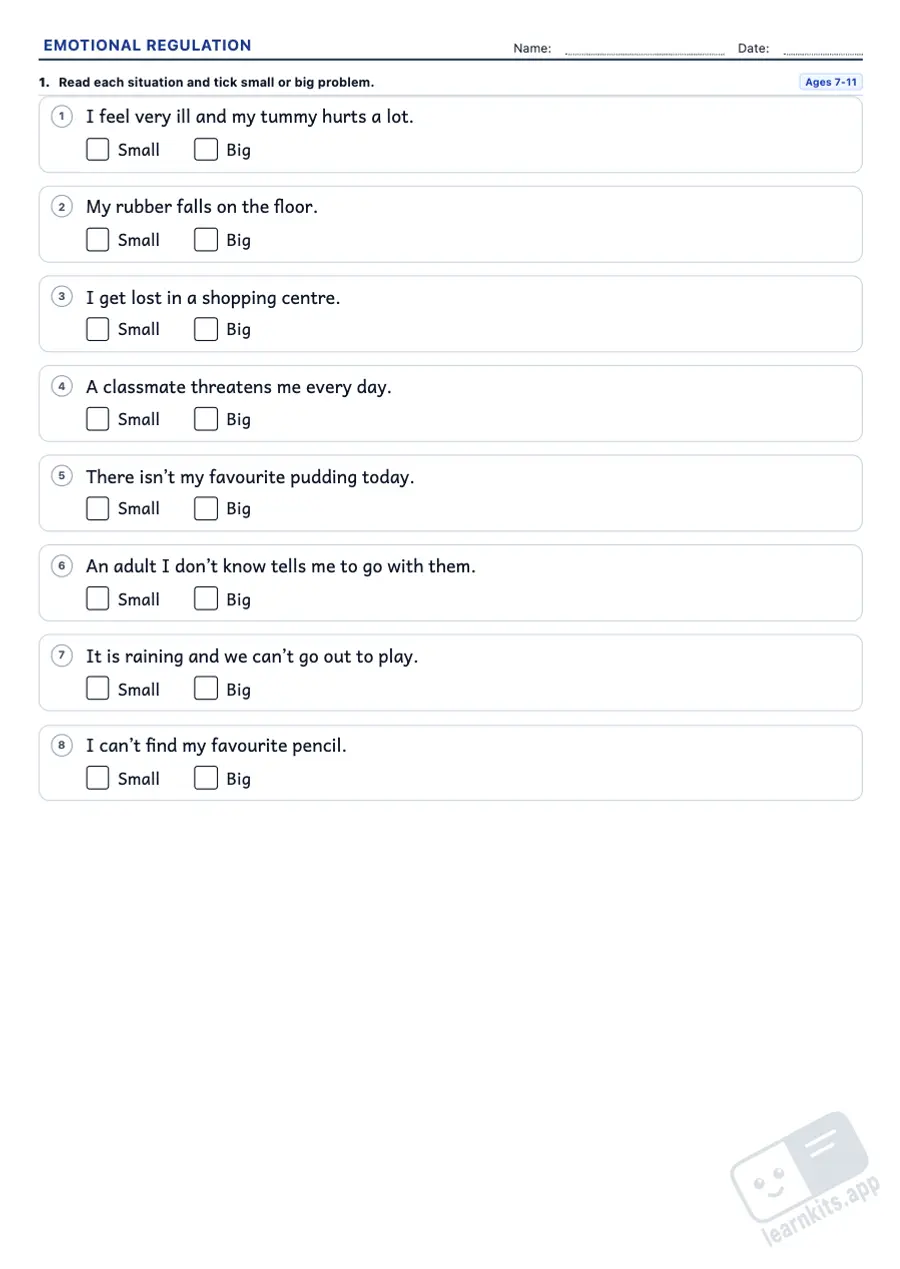 Student worksheet
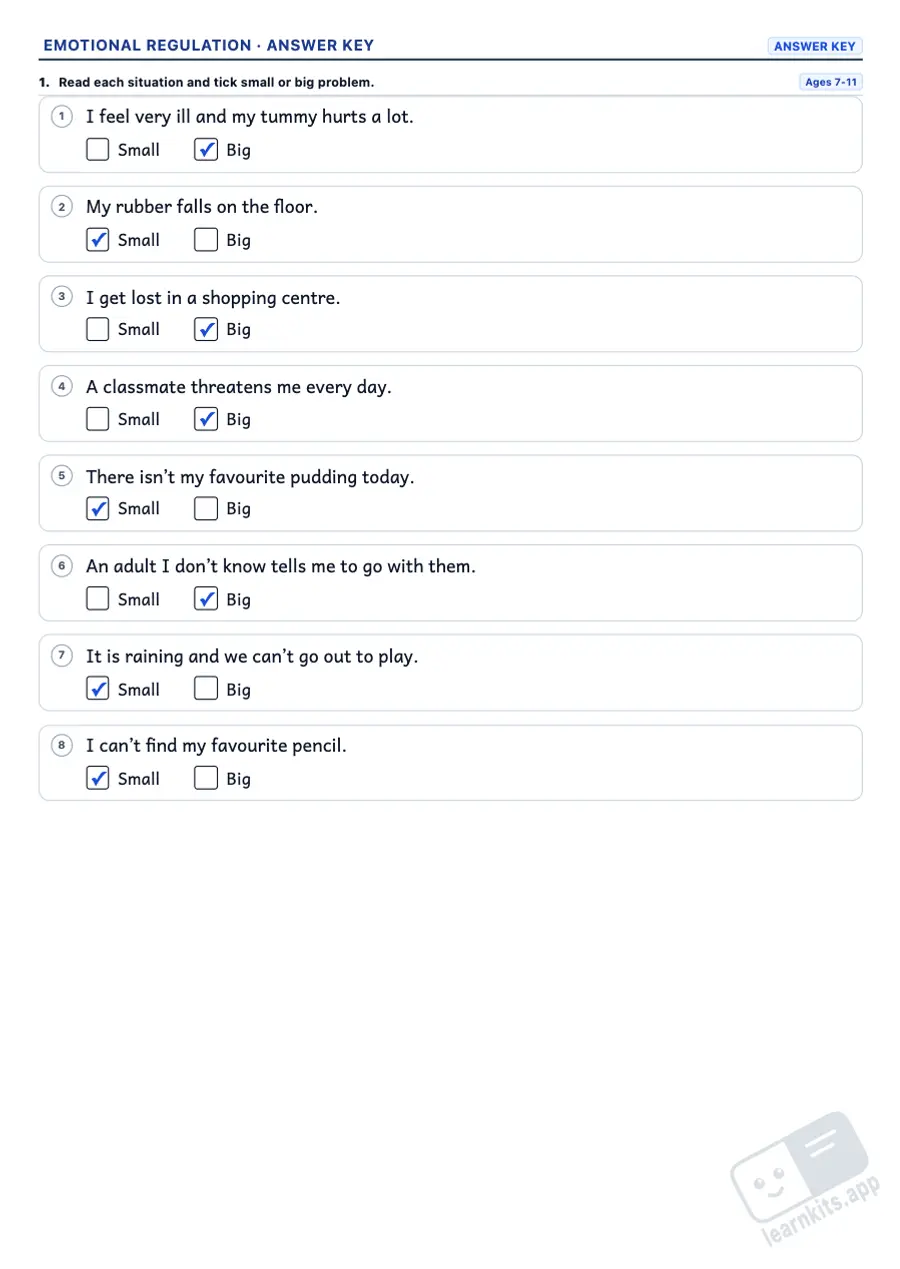 Answer key
Everyday situations to decide whether they are a small problem I can solve or let go, or a big problem that needs an adult straight away. Only situations everyone would agree on are used, and the answer key marks them.
A thermometer from calm to exploding that shows feelings rise step by step. From age 7 children write what they notice and what they can do at each level; from 12, their body signals and the strategies that work.
A body outline to colour where a feeling shows: anger in the hands or face, fear in the tummy. It helps children spot the signals before the feeling gets too strong.
Calming ideas with pictures, such as breathing slowly or going to the calm corner, and a personal plan for anger, fear, sadness or worry: what happens, how I notice it, what I can do and who helps me.
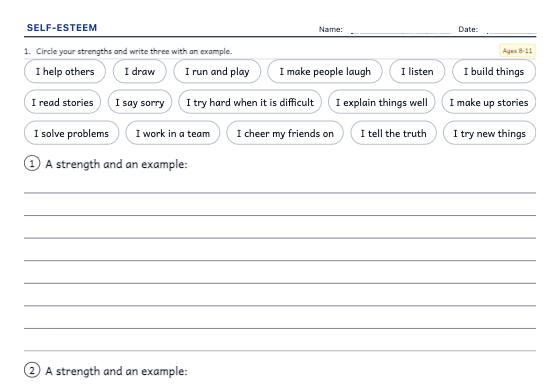
Self-esteem: all about me, my strengths, cards for classmates to say what they value, things I am proud of, kind self-talk, a gratitude journal and a goal in small steps, ages 6 to 16.
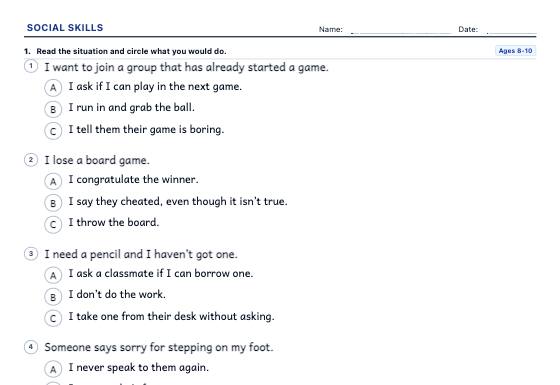
Social skills: what would you do with three options, what each one thinks and feels, conversation steps, solving a conflict and personalised social narratives, ages 5 to 14, with answers.
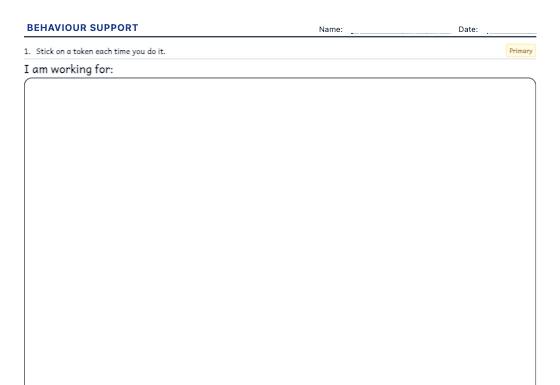
Positive behaviour support: token boards of 3, 5 or 10 tokens, reward charts, first-then boards, behaviour contracts, self-monitoring checklists and an ABC chart, with your own targets, ages 3 to 14.