Complete dominance
Mendel's pea traits, guinea pig fur, fruit fly wings and albinism: the 3:1 and 1:1 ratios and the test cross.
A Punnett square predicts the offspring of a cross: each parent's gametes along the edges and, in every box, the genotype they make together. This free Punnett square worksheet generator builds A4 genetics worksheets for Grade 10 with real traits, from Mendel to Morgan, and a full answer key.
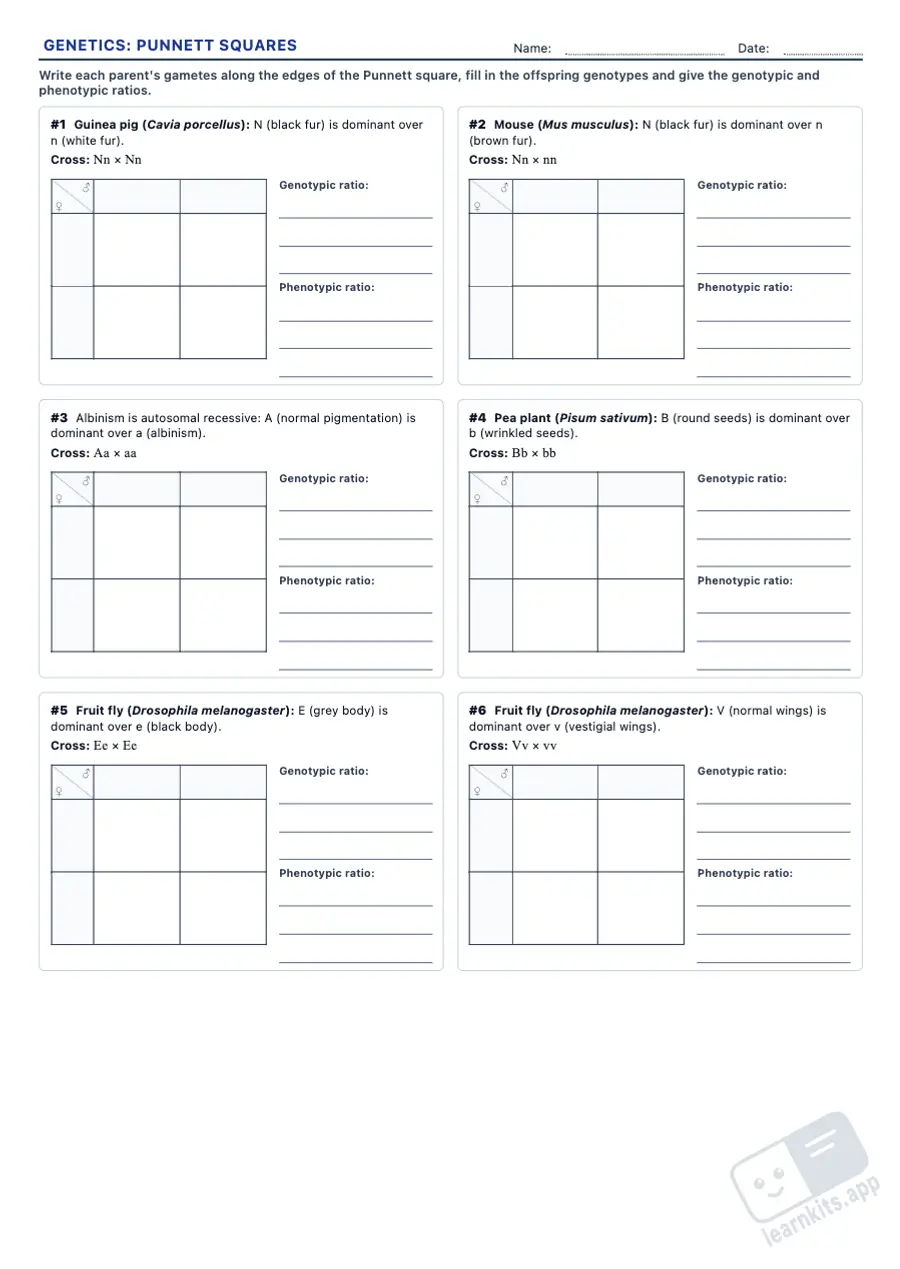 Student worksheet
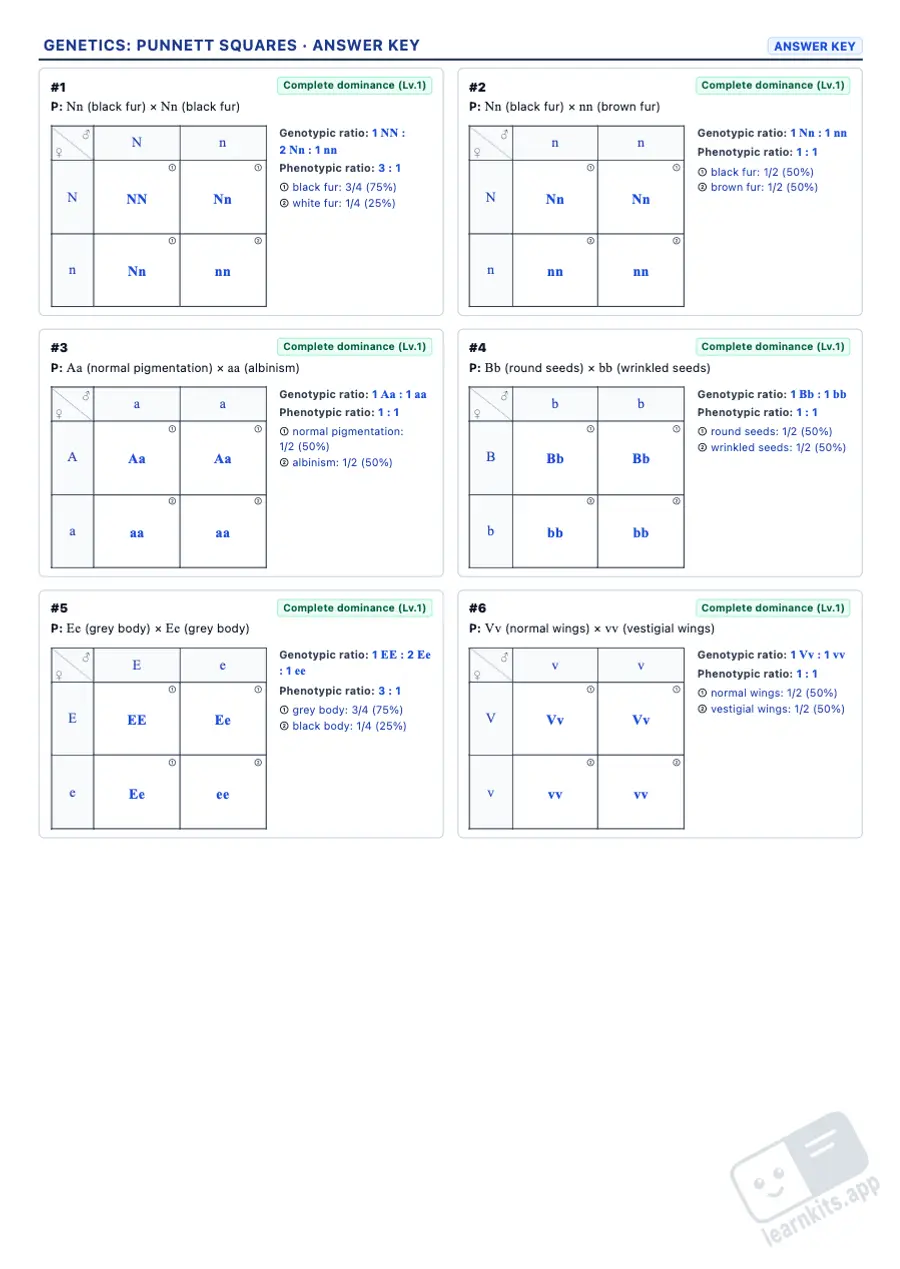 Answer key
Mendel's pea traits, guinea pig fur, fruit fly wings and albinism: the 3:1 and 1:1 ratios and the test cross.
Pink snapdragons, blue Andalusian chickens, roan cattle and the MN blood groups: the heterozygote shows in the phenotype.
Three alleles, two codominant and one recessive: which groups a couple’s children can have and what a child with group O reveals.
Colour blindness, haemophilia and Drosophila eye colour: carrier women, men with a single allele and different ratios in sons and daughters.
Four gametes from each parent, the 16-box square and Mendel's law of independent assortment: 9:3:3:1, 1:1:1:1 and 3:3:1:1.
Gametes, the completed square with the phenotype of every box, and the simplified genotypic and phenotypic ratios as fractions and percentages.
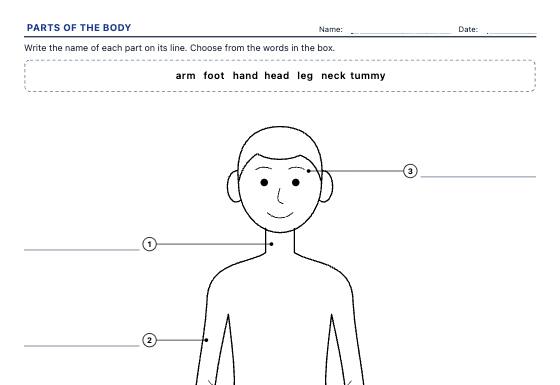
Human body diagrams to label with our own line art: parts of the body and face, skeleton, muscles, internal organs and the digestive, respiratory and urinary systems, in three levels with an optional word bank.
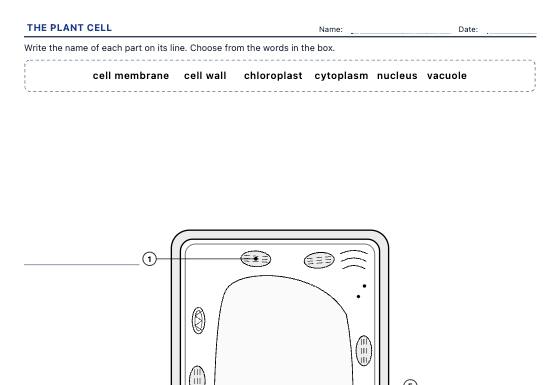
Diagrams to label with our own line art: the animal and plant cell, the microscope, the parts of a plant and a flower, seed germination and photosynthesis, in three levels, with an optional word bank and an answer key.
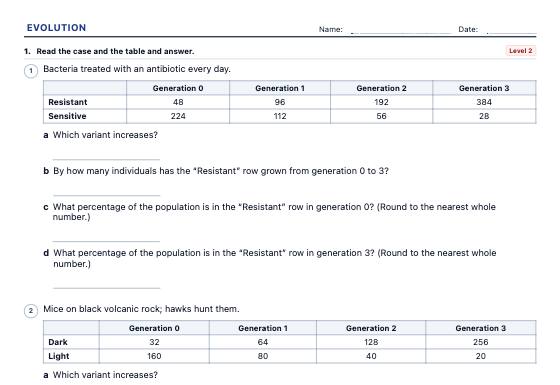
Evolution worksheets: adaptations to the environment, Lamarck's and Darwin's explanations, natural selection with population data over generations, evidence for evolution (homologous structures, fossils, DNA) and phylogenetic trees, in three levels with an answer key.