Concentration
In g/L, percentage by mass and by volume, the mass of solute needed and dilutions with c₁ × V₁ = c₂ × V₂.
Chemical calculations start in Grades 8 and 9 with the concentration of solutions and the mole, and go on in Grade 10 to molarity and stoichiometry. This free generator makes worked worksheets for every step, with the relative atomic masses on the sheet and an answer key that uses conversion factors, as in class.
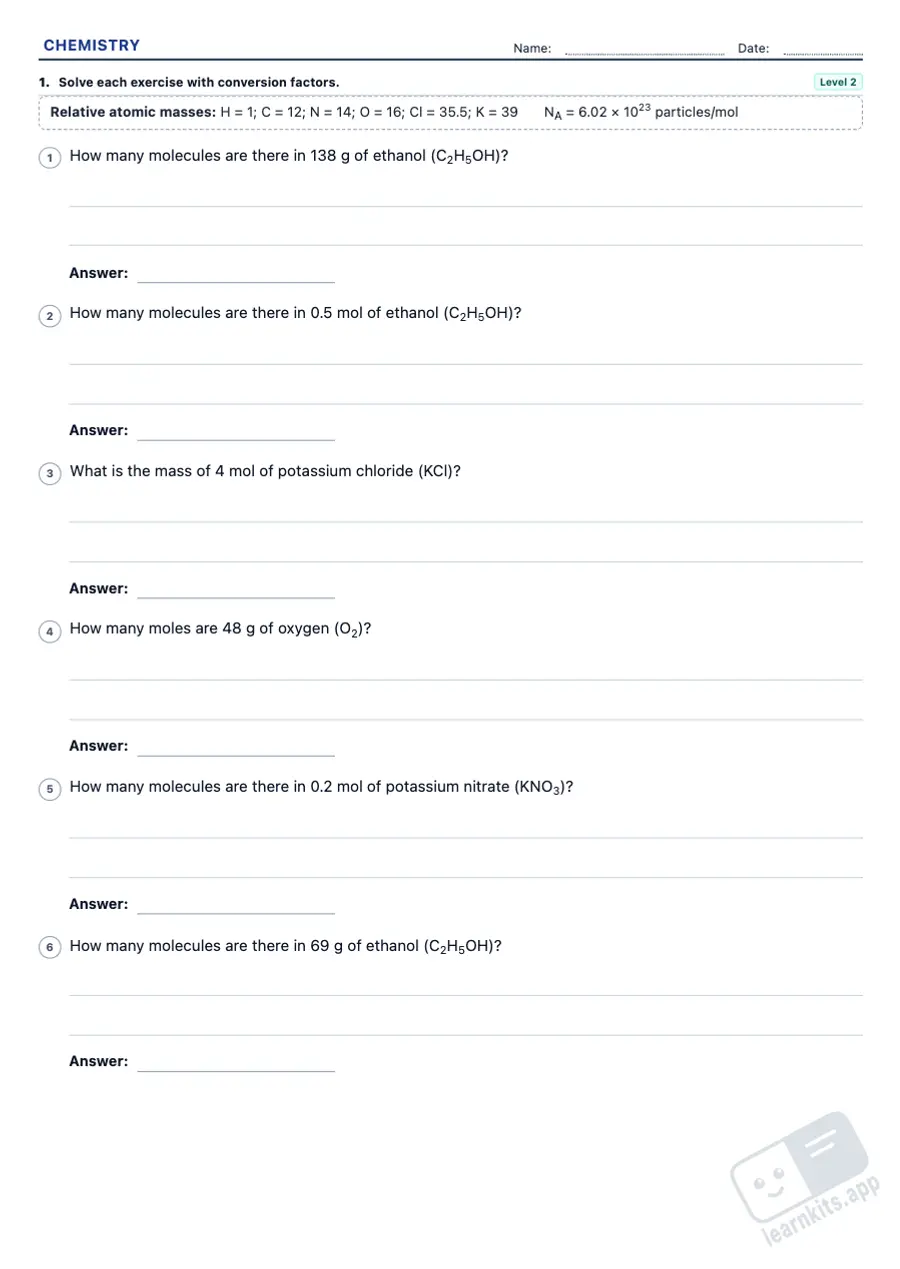 Student worksheet
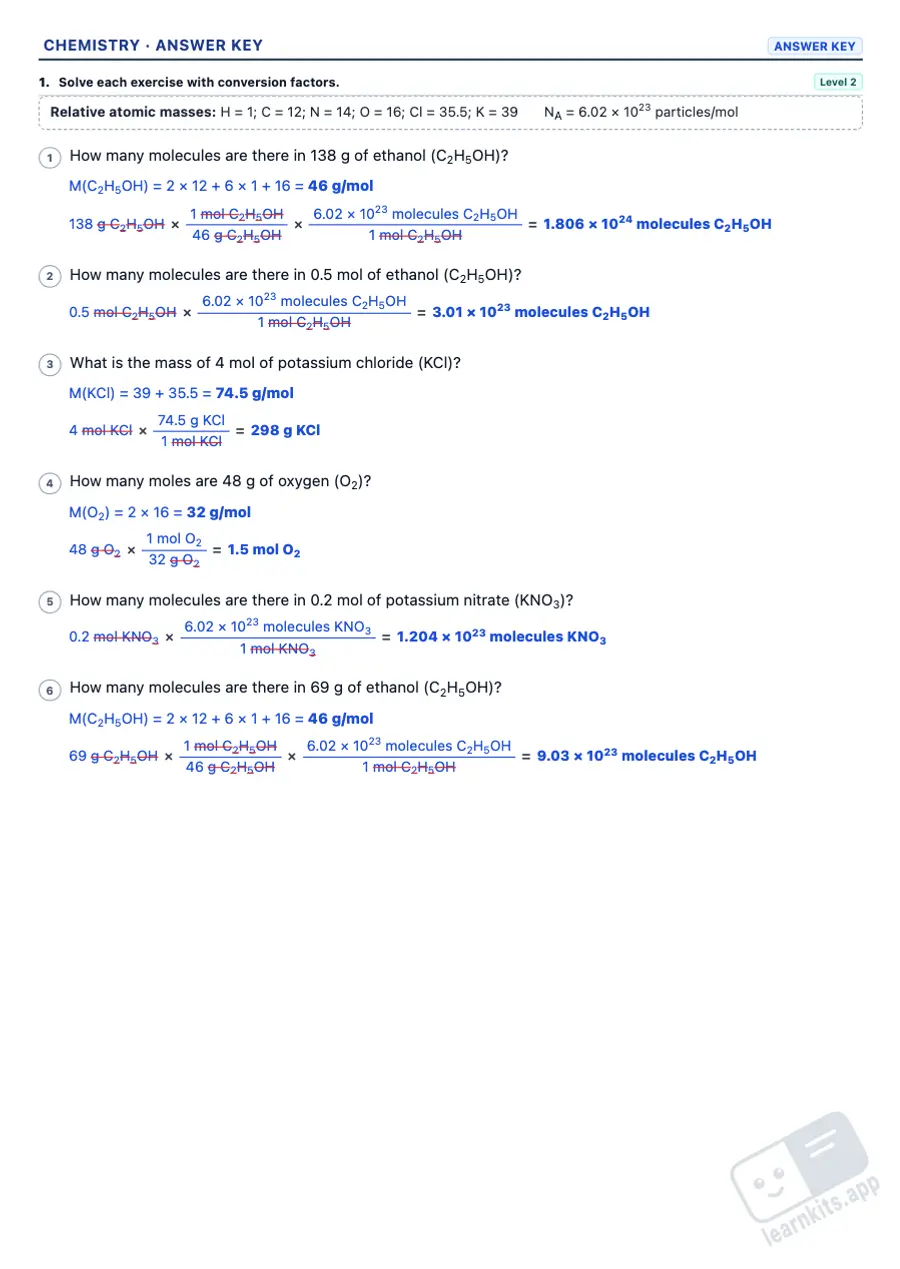 Answer key
In g/L, percentage by mass and by volume, the mass of solute needed and dilutions with c₁ × V₁ = c₂ × V₂.
From simple formulas to formulas with brackets and hydrates, with the atomic masses on the sheet.
From grams to moles, molecules and atoms with the Avogadro constant, 6.02 × 10²³.
Moles per litre from moles or grams, the mass needed to make a solution, and dilutions.
On equations balanced by the chemical equations generator: moles to moles and mass to mass.
Each answer with its chain of conversion factors and the units crossed out, ready to mark.
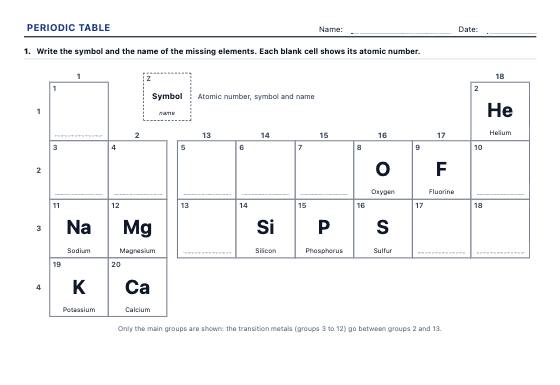
Blank periodic tables to complete, symbols and names, group and period data tables, clue puzzles and metal and non-metal sorting, from the first 20 elements to the whole table, and atomic structure: protons, neutrons and electrons, ions and isotopes, Bohr model, electron configuration and valence electrons, with an answer key.
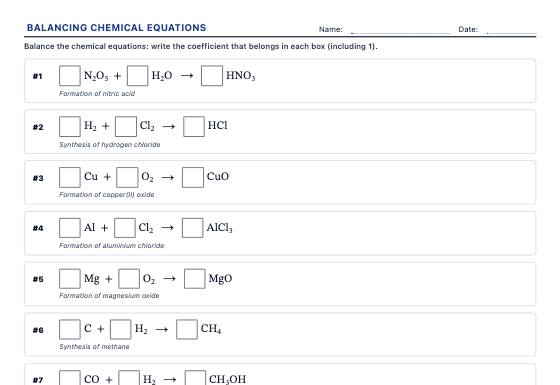
Real reactions to balance with coefficient boxes and an atom-count table, from simple formulas to groups in brackets, hydrates and large coefficients, with an answer key that checks every element.
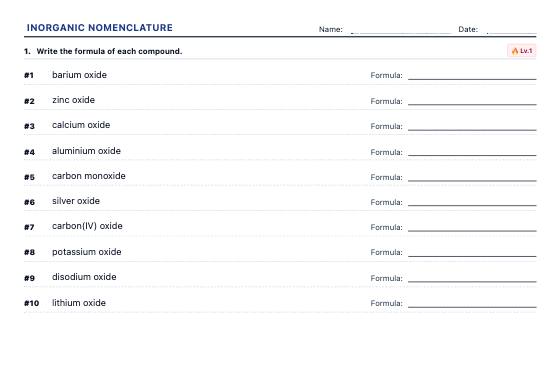
Worksheets to write formulas and name oxides, peroxides, hydrides, hydracids, binary salts, hydroxides, oxoacids and oxosalts, with stoichiometric, Stock and traditional names and an answer key with every name.